
Synthetic and Organic Lettuce Fertilizers- Fertilizantes orgánicos y sintéticos
We are always trying to down grade costs. Farmers, especially, who focus on maximizing their yields and profits for the labor, energy, and supplies they put in, need reliable, cost-efficient sources of fertilizer.
We invite you to read this work made by our EAP Spring student Sarah Vetter. This was made on a two week research, if you would like more information on the article (or you want to read the full article) you can to write to: info@mvinsitute.org
Lettuce Growth in Response to Weather & Soil Nutrients & pH
Sara L. Vetter -Department of Environmental Science - University of California, Los Angeles -EAP Tropical Biology and Conservation Program, Spring 2013
ABSTRACT
Organic fertilizers can prove just as efficient as or even better in aiding in plant growth than synthetic fertilizers. I observed how lettuce seedlings would differ in growth of leaf width and length between treatments with and without the two types of fertilizers. I looked at nutrient and pH content of each treatment before and after planting, and analyzed the effects of weather on leaf production. For organic fertilizer I utilized vermi-compost cow manure, regular cow manure, and goat manure, products of a local La Cruz de Abangares farm. For synthetic fertilizer, I chose Urea and 10-30-10, ones commonly used by farmers of the same area. I measured leaf growth of the largest leaf of each seedling for each treatment for each area. For the indoor plot the seedlings of the vermi-compost cow manure treatment grew significantly taller (4.25 cm) than those of the goat manure (1.81 cm) and the control (2.12 cm). I found seedlings of the 10-30-10 treatment (4.06 cm) to have grown significantly more than goat manure as well. For the outdoor plot, goat manure (2.08 cm) and Urea (1.85 cm) showed a significantly greater change in width than the 10-30-10 treatment (0.75 cm). The vermi-compost treatment appeared to have had good soil structure and perhaps undetected reserves of micronutrients released by earth worms. For the outdoor plot the goat manure treatment may have had undetected nitrogen and salt reserves, while the Urea treatment high nitrogen content. Weather may have influenced the release of nutrients in some treatments in a way that caused seedling growth to differ in the indoor and outdoor plots. A partially unifying factor in the results between the outdoor and indoor plots appears to have been the presence of nitrogen in the starting treatment.

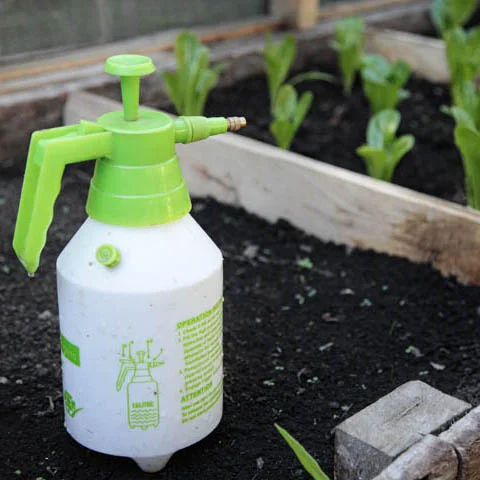
Photo for illustrative purposes/ Foto para uso ilustrativo.
RESUMEN
Los fertilizantes orgánicos pueden ser igual de eficaces o incluso mejores que los fertilizantes sintéticos en ayudar en el crecimiento de plantas. Estudié diferencias en el crecimiento de plántulas de lechuga en cuanto a la anchura de la hoja y la longitud entre los tratamientos con y sin los dos tipos de fertilizantes. Medí los nutrientes y el contenido de pH de cada tratamiento antes y después de la siembra, y analicé los efectos del clima en la producción de la hoja. Para obtener fertilizante orgánico utilicé estiércol de vaca ya compostado por lombrices, estiércol de vaca regular, y estiércol de cabra, productos de una finca en La Cruz de Abangares. Por fertilizantes sintéticos, elegí Urea y 10-30-10, utilizadas por los agricultores de la misma zona. Medí crecimiento de la hoja de la hoja más grande de cada planta para cada tratamiento para cada área. Para la parcela del interior las plántulas del vermi-compost de estiércol de vaca crecieron significativamente más altas (4,25 cm) que las del estiércol de cabra (1,81 cm) y el control (2,12 cm). Las del tratamiento 10-30-10 (4,06 cm) crecieron más que las de estiércol de cabra también. Para la parcela al aire libre, el estiércol de cabra (2,08 cm) y urea (1,85 cm) mostraron un cambio significativamente mayor en anchura que el tratamiento 10-30-10 (0,75 cm). El tratamiento vermi-compost parecía haber tenido una buena estructura del suelo y reservas de micronutrientes tal vez no detectados en la prueba. En la parcela exterior del tratamiento del estiércol de cabra puede haber tenido de nitrógeno y reservas de sal que no se detectaron, mientras urea presentó un alto contenido en nitrógeno. El clima puede haber influido en la liberación de nutrientes en algunos tratamientos de una manera que hizo que el crecimiento de plántulas difiriera en las parcelas cubiertas y al aire libre. Un factor unificador parcialmente en los resultados entre las parcelas al aire libre y de interior parece haber sido la presencia de nitrógeno en el tratamiento inicial.



Hugelkultur in Monteverde
Hugelkulture in Monteverde guidelines.
We cannot talk about sustainability without including the fundamental theme of agriculture, growing that which we eat. With this in mind and with a great amount of effort form our students; the Monteverde Institute is testing different vegetable-garden types in our campus. So far we have an example of HugelKulture and a Keyhole garden in progress. Both of these projects follow sustainable guidelines and have their bases on Permaculture practices.
Here you can find a "how to" guideline built by one of our interns, Peter Wells.
Hugelkultur in Monteverde
A Hugelkultur is raised bed that mimics forest decomposition. This technique is native to Austria where is has been used for hundreds for years, for more information on this system, research the work of Sepp Holzer and his Permaculture farm in the Alps. With good construction and adequate precipitation, a hugelkultur is a self sustaining system. With occasional maintenance, it requires no additional fertilizer, chemicals, irrigation, or tillage. Here is how to make one.

Sample of a Hugelkulture Garden

Start with a couple of large, rotting trees or logs as a base.

2 Pile smaller deadwood and branches on top. Let sit in rain or soak to help retain moisture.

3 Cover with compost (manure is a plus).

3.5 Cover the mound in good soil and finally, leaves or straw.

The mound can be any length and as high as two meters
This system 3 major functions:
It is a water reserve in times of drought.
It is a beneficial harbor for microbial, fungal, insect, and animal life.
It is a nutrient mine for the plants that grow on it and drastically improves soil health.
Peter Wells, 2013. Instituto Monteverde.
Video sustainable agriculture/ Video agricultura sostenible
Student project- Proyecto estudiantil
