
Empanadas de Chiverre
At the Monteverde Institute we have been working hard on our vegetables gardens and our own MVI kitchen has been one of the places where we have enjoyed the produce the most. Incidentally this month we got a new stove, the best way to celebrate this was making Chiverre (spaghetti squash) empanadas from a chiverre picked straight out of the garden.
ESPAÑOL: En el Instituto Monteverde hemos estado trabajando arduamente en las huertas y en la cocina del Instituto es uno de los lugares donde más nos hemos aprovechado de las cosechas. Este mes, además, conseguimos una cocina nueva y la mejor manera de celebrarlo era cocinando unas empanadas de chiverre con uno de la huerta.
At the Monteverde Institute we have been working hard on our vegetables gardens and our own MVI kitchen has been one of the places where we have enjoyed the produce the most. Incidentally this month we got a new stove, the best way to celebrate this was making Chiverre (spaghetti squash) empanadas from a chiverre picked straight out of the garden. Anybody has come to the MVI knows how important our kitchen is as a point of encounter, so check out this recipe made by our very own Elieth and Arelis. We would also like to thank the Howes' for their incredible support in getting the new addition to the kitchen.
ESPAÑOL: En el Instituto Monteverde hemos estado trabajando arduamente en las huertas y en la cocina del Instituto es uno de los lugares donde más nos hemos aprovechado de las cosechas. Este mes, además, conseguimos una cocina nueva y la mejor manera de celebrarlo era cocinando unas empanadas de chiverre con uno de la huerta. Cualquier persona que ha pasado por el Instituto Monteverde sabe la importancia que tiene nuestra cocina como punto de encuentro, así que vean esta buena receta hecha por nuestras amigas Elieth y Arelis. También queremos agradecer a la familia Howe por todo su apoyo en la nueva adición de la cocina.

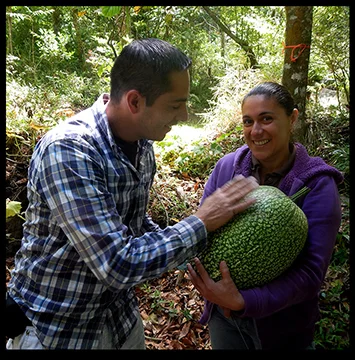
Elieth and Jorge picking the Chiverre, and then peeling it.
Español---- Elieth y Jorge cosechando el Chiverre. Luego se debe de pelar.

After that you take the seeds out, cut it in chunks and put it in warm water. Make sure the pieces are completely covered and cook until soft.
Español--- Después se deben de sacar las semillas, cortar en pedazos y sumergir en agua caliente. Luego se cocina hasta que las hebras estén sueltas.

Once the Chiverre is cooked you strain it and put it in a cheese cloth, where you strain it even more. The girls also put the cooked chiverre in the centrifuge of the washing machine to really dry it out!
Español --- Una vez que el chiverre esté cocinado se cuela y se coloca en una tela limpia, de ahí nuestras amigas lo pusieron en la centrífuga de la lavadora para secarlo bien!

You then place the chiverre into a pot and add raw sugar (in this case we used two "tapas"), cinnamon sticks and nutmeg. You cook all this together, mixing constantly until it dries out. This will be how you make the filling! You can also use this for a numb rod other recipes.
Español --- Luego se pone el chiverre en una olla con tapa dulce (en este caso usamos dos tapas), astillas de canela y nuez moscada. Se cocina todo esto junto a fuego lento y mezclando constantemente hasta que se seque bien. ¡Y así es como se hace la miel de chiverre que va a ser nuestro relleno! También se puede usar esta miel par acuchas otras cosas.

Empana recipe: 30 of them. - 250 grams of sweet cream (whipping cream). - 3 cups of flower. -2 bars of butter. - 1 tablespoon of sugar - 1 pinch of salt.
You mix everything together and extend the dough, cut out the moods, place the chiverre in the centre, fold over and stick it together with a fork. You bake for apron. 30 min, at 200c or until golden.
Español---- Receta para 30 empanas. 250 gramos de Crema Dulce. - 3 tazas de harina de trigo. - 2 barras de mantequilla. - 1 cucharada de azucar. - 1 pizca de sal.
Se mezcla todo junto y se extiende la masa. Luego se sacan los moldes y se pone la miel de chiverre en el centro, se doblan y se une con un tenedor. Las empanadas se colocan en el horno a 200c por 30 min o hasta que queden doraditas.

And now, enjoy!
--- ¡Y ahora a disfrutar!
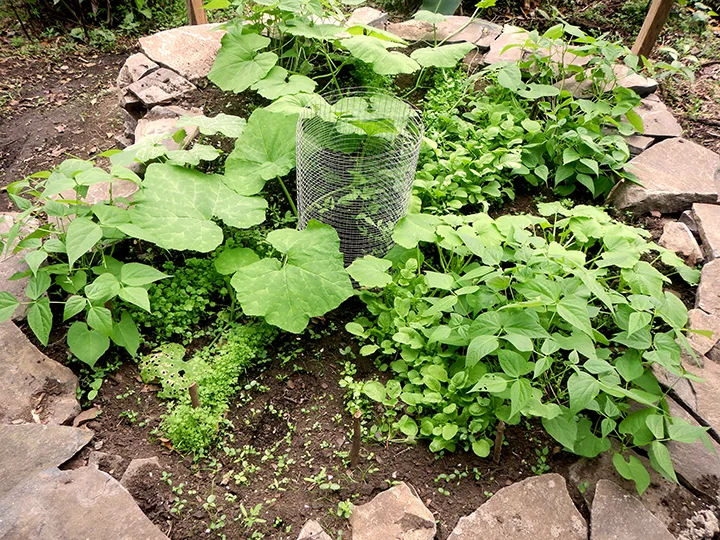
Keyhole Garden- Jardín Ojo de Herradura-Costa Rica.
Manual on how to make a KeyHole garden in the tropics. This is a high yielding agricultural system.---Manual de como hacer una huerta Keyhole en zonas lluviosas.
Keyhole Garden a la Tica: Organic and Sustainable
Sara Arias, Emily Bissett, Constanza Carney, Lillie Dao, Alejandro Garcia, Zuhra Malik
Globalization and Community Health Field School National Science Foundation REU Program University of South Florida
Monteverde Institute
Monteverde, Costa Rica May 29 – August 3, 2013
Adaptación de Keyhole para Latinoamérica en lugar lluvioso. --- Keyhole adaptation to rainy area in Latin America, this is a printable brochure.
Side one of the brochure on hoy to make a keyhole.
Side two of the brochure on how to make the keyhole.


RECOMMENDATIONS
Keyhole Construction Recommendations and Alternatives
Although the exterior of both Monteverde Institute demonstration keyhole gardens were constructed using large stones, there are many other feasible alternatives. These materials were used due to greatest availability to the Institute. Other potential exterior materials suggested by community advisors include recycled materials (glass bottles, tires), lamina roofing material, cinderblocks, or bamboo/sticks.
The layers may also be varied depending upon what is most readily available to the household or organization constructing the garden. Many other kinds of manure, such as goat, rabbit, or cow, may be used instead of chicken manure and/or coffee shells. Limestone can be easily substituted for ash because both materials maintain the neutral balance of the soil and compost pH. Finally, as recommended by several focus group participants, dry leaves can be substituted for rice shells (gransa de arroz) depending upon what is accessible.
Additionally, many other materials, specifically recycled resources, may be implemented to facilitate drainage. Focus group members and community advisors proposed several drainage items options that included halved tires, inverted plastic crates, inverted plastic bottles, and bamboo shoots. These materials, especially used tires and plastic bottles, may require further research to ensure that they are safe for food production use.
Finally, much debate was raised with regard to the roof construction. Several focus group and interview participants stated that saran was the ideal material, while other members supported the use of clear greenhouse plastic. Either of these materials could be used to form the roof. Furthermore, the roof could incorporate covered sides, though this is not required. Each of these alternative materials could be incorporated in a future experimental research garden. Local community members who decide to create their own keyhole garden could also integrate these alternative materials.
For more information please write to us at info@mvinstitute.org.
----------------------------------------------------------------------------------------------------------------------------------
Ventajas jardín Ojo de Herradura:
Producción intensiva en espacio pequeño, tiene periodo de 5 años antes de volver a cambiar los sustratos, es relajante-terapeutico y tiene diseño universal, por ello es adecuado para personas adultas mayores, personas con discapacidad o mujeres embarazadas.