
Parque Recreativo * San Luis * Recreational Park
San Luis decidió construir un parque. Que se complemente como una oportunidad recreativa adicional.
--- San Luis decided to build a park that will complement the other recreational opportunities.


Parque Comunitario: Una oportunidad de recreación para la comunidad.
Por: Noé Vargas - Presidente Junta Directiva Asoc. Desarrrollo San Luis
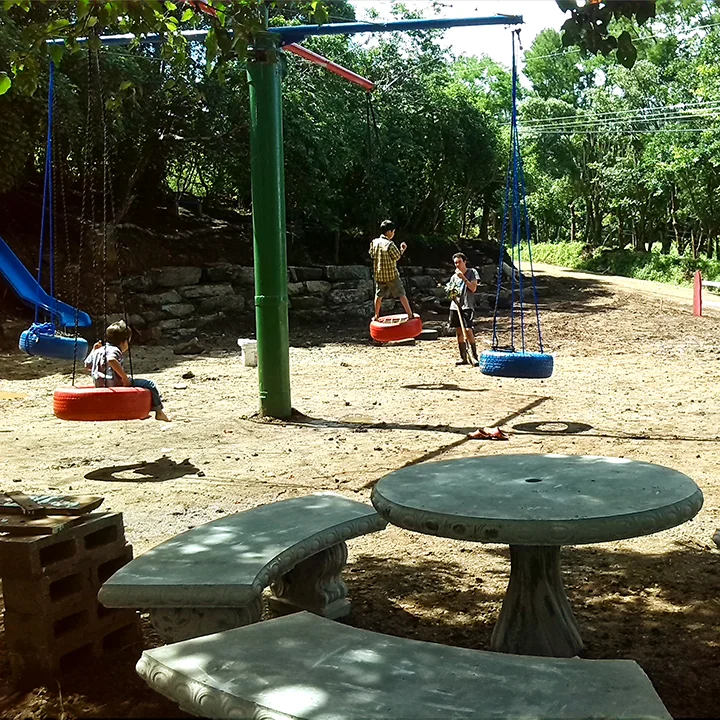
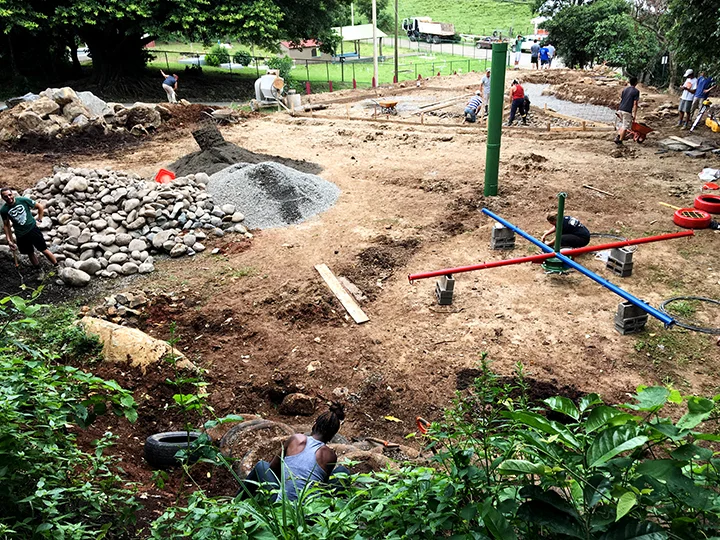
Fotos del parque - aún está en proceso
La recreación y los espacios de encuentro social son una necesidad para el sano desarrollo de las comunidades. En Monteverde es usual escuchar que la falta de oportunidades de recreación para las familias, es una limitación que afecta nuestra comunidad. Ciertamente las condiciones de vida actuales, exigen ofrecer más y diversas alternativas recreativas a la población en general.
A través de un parque recreativo se puede ofrecer oportunidades como: recreación familiar, sana diversión, fomento a la salud física y emocional, encuentro comunitario, compartir con respecto y armonía.
San Luis decidió construir un parque. Que se complemente como una oportunidad recreativa adicional, a las otras que ya existen administradas por la comunidad como: La red de senderos del Sendero Pacífico, la Plaza de fútbol, el Centro Educativo Cultural.
Este parque recreativo San Luis se construye en Finca La Bella, de manera que en muchas formas es un proyecto colaborativo. Más recientemente, se tomó la decisión de disponer de un área de 1500 metros de esta finca para construir el parque, ubicado muy estratégicamente al lado del Centro Educativo Cultural y muy céntrico para la comunidad.
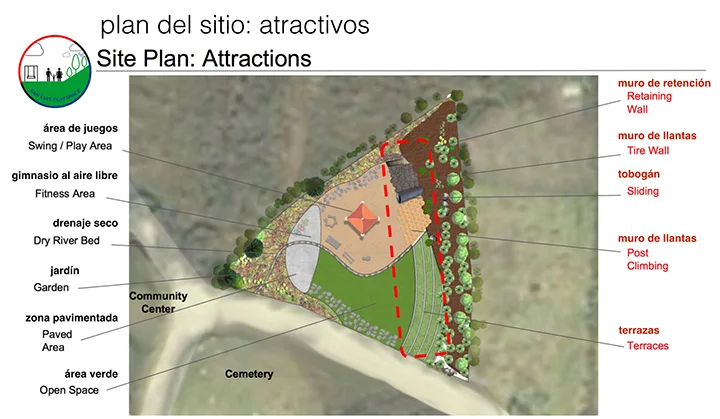
Copia del plan hecho por los estudiantes de Futuros Sostenibles.
La planificación del uso del espacio se realizó con el apoyo del programa de Futuros Sostenibles del IMV, y entre otras cosas incluirá: Áreas de estar con mesas y bancas, senderos internos, área de jardín, área con árboles nativos y frutales. Así como, graderías construidas con piedra, muro de llantas para jugar y como retén de suelo. Juegos como tobogán, carrusel, espacio para juegos tradicionales. Para su construcción, se ha tratado de reutilizar la mayor cantidad posible de materiales(ej llantas) y otros materiales de la región (ej piedra).
Pero, y el dinero para hacerlo? Es la pregunta que usualmente viene de primero.......No hay excusa. Si tiene el propósito y personas dispuestas a lograrlo se hace. Así se ha avanzado significativamente con aportes de mano de obra, materiales, maquinaria, diseños, fondos etc.
Perseverancia, trabajo, alianzas son parte de la receta en este exitoso proyecto!!!
Para más información u ofrecer su apoyo al proyecto contacte a:
Tel 2645 7485. Email trcsanluis@gmail.com face: San Luis de Monteverde
Asociación de Desarrollo Integral de San Luis
Fotos de miembros de la comunidad y estudiantes de Futuros Sostenibles trabajando en el proyecto.


Photos of the Sustainable Futures students with community members working on the park.

Community Park: A recreational Opportunity for the Community.
By: Noé Vargas –President of the Board of Directors of the San Luis Development Association

Putting the carousel together.
For a healthy community development it’s important to have spaces for recreation and social gatherings. In Monteverde it’s common to hear about the lack of recreation opportunities for families, and this is a limitation that has affected our community. Clearly current lifestyles demand to have a more diverse offer of recreative alternatives for the general population.
A recreational park offers opportunities such as: family entertainment, healthy amusement, promotion of healthy lifestyles, community encounters, respectful sharing and harmony.
San Luis decided to build a park that complements other recreational opportunities such as: the Pacific Pathway Network, the soccer field, and the Cultural Education Center.
This recreational park is being built in Finca la Bella, so in many ways it’s a collaborative project. Recently, the decision was made to use 1500 m (4900 ft.) of this farm’s area to build the park, located strategically next to the Cultural Education Center, and in a very centric location for the community.
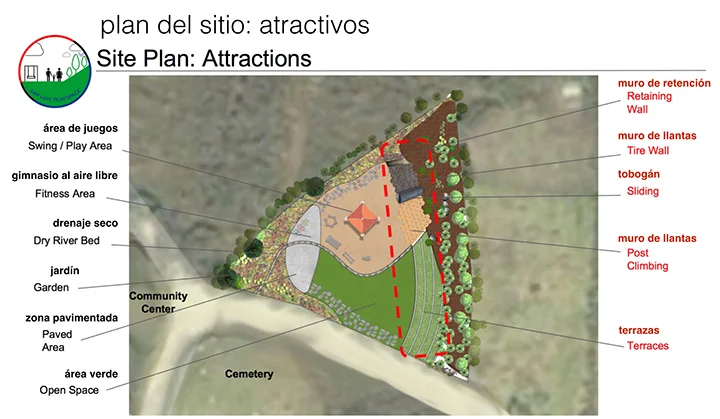
Copy of the plan designed by the Sustainable Futures Group
The space management plan was made with support from the Sustainable Futures Program of the Monteverde Institute, the finished park will include: sharing spaces with tables and chairs, paths, open areas, and native plant gardens and fruit trees. It also includes stone bleachers, a recycled tire wall that can be used for climbing, a slide, a carrousel, and a space for playing Costa Rican traditional games. For its construction we tried to use recycled material as much as possible (ex. tires and metal pipes) and materials from the location (ex. rocks).
But, what about the money to build it? ---This is usually the first question people have, but in reality there is no excuse. If you have the goal and the people supporting it, it’s possible. We have managed to get a lot done with volunteers, donations of materials, designs, funds, etc.
Our perseverance, work and partnerships are part of the recipe to this successful project!
For more information about this project, or if you wish to collaborate please contact:
Tel 2645 7485. Email trcsanluis@gmail.com face: San Luis de Monteverde
Asociación de Desarrollo Integral de San Luis
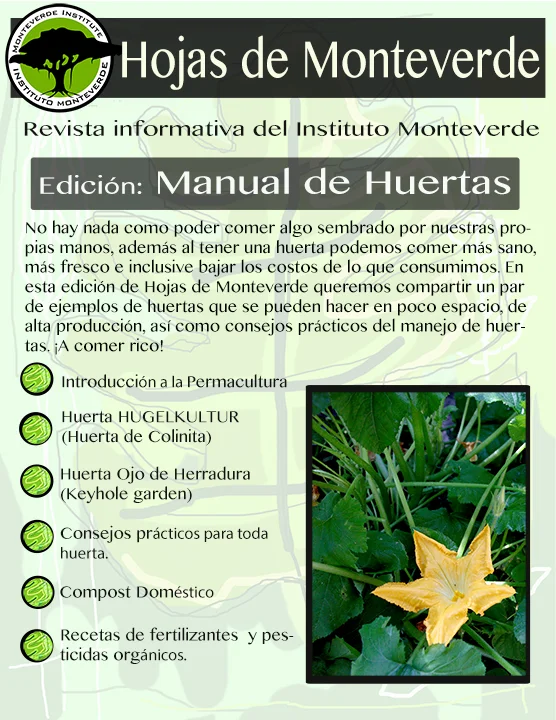
Manual de Huertas - Vegetable Garden Manual
El Instituto Monteverde hace publicaciones para la comunidad, en este caso fue una manual de huertas para poder hacerlas en casa, aquí se lo dejamos en versión digital y pueden pasar el Instituto si quieren uno impreso! /
The Monteverde Institute does publications for the community in this case it's a manual on how to make a vegetable garden at home, this is the digital version, and we have a printed version at the MVI if you are interested.


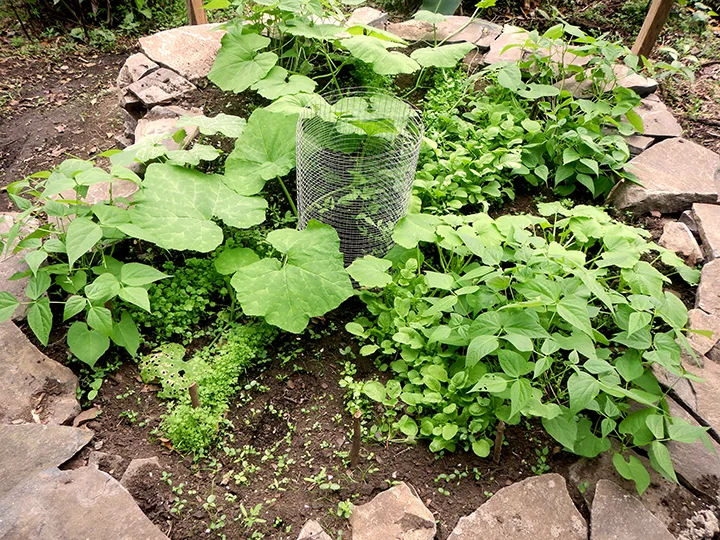
Keyhole Garden- Jardín Ojo de Herradura-Costa Rica.
Manual on how to make a KeyHole garden in the tropics. This is a high yielding agricultural system.---Manual de como hacer una huerta Keyhole en zonas lluviosas.
Keyhole Garden a la Tica: Organic and Sustainable
Sara Arias, Emily Bissett, Constanza Carney, Lillie Dao, Alejandro Garcia, Zuhra Malik
Globalization and Community Health Field School National Science Foundation REU Program University of South Florida
Monteverde Institute
Monteverde, Costa Rica May 29 – August 3, 2013
Adaptación de Keyhole para Latinoamérica en lugar lluvioso. --- Keyhole adaptation to rainy area in Latin America, this is a printable brochure.
Side one of the brochure on hoy to make a keyhole.
Side two of the brochure on how to make the keyhole.


RECOMMENDATIONS
Keyhole Construction Recommendations and Alternatives
Although the exterior of both Monteverde Institute demonstration keyhole gardens were constructed using large stones, there are many other feasible alternatives. These materials were used due to greatest availability to the Institute. Other potential exterior materials suggested by community advisors include recycled materials (glass bottles, tires), lamina roofing material, cinderblocks, or bamboo/sticks.
The layers may also be varied depending upon what is most readily available to the household or organization constructing the garden. Many other kinds of manure, such as goat, rabbit, or cow, may be used instead of chicken manure and/or coffee shells. Limestone can be easily substituted for ash because both materials maintain the neutral balance of the soil and compost pH. Finally, as recommended by several focus group participants, dry leaves can be substituted for rice shells (gransa de arroz) depending upon what is accessible.
Additionally, many other materials, specifically recycled resources, may be implemented to facilitate drainage. Focus group members and community advisors proposed several drainage items options that included halved tires, inverted plastic crates, inverted plastic bottles, and bamboo shoots. These materials, especially used tires and plastic bottles, may require further research to ensure that they are safe for food production use.
Finally, much debate was raised with regard to the roof construction. Several focus group and interview participants stated that saran was the ideal material, while other members supported the use of clear greenhouse plastic. Either of these materials could be used to form the roof. Furthermore, the roof could incorporate covered sides, though this is not required. Each of these alternative materials could be incorporated in a future experimental research garden. Local community members who decide to create their own keyhole garden could also integrate these alternative materials.
For more information please write to us at info@mvinstitute.org.
----------------------------------------------------------------------------------------------------------------------------------
Ventajas jardín Ojo de Herradura:
Producción intensiva en espacio pequeño, tiene periodo de 5 años antes de volver a cambiar los sustratos, es relajante-terapeutico y tiene diseño universal, por ello es adecuado para personas adultas mayores, personas con discapacidad o mujeres embarazadas.