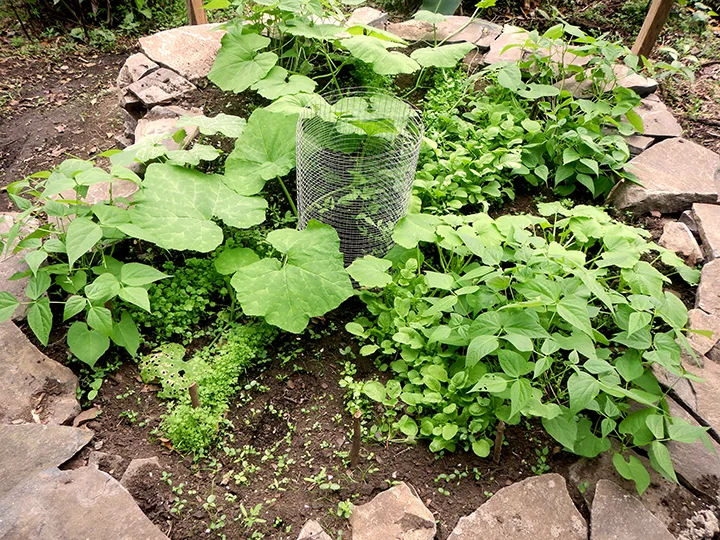
Keyhole Garden- Jardín Ojo de Herradura-Costa Rica.
Manual on how to make a KeyHole garden in the tropics. This is a high yielding agricultural system.---Manual de como hacer una huerta Keyhole en zonas lluviosas.
Keyhole Garden a la Tica: Organic and Sustainable
Sara Arias, Emily Bissett, Constanza Carney, Lillie Dao, Alejandro Garcia, Zuhra Malik
Globalization and Community Health Field School National Science Foundation REU Program University of South Florida
Monteverde Institute
Monteverde, Costa Rica May 29 – August 3, 2013
Adaptación de Keyhole para Latinoamérica en lugar lluvioso. --- Keyhole adaptation to rainy area in Latin America, this is a printable brochure.
Side one of the brochure on hoy to make a keyhole.
Side two of the brochure on how to make the keyhole.


RECOMMENDATIONS
Keyhole Construction Recommendations and Alternatives
Although the exterior of both Monteverde Institute demonstration keyhole gardens were constructed using large stones, there are many other feasible alternatives. These materials were used due to greatest availability to the Institute. Other potential exterior materials suggested by community advisors include recycled materials (glass bottles, tires), lamina roofing material, cinderblocks, or bamboo/sticks.
The layers may also be varied depending upon what is most readily available to the household or organization constructing the garden. Many other kinds of manure, such as goat, rabbit, or cow, may be used instead of chicken manure and/or coffee shells. Limestone can be easily substituted for ash because both materials maintain the neutral balance of the soil and compost pH. Finally, as recommended by several focus group participants, dry leaves can be substituted for rice shells (gransa de arroz) depending upon what is accessible.
Additionally, many other materials, specifically recycled resources, may be implemented to facilitate drainage. Focus group members and community advisors proposed several drainage items options that included halved tires, inverted plastic crates, inverted plastic bottles, and bamboo shoots. These materials, especially used tires and plastic bottles, may require further research to ensure that they are safe for food production use.
Finally, much debate was raised with regard to the roof construction. Several focus group and interview participants stated that saran was the ideal material, while other members supported the use of clear greenhouse plastic. Either of these materials could be used to form the roof. Furthermore, the roof could incorporate covered sides, though this is not required. Each of these alternative materials could be incorporated in a future experimental research garden. Local community members who decide to create their own keyhole garden could also integrate these alternative materials.
For more information please write to us at info@mvinstitute.org.
----------------------------------------------------------------------------------------------------------------------------------
Ventajas jardín Ojo de Herradura:
Producción intensiva en espacio pequeño, tiene periodo de 5 años antes de volver a cambiar los sustratos, es relajante-terapeutico y tiene diseño universal, por ello es adecuado para personas adultas mayores, personas con discapacidad o mujeres embarazadas.
Green walkways/ Aceras verdes
This project consistes on making green-paths as sidewalks from the gas station in Cerro Plano to Monteverde and was donde by the Sustainable Futures program of the Monteverde Institute along with the, Government counsel and neighbors. The Goucher and Mt. Holyoke program also colaborated on the construction. /
Proyecto de aceras verdes del Programa de Futuros Sostenibles del Instituto Monteverde en conjunto con el Consejo de Distrito de Monteverde y vecinos de la zona, este trayecto va desde la Gasolinera en Cerro Plano hasta Monteverde. El programa de Goucher y Mt. Holyoke también ayudaron con el proyecto.