
Campamento Las Hormiguitas
Campamento las Hormiguitas (Camp of the Ants) has completed the 7th season. When you teach someone something you know, you learn it better and that knowledge goes on to be shared again and again.
El Campamento las Hormiguitas ha completado su séptima temporada. Cuando uno comparte con alguien algo que sabe, lo aprende mejor y ese conocimiento se multiplica una y otra vez.
Campamento las Hormiguitas (Camp of the Ants) has completed the 7th season. Las “Homiguitas” in Spanish, as you may already know, can refer to ‘little’ but also it’s a way to refer to something we care about and love. In our case, Las “Hormiguitas” represent all the amazing hard working kids that participate each year in our camp one way or another. In the 7 years the camp has operated nearly 300 teens from our small community have participated in our program.
The week-long day camp is for teens aged 12-15. Many of the campers return after age 15 to be camp Leaders (counselors). There are 7 communities within the larger community known as “Monteverde,” and surprisingly, many of the teens from one area didn’t know teens from another. We wanted to change that. Teens also didn’t feel empowered and we wanted to change that too. Some adults had bad impressions of teenagers; we felt this had to change for the well-being of our larger community.
Days of fun and games are followed by days of fun in community giving. In addition to splashing in mud pits, tree climbing and ziplining, team building exercises, cheering each other in team sports and other traditional camp activities, campers have painted the recycling centers, stairs and walkways, created signs, helped older members of the community with chores and companionship, and planted native plants in a roundabout at La Cruz.
When you teach someone something you know, you learn it better and that knowledge goes on to be shared again and again. The applicants for the youth Leadership positions receive a three-weekend leadership course. This course is open to anyone from the Monteverde area who is between 16 and 20 years old. At the end of the course ten leaders/counselors are selected from those who participated and want to apply. Although the others weren’t to be part of the summer’s camp staff, they received training and learning from the experience. Many, however, choose to become part of the camp as volunteers.
Campamento las Hormiguitas is providing opportunities not only to learn about leadership, but to practice it, opportunities that otherwise might not be available. Many of these young people have become community leaders and already have good experience in organizing, planning and carrying out activities to benefit others while having fun.
After the camp at least two other activities are planned, so campers can have fun together and cement the relationships they have built. Generally a great majority of the campers and leaders attend these free extra-camp activities.
Comments by former campers and leaders:
“My favorite part about the camp was that I learned lots of things, met new people and changed many bad attitudes I had”
“It’s the only place where I can be myself.”
“It's great to see kids shine for who they are. Here kids get to be kids, and learn how to get along in community by solving issues on their own” said a leader.
“We need more spaces like this, where we get a change to meet other young people outside of school activitites”.
Truthfully I loved all the camp, but the food was absolutly amazing, from another world.
If you would like to help, follow the link below:
https://monteverde-institute.org/donate-support.html
Your donations allow us to continue with this important community work.
Written by: Robert W. Howe
El Campamento las Hormiguitas ha completado su séptima temporada. Aunque pueden sonar pequeñas, en realidad “las hormiguitas” es el nombre que decimos con cariño para referirnos a todos(as) los (las) increíbles y laboriosos chicos(as) que participan cada año en nuestro campamento de una u otra manera. En los 7 años que hemos operado, casi 300 adolescentes de nuestra pequeña comunidad han participado en el programa.
El campamento tiene una semana de duración y es para adolescentes de 12 a 15 años. Muchos de los campistas continúan después de los 15 años para participar como líderes del campamento. Hay 7 comunidades dentro de la comunidad más grande conocida como "Monteverde", y sorprendentemente, muchos de los adolescentes de un área no conocían a los adolescentes de otra. Queríamos cambiar eso. Los adolescentes tampoco se sentían empoderados y queríamos cambiar eso también. Algunos adultos tenían malas impresiones de los adolescentes; sentimos que eso también tenía que cambiar para el bienestar de nuestra comunidad en general.
Los días de diversión y juegos son continuados por días de diversión en servicio a la comunidad. Además de salpicar en pozos de lodo, trepar árboles y hacer canopy, participar en ejercicios de trabajo en equipo, animarse mutuamente en deportes y otras actividades tradicionales de campamento, los campistas han pintado centros de reciclaje, escaleras y senderos, han creado letreros, han ayudado a los adultos mayores de la comunidad con sus labores y haciéndoles compañía, y han plantado plantas nativas en una rotonda en La Cruz.
Cuando uno comparte con alguien algo que sabe, lo aprende mejor y ese conocimiento se multiplica una y otra vez. Los solicitantes para puestos de liderazgo juvenil reciben un curso de liderazgo de tres fines de semana. Este curso está abierto a cualquier persona del área de Monteverde que tenga entre 16 y 20 años de edad. Al terminar, se seleccionan diez líderes de aquellos que participan y desean postularse. Aunque los otros(as) once no forman parte del equipo final, recibieron capacitación y aprendieron de la experiencia. Muchos, sin embargo, eligen ser parte del campamento como voluntarios, aunque no como líderes del campamento.
El Campa las Hormiguitas está brindando oportunidades no solo para aprender sobre liderazgo, sino para practicarlo, oportunidades que de otra manera podrían no estar disponibles. Muchos de estos jóvenes se han convertido en líderes comunitarios y ya tienen experiencia organizando, planificando y realizando actividades para beneficiar a otros, disfrutando del acto de servir.
Después del campamento, se planifican al menos dos actividades adicionales para que los participantes puedan divertirse juntos y consolidar las relaciones que han establecido. En general, una gran mayoría de los campistas y líderes participan de estas actividades.
Comentarios de ex campistas y líderes:
"Mi parte favorita del campa es que aprendí muchas cosas, conocí nuevas personas y cambié muchas actitudes que no me gustaban de mi".
"Es el único lugar donde puedo ser yo mismo sin que nadie me critique".
"Es genial ver a los campistas brillar por lo que realmente son, aquí los chicos(as) pueden ser y aprender cómo llevarse bien en la comunidad resolviendo los problemas por sí mismos", dijo un líder.
“Necesitamos más espacios como este, donde obtenemos un cambio para conocer a otras personas jóvenes fuera de las actividades escolares”.
"Realmente me encantó todo el campa, aunque la comida siempre era de otro mundo".
Si desea ayudar, siga el siguiente enlace:
https://monteverde-institute.org/donate-support.html
Sus donaciones nos permiten continuar con este importante aporte comunitario que realizamos.
Escrito por Robert W. Howe
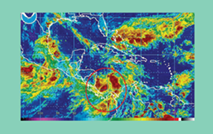
Tropical Storm Nate and what the Community of Monteverde Learned
Tropical storms in Costa Rica have become stronger in recent years, more frequent, and are lasting longer since records began in the 1880s.
Las tormentas tropicales en Costa Rica se han vuelto más fuertes en los últimos años, son más frecuentes y duran más en base a los registros que se comenzaron en la década de 1880.
Shortly after Tropical Storm Nate, Deb Hamilton, Executive Director of the Monteverde Institute wrote:
One prediction of global climate change is an intensification of weather events. While the proven scientific process does not permit a single event to constitute a conclusion, Tropical Storm Nate should be noted in the accounts of multiple anomalies that are occurring throughout the world. Here we would like to share the precipitation and wind data from our weather station at the Monteverde Institute.
Tropical Storm Nate began on Wednesday, October 4th with a rainfall of 155.4 mm (6.12 inches). The precipitation amount for Thursday, October 5th was 364.0 mm (14.33”) for a total rainfall of 519.4 mm (20.45”) over the two days. This rainfall was accompanied by winds of 35.4 km/hour from the west on the 4th and 45.1 km/hour from the WNW on the 5th. The following day, October 6th, was relatively dry with 17 mm of precipitation but still windy with 37 km/hour winds then coming from the ESE.
This rain fell on soils that were already saturated from the 687.1 mm (27.05 inches) of rain received in the month of September and the 102.3mm that fell on October 1st through 3rd.
Annual precipitation in the zone ranges between 3000-4500 mm of precipitation. We would expect the lower end of the rainfall at 1400m of elevation, meaning that Tropical Storm Nate contributed 17% of our annual rainfall – in just two days. Total rainfall from September 1st through October 7th totals 1.33 meters of precipitation.
Impermeable clay layers become slippery slopes as rain penetrates through the top layers of our soil. Small particles act as ball bearings as the water moves laterally across the clay layer, carrying the complete upper soil and vegetation down in landslides. Karen Gordon described the San Luis Valley as an area where a giant cat with long nails scratched the mountain slopes as it walked through. Many areas have been greatly affected.
We applaud all the individuals and organizations that worked diligently during this storm to restore the well-being of the communities, we commend the the residents of the zone for their collaboration and resilience, and we hold close to our hearts all those that lost property and income in this event.
In October of 2018, Deb Hamilton, Randy Chinchilla and Jessie Zuniga (sp) reported the community more details of the aftermath and what was learned.

The following is what we learned from Nate that will be helpful for us and other communities in other emergencies:
Nate wasn’t a hurricane, but “merely” a tropical storm; meteorologists consider a tropical storm one that has sustained winds greater than 39 mph. Tropical Storm Nate began on October 1, 2017 and hung around the Monteverde area for two more days. During that time it dropped 102.3 mm of rain (on top of the rainfall from an unusually wet September) which “fell” horizontally, shaking trees to their very roots and twisting deep into the soil that became wetter and weaker, by the hour.
During the storm there were hundreds of landslides. Surprisingly, they were all within forested land. Everyone thought that the forests would protect slopes from collapsing, but that wasn’t the case. In the Monteverde area at least three homes were destroyed in landslides. The stream by La Cascada became a torrent that ripped out the road, isolating Monteverde and destroying three homes. In San Luis La Trocha was blocked and one home completely destroyed as the owners scrambled to safety through a window as the house was collapsing around them. Education throughout Costa Rica was interrupted as 72 schools were damaged and harvests were damaged or destroyed, leaving workers without crops to harvest and owners without income. President Solis called Nate “the worst disaster ever in Costa Rica.”
As much as 60% of the country was affected.
124,000 acres of pasture ruined
437 highways, 42 bridges, 20 drainage systems
14 people died in one of the landslides
Altogether there was more than $562 million in damages. With a GDP in 2014 of $50 Billion This represents a bit more than 1.24 of that GDP.
Tropical storms have become stronger in recent years, more frequent, and are lasting longer and affected lands further south than since records began in the 1880s. What will they be like in the future, and how can we better prepare for them? Monteverde, with its spirit of cooperation and caring, managed better than many communities. After a year Monteverde is largely recovered while many communities in the country are still struggling. What made the difference?
Slopes more than 15% were the ones most likely to collapse. The trees provided a protection only to a point. If the soil was soaked well below the roots the weight of the forest perhaps exacerbated the slide. The trees within the slide either acted as a plow, pushing other forest and debris further downhill, or they backed up, forming dams. If the dams held, the damage was more limited, but if the dams failed the extra debris and water caused greater damage.
The Institute’s GIS expert, Randy Chinchilla, has studied 29 of the slides using aerial photos and drones, and has created a map to show where the areas of greatest danger lie, good information for developers considering construction in the future. In the study area of 8558 hectares, all 29 of the landslides were forested. The slides were of many types depending on soil type, slope, type of slide-whether it was a slope fall, a sliding away of wet soil from a firm base, or from erosion by wild-running streams. What became clear is that slopes of 15% or more were the most dangerous. It wasn’t only the immediate danger, when a mashup of trees and debris bull-dozed its way downhill, but later when the debris formed dams that backed up water as they broke and flushed everything downhill in a destructive force that flooded and buried roads, pastures, parts of forests, and streambeds.
The human effects were interesting, ranging from the tragic to the inspirational. Jesse Zuñiga studied the social aspects of the storm, to learn more about how people reacted to the emergency and what they did to help make the recovery so fast. The Community pulled together remarkably well, better than many communities it seems, and after a year much of the damage has been repaired. She studied four aspects: how people adapted, what they did to recuperate, how they prepared for this event and how they are planning for the future. Overall she studied how resilient they were and what created that resilience. Nate created a new reality, which often happens after a trauma. This is being referred to as a “Third State,” a term that is credited to Nalini Nadkarni. At a meeting of community groups recently, the Monteverde Community Fund representatives were surprised at how other communities so highly respected the Monteverde area community organizations and the work they did.
Jessie interviewed 52 people in the zone, from Monteverde, Cerro Plano and San Luis in particular, the areas which had been most affected and isolated. In this area she found that without exception, in the minds of the people affected, the first priority was people. Neighbors sought out each other asking, are you okay? Do you have food? Water? They shared resources, worked to communicate needs, concerns, pitched in to clear roads and meet various needs. There was a strong sense of community already but most of the interviewees felt that the storm had increased the feeling of a tight-knit community, involving themselves in the needs others and becoming conscientious volunteers.
During the storm the Monteverde Institute became a center for information, support, even a place to get water and to prepare meals in their commercial kitchen. The local Emergency Commission has requested that for emergencies the Institute accept this as an official responsibility, which they have accepted. This means that in a future emergency supplies will be provided to the Institute (beds, water, medicines, etc), so it can act as a refuge area.
The Monteverde Institute and the Costa Rican Conservation Foundation been working in reforestation the area for more than 20 years. Each year they provide at least 10,000 seedling trees of critical varieties to families and farmers. In these years they have provided 250,000 trees of 140 species to 43 families as well as to various nature reserves. Naturally, they were concerned about the survival rate of the young trees planted in June of 2017 and hurried to evaluate the situation. Debra Hamilton led research into 3 species from different families (Fabaceae, Lauracacae, and an Anacardiaceae. Tropical Storm Nate’s pounding rains negatively affected the survival of the seedlings planted that year. They were happy to discover that although the Inga did not survive well the others had survival rates of over 70%.
The Institute created a huge poster, 4’x 8’, titled “Tropical Storm Nate: The Resilience of Conservation Efforts, Forests, and the Community of Monteverde, Costa Rica. This poster addressed the questions of how did Tropical Storm Nate affect the landscape, How is habitat restoration affected by large precipitation events, and how resilient is the Monteverde Community?
The poster was designed to help not only educate about the storm, but to prepare for future weather emergencies. Research for this poster was performed by students from Mt Holyoke and Goucher Colleges and Duke University. It was presented at the Ecological Society of America conference in New Orleans in August, and was widely appreciated because all factors for recovery were considered-physical, social, emotional.
Please feel free to view and use our poster with the following link:
https://drive.google.com/open?id=1yPdelAPevqUnz6ptIK-pdpMteJpohi5W
***Remember to include the reference:
Hamiltlon D, Chincilla R and Zúñiga J. Tropical storm Nate: the resilience of conservation efforts, the environment and community – Monteverde, Costa Rica [version 1; not peer reviewed]. F1000Research 2018, 7:1439 (poster) (doi: 10.7490/f1000research.1116062.1)
Written by Robert W. Howe
Poco después de la Tormenta Tropical Nate, Deb Hamilton, la Directora Ejecutiva del Instituto Monteverde escribió:
Una predicción del cambio climático global es una intensificación de los eventos climáticos. Si bien el proceso científico comprobado no permite que un solo evento constituya una conclusión, la Tormenta Tropical Nate debe de anotarse en las cuentas de múltiples anomalías que están ocurriendo en todo el mundo. Aquí nos gustaría compartir los datos de precipitación y viento de nuestra estación meteorológica en el Instituto Monteverde.
La Tormenta Tropical Nate comenzó el miércoles 4 de octubre con una precipitación de 155.4 mm (6.12 pulgadas). La cantidad de precipitación para el jueves 5 de octubre fue de 364.0 mm (14.33 ") para una precipitación total de 519.4 mm (20.45") durante los dos días. Esta lluvia estuvo acompañada por vientos de 35.4 km / hora desde el oeste el 4 ° y 45,1 km / hora desde el ONO hasta el 5 °. El día siguiente, 6 de octubre, fue relativamente seco con 17 mm de precipitación, pero todavía ventoso con vientos de 37 km / hora provenientes del ESE.
Esta lluvia cayó sobre suelos que ya estaban saturados de los 687.1 mm (27.05 pulgadas) de lluvia recibidos en el mes de septiembre y los 102.3mm que cayeron del 1 al 3 de octubre. La precipitación anual en la zona oscila entre los 3000-4500 mm. La Tormenta Tropical Nate contribuyó con el 17% de nuestra precipitación anual, en solo dos días. Las lluvias totales del 1 de septiembre al 7 de octubre totalizan 1,33 metros de precipitación.
Las capas de arcilla impermeables se convierten en pendientes resbaladizas a medida que la lluvia penetra a través de las capas superiores de nuestro suelo. Las pequeñas partículas actúan como cojinetes de bolas cuando el agua se mueve lateralmente a través de la capa de arcilla, arrastrando el suelo superior completo y la vegetación hacia abajo en deslizamientos de tierra. Karen Gordon describió el Valle de San Luis como un área donde un gato gigante con largas uñas rasguñaba las laderas de la montaña mientras caminaba. Muchas áreas se han visto muy afectadas.
Aplaudimos a todos los individuos y organizaciones que trabajaron diligentemente durante esta tormenta para restaurar el bienestar de las comunidades, felicitamos a los residentes de la zona por su colaboración y resistencia. Mantenemos cerca de nuestros corazones a todos aquellos que perdieron propiedades e ingresos en este evento.
En octubre de 2018, Deb Hamilton, Randy Chinchilla y Jessie Zuniga (sp) informaron a la comunidad más detalles de las consecuencias y lo que se aprendió.
Lo siguiente es lo que aprendimos de Nate que será útil para nosotros y otras comunidades en otras emergencias.
Nate no fue un huracán, sino "simplemente" una tormenta tropical. La Tormenta Tropical Nate comenzó el 1 de octubre del 2017 y se mantuvo en el área de Monteverde por dos días más. Durante ese tiempo, cayó 102.3 mm de lluvia (sumado a las lluvias de un inusualmente húmedo mes de septiembre) que “cayó” horizontalmente, sacudiendo los árboles hasta sus mismas raíces y retorciéndose profundamente los suelo los cuales se volvieron más húmedos y débiles a cada hora.
Durante la tormenta hubo cientos de derrumbes. Sorprendentemente, todos estaban dentro de tierras boscosas. Todos pensaron que los bosques protegerían las laderas de un colapso, pero ese no fue el caso. En el área de Monteverde, al menos tres casas fueron destruidas por deslizamientos de tierra. El arroyo de La Cascada se convirtió en un torrente que arrancó la carretera, aislando a Monteverde y destruyendo tres casas. En San Luis, la Trocha fue bloqueada y una casa completamente destruida. Los propietarios se apresuraron a salir por la ventana mientras la casa se derrumbaba a su alrededor. La educación en toda Costa Rica se interrumpió debido a que 72 escuelas sufrieron daños y las cosechas fueron dañadas o destruidas, dejando a los trabajadores sin cultivos para cosechar y los propietarios sin ingresos. El presidente Solís dijo que Nate era "el peor desastre en Costa Rica".
El 60% del país se vio afectado.
• 124,000 hectáreas de pasto en ruinas
• 437 carreteras, 42 puentes, 20 sistemas de drenaje.
• 14 personas murieron en uno de los derrumbes
En total hubo más de $ 562 millones en daños. Con un PIB en 2014 de $ 50 mil millones, esto representa un poco más de 1,24 de ese PIB.
Las tormentas tropicales se han vuelto más fuertes en los últimos años, son más frecuentes, duran más y afectan a las tierras más al sur en base a los registros que se comenzaron en la década de 1880. ¿Cómo serán en el futuro y cómo podemos prepararnos mejor para ellos? Monteverde, con su espíritu de cooperación y cuidado, se manejó mejor que muchas comunidades. Después de un año, Monteverde se ha recuperado considerablemente mientras muchas otras comunidades en el país todavía están luchando. ¿Qué hizo la diferencia?
Las pendientes de más del 15% fueron las más propensas a colapsar. Los árboles proporcionaron protección hasta sólo cierto punto. Si el suelo se empapaba bien por debajo de las raíces, el peso del bosque probablemente empeoraba el deslizamiento. Los árboles dentro del tobogán actuaron como un arado, empujando otros bosques y escombros hacia abajo, o retrocediéndose, formando represas. Si las represas se mantenían, el daño era más limitado, pero si las represas fallaban, los escombros adicionales y el agua causaban un daño mayor.
El experto en SIG del Instituto, Randy Chinchilla, ha estudiado 29 de los deslizamientos utilizando fotos aéreas y aviones no tripulados, creando un mapa para mostrar dónde se encuentran las áreas de mayor peligro, buena información para los desarrolladores que consideran la construcción en el futuro. En el área de estudio de 8558 hectáreas, todos los 29 de los deslizamientos de tierras fueron en áreas boscosas. Los deslizamientos fueron distintos según el tipo de suelo, la pendiente y el tipo de deslizamiento. Lo que quedó claro es que las pendientes de 15% de inclinación o más fueron las más peligrosas. No solo fue el peligro inmediato de cuando una mezcla de árboles y escombros se derrumba cuesta abajo, sino que más tarde, cuando los escombros formaron represas que luego rompían y tiraban todo hacia abajo con una fuerza destructiva que inundaba enterrando caminos, pastizales, partes de bosques y arroyos.
Los efectos humanos fueron interesantes, desde lo trágico hasta lo inspirador. Jesse Zuñiga estudió los aspectos sociales de la tormenta para aprender más sobre cómo reaccionó la gente ante la emergencia y qué hizo para ayudar a que la recuperación fuera tan rápida. La comunidad se organizó notablemente bien, mejor muchas otras comunidades y después de un año, gran parte del daño ha sido reparado. Estudió cuatro aspectos: cómo se adaptaron las personas, qué hicieron para recuperarse, cómo se prepararon para este evento y cómo planean para el futuro. En general, estudió qué tan resistente fue la reacción de la comunidad y su capacidad de recuperación. Nate creó una nueva realidad, que a menudo sucede después de un trauma. Esto se conoce como un "tercer estado", un término que se acredita a Nalini Nadkarni. En una reciente reunión de grupos comunitarios, los representantes del Fondo Comunitario de Monteverde se sorprendieron de cómo otras comunidades quedaron impresionadas con las organizaciones comunitarias del área de Monteverde y el trabajo que hicieron.
Jessie entrevistó a 52 personas en la zona de Monteverde, Cerro Plano y San Luis en particular, las áreas más afectadas y aisladas. Encontró sin excepción que la primera preocupación de las personas afectadas fue el bienestar de las otras personas en la comunidad. Los vecinos se buscaron unos a otros preguntando, ¿Estás bien? ¿Tienes comida? ¿Agua? Compartieron recursos, trabajaron para comunicar necesidades, inquietudes, colaboraron para despejar caminos y satisfacer diversas necesidades. Ya existía un fuerte sentido de comunidad, pero la mayoría de los entrevistados sentían que la tormenta había aumentado el sentimiento de una comunidad muy unida, involucrándose en las necesidades de los demás y convirtiéndose en voluntarios conscientes. Durante la tormenta, el Instituto Monteverde se convirtió en un centro de información, apoyo e incluso un lugar para obtener agua y preparar comidas. La Comisión de Emergencias local ha solicitado que, en caso de emergencias, el Instituto sea un lugar oficial de albergue, responsabilidad que fue aceptada. Esto significa que en un futuro se proporcionarán suministros de emergencia al Instituto (camas, agua, medicamentos, etc.), para que pueda actuar como área de refugio.
El Instituto Monteverde y la Fundación de Conservación de Costa Rica han estado trabajando en la reforestación del área por más de 20 años. Cada año, proporcionan a las familias y agricultores al menos 10,000 árboles de plántulas de variedades críticas. En estos años, han proporcionado 250,000 árboles de 140 especies a 43 familias, así como a varias reservas naturales. Naturalmente, les preocupaba la tasa de supervivencia de los árboles jóvenes plantados en junio de 2017 y se apresuraron a evaluar la situación. Debra Hamilton dirigió la investigación de 3 especies de diferentes familias (Fabaceae, Lauracacae y Anacardiaceae). Las fuertes lluvias de la Tormenta Tropical Nate afectaron negativamente la supervivencia de las plántulas plantadas ese año. Se alegraron al descubrir que, aunque el Inga no sobrevivió bien las demás tuvieron tasas de supervivencia superiores al 70%.
El Instituto creó un enorme póster, 1,20 metros x 2,40 metros, titulado “ Tormenta Tropical Nate: Resiliencia de los esfuerzos de conservación, los bosques y la comunidad de Monteverde, Costa Rica”.
Este póster abordó las preguntas de cómo la Tormenta Tropical Nate afectó el paisaje, cómo se ve afectada la restauración del hábitat después de grandes eventos de precipitación y qué tan resistente es la comunidad de Monteverde.
El póster fue diseñado para ayudar no solo a educar sobre la tormenta, sino también a prepararse para futuras emergencias climáticas. La investigación para este cartel fue realizada por estudiantes de Mt Holyoke and Goucher Colleges y Duke University. Fue presentado en la conferencia de la Sociedad Ecológica de América en Nueva Orleans en agosto.
Por favor, siéntase libre en consultar y utilizar nuestro póster el cuál se puede acceder por medio del siguiente enlace:
https://drive.google.com/open?id=1yPdelAPevqUnz6ptIK-pdpMteJpohi5W
Recuerde de incluir la citación pertinente:
Hamiltlon D, Chincilla R and Zúñiga J. Tropical storm Nate: the resilience of conservation efforts, the environment and community – Monteverde, Costa Rica [version 1; not peer reviewed]. F1000Research 2018, 7:1439 (poster) (doi: 10.7490/f1000research.1116062.1)
Escrito por Robert W. Howe

Adventure Girls in Monteverde - Chicas de Aventuras en Monteverde
Young people are often told that they are the leaders of tomorrow. Jorie and Julia Bachus and their friends decided that they wanted to take the lead today instead of waiting.
A menudo se les dice a los jóvenes que son los líderes del mañana. Jorie y Julia Bachus junto a sus amigas decidieron que querían tomar la iniciativa hoy en lugar de esperar.

Jorie and Julia Bachus with family.
Young people are often told that they are the leaders of tomorrow. Jorie and Julia Bachus and their friends decided that they wanted to take the lead today instead of waiting. In the case of Jorie and Julia, this goes back to when they were five and eight years old and first came to Costa Rica, bringing with them contributions to help the Children’s Eternal Rain Forest to grow.

This June, they returned with six of their friends aged 12 to 17 and about $7000 the eight girls had raised as contributions for Monteverde Institute’s reforestation program. But the girls also came to plant trees.
They were so excited to spend time planting trees, meeting Debra Hamilton and Victorino Molina, touring Curi Cancha with their wonderful guide Mark Wainwright, meeting local teens from the zone and more. They’ve carried their enthusiasm back home with them now, hoping to return and with the dedication to making a difference in the world despite their age.

Written by Bob Howe.


Jorie y Julia Bachus con su familia.
A menudo se les dice a los jóvenes que son los líderes del mañana. Jorie y Julia Bachus junto a sus amigas decidieron que querían tomar la iniciativa hoy en lugar de esperar. En el caso de Jorie y Julia, esto se remonta a cuando tenían cinco y ocho años cuando llegaron por primera vez a Costa Rica, trayendo consigo contribuciones para ayudar en la protección del Bosque Eterno de los Niños.

Este junio, regresaron con seis de sus amigas de entre 12 y 17 años y alrededor de $ 7000 que las ocho chicas habían recaudado como contribuciones para el Programa de Reforestación del Instituto Monteverde. Pero no se quedaron ahí, también vinieron a plantar árboles.
Estaban tan emocionadas de pasar tiempo plantando árboles, conociendo a Debra Hamilton y Victorino Molina, recorriendo Curi Cancha con su maravilloso guía Mark Wainwright, conociendo a los adolescentes locales y más. Han llevado su entusiasmo a casa ahora, con la esperanza de regresar y con la dedicación de hacer una diferencia en el mundo a pesar de su edad.

Escrito por Bob Howe.
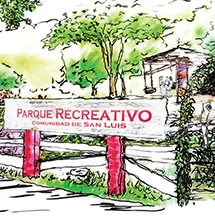
Parque Recreativo * San Luis * Recreational Park
San Luis decidió construir un parque. Que se complemente como una oportunidad recreativa adicional.
--- San Luis decided to build a park that will complement the other recreational opportunities.


Parque Comunitario: Una oportunidad de recreación para la comunidad.
Por: Noé Vargas - Presidente Junta Directiva Asoc. Desarrrollo San Luis
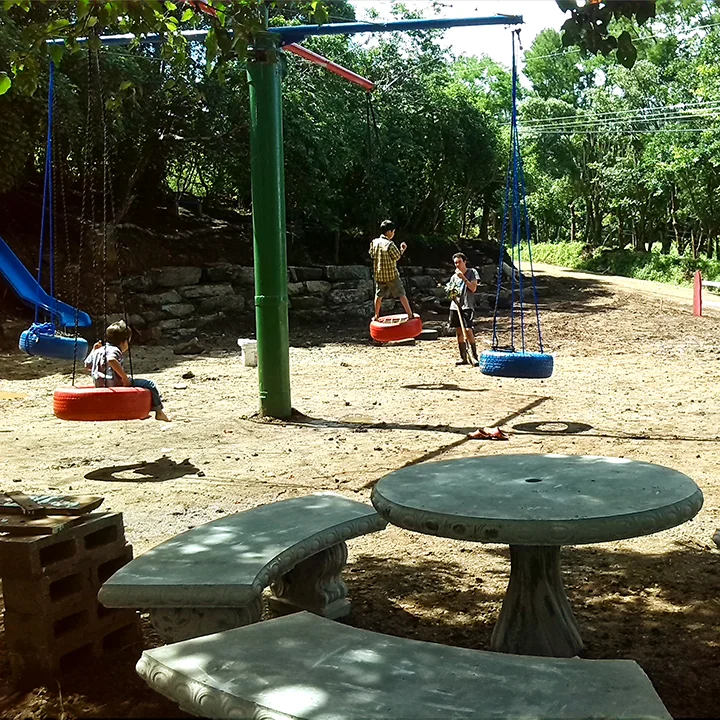
Fotos del parque - aún está en proceso
La recreación y los espacios de encuentro social son una necesidad para el sano desarrollo de las comunidades. En Monteverde es usual escuchar que la falta de oportunidades de recreación para las familias, es una limitación que afecta nuestra comunidad. Ciertamente las condiciones de vida actuales, exigen ofrecer más y diversas alternativas recreativas a la población en general.
A través de un parque recreativo se puede ofrecer oportunidades como: recreación familiar, sana diversión, fomento a la salud física y emocional, encuentro comunitario, compartir con respecto y armonía.
San Luis decidió construir un parque. Que se complemente como una oportunidad recreativa adicional, a las otras que ya existen administradas por la comunidad como: La red de senderos del Sendero Pacífico, la Plaza de fútbol, el Centro Educativo Cultural.
Este parque recreativo San Luis se construye en Finca La Bella, de manera que en muchas formas es un proyecto colaborativo. Más recientemente, se tomó la decisión de disponer de un área de 1500 metros de esta finca para construir el parque, ubicado muy estratégicamente al lado del Centro Educativo Cultural y muy céntrico para la comunidad.
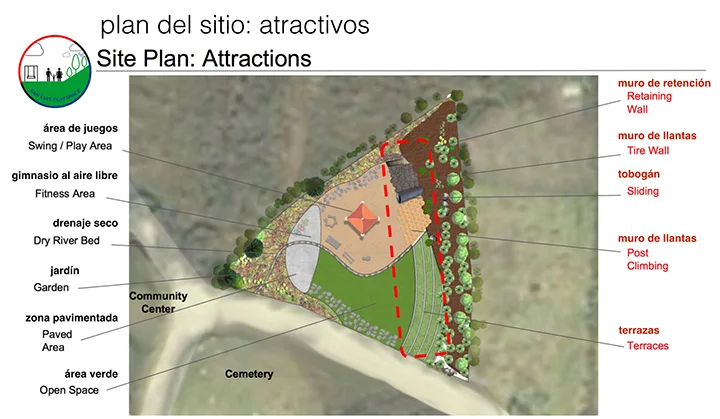
Copia del plan hecho por los estudiantes de Futuros Sostenibles.
La planificación del uso del espacio se realizó con el apoyo del programa de Futuros Sostenibles del IMV, y entre otras cosas incluirá: Áreas de estar con mesas y bancas, senderos internos, área de jardín, área con árboles nativos y frutales. Así como, graderías construidas con piedra, muro de llantas para jugar y como retén de suelo. Juegos como tobogán, carrusel, espacio para juegos tradicionales. Para su construcción, se ha tratado de reutilizar la mayor cantidad posible de materiales(ej llantas) y otros materiales de la región (ej piedra).
Pero, y el dinero para hacerlo? Es la pregunta que usualmente viene de primero.......No hay excusa. Si tiene el propósito y personas dispuestas a lograrlo se hace. Así se ha avanzado significativamente con aportes de mano de obra, materiales, maquinaria, diseños, fondos etc.
Perseverancia, trabajo, alianzas son parte de la receta en este exitoso proyecto!!!
Para más información u ofrecer su apoyo al proyecto contacte a:
Tel 2645 7485. Email trcsanluis@gmail.com face: San Luis de Monteverde
Asociación de Desarrollo Integral de San Luis
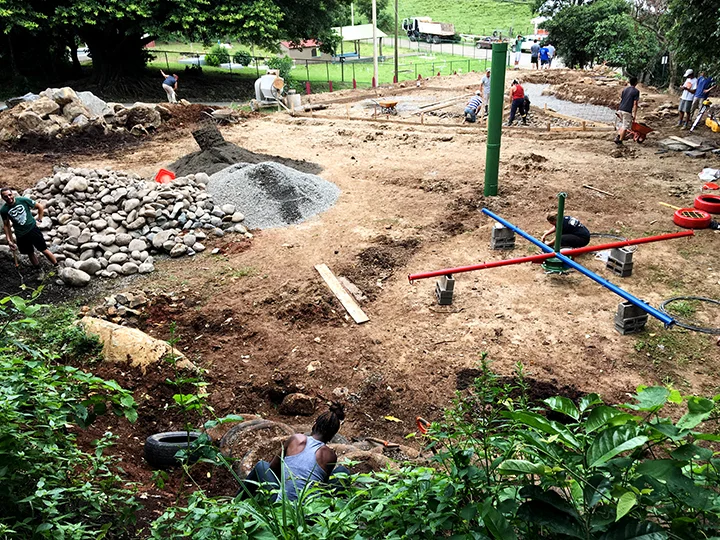
Fotos de miembros de la comunidad y estudiantes de Futuros Sostenibles trabajando en el proyecto.


Photos of the Sustainable Futures students with community members working on the park.

Community Park: A recreational Opportunity for the Community.
By: Noé Vargas –President of the Board of Directors of the San Luis Development Association

Putting the carousel together.
For a healthy community development it’s important to have spaces for recreation and social gatherings. In Monteverde it’s common to hear about the lack of recreation opportunities for families, and this is a limitation that has affected our community. Clearly current lifestyles demand to have a more diverse offer of recreative alternatives for the general population.
A recreational park offers opportunities such as: family entertainment, healthy amusement, promotion of healthy lifestyles, community encounters, respectful sharing and harmony.
San Luis decided to build a park that complements other recreational opportunities such as: the Pacific Pathway Network, the soccer field, and the Cultural Education Center.
This recreational park is being built in Finca la Bella, so in many ways it’s a collaborative project. Recently, the decision was made to use 1500 m (4900 ft.) of this farm’s area to build the park, located strategically next to the Cultural Education Center, and in a very centric location for the community.
Copy of the plan designed by the Sustainable Futures Group
The space management plan was made with support from the Sustainable Futures Program of the Monteverde Institute, the finished park will include: sharing spaces with tables and chairs, paths, open areas, and native plant gardens and fruit trees. It also includes stone bleachers, a recycled tire wall that can be used for climbing, a slide, a carrousel, and a space for playing Costa Rican traditional games. For its construction we tried to use recycled material as much as possible (ex. tires and metal pipes) and materials from the location (ex. rocks).
But, what about the money to build it? ---This is usually the first question people have, but in reality there is no excuse. If you have the goal and the people supporting it, it’s possible. We have managed to get a lot done with volunteers, donations of materials, designs, funds, etc.
Our perseverance, work and partnerships are part of the recipe to this successful project!
For more information about this project, or if you wish to collaborate please contact:
Tel 2645 7485. Email trcsanluis@gmail.com face: San Luis de Monteverde
Asociación de Desarrollo Integral de San Luis
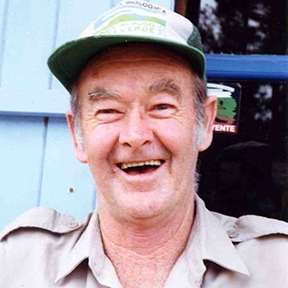
About Walking with Wolf - Sobre el caminar con Wolf
"It is a great privilege to have been in the right place at the right time, and through a quirk of fate in agreeing to take a hike with this man, have been given the opportunity to share his wonderful life. "
---" Ha sido un gran privilegio el haber estado en el momento justo en el lugar correcto, y que por un capricho del destino al aceptar ir en una caminata con este hombre, he tenido la oportunidad de compartir su hermosa vida. "
About Walking with Wolf
By: Kay Chornook

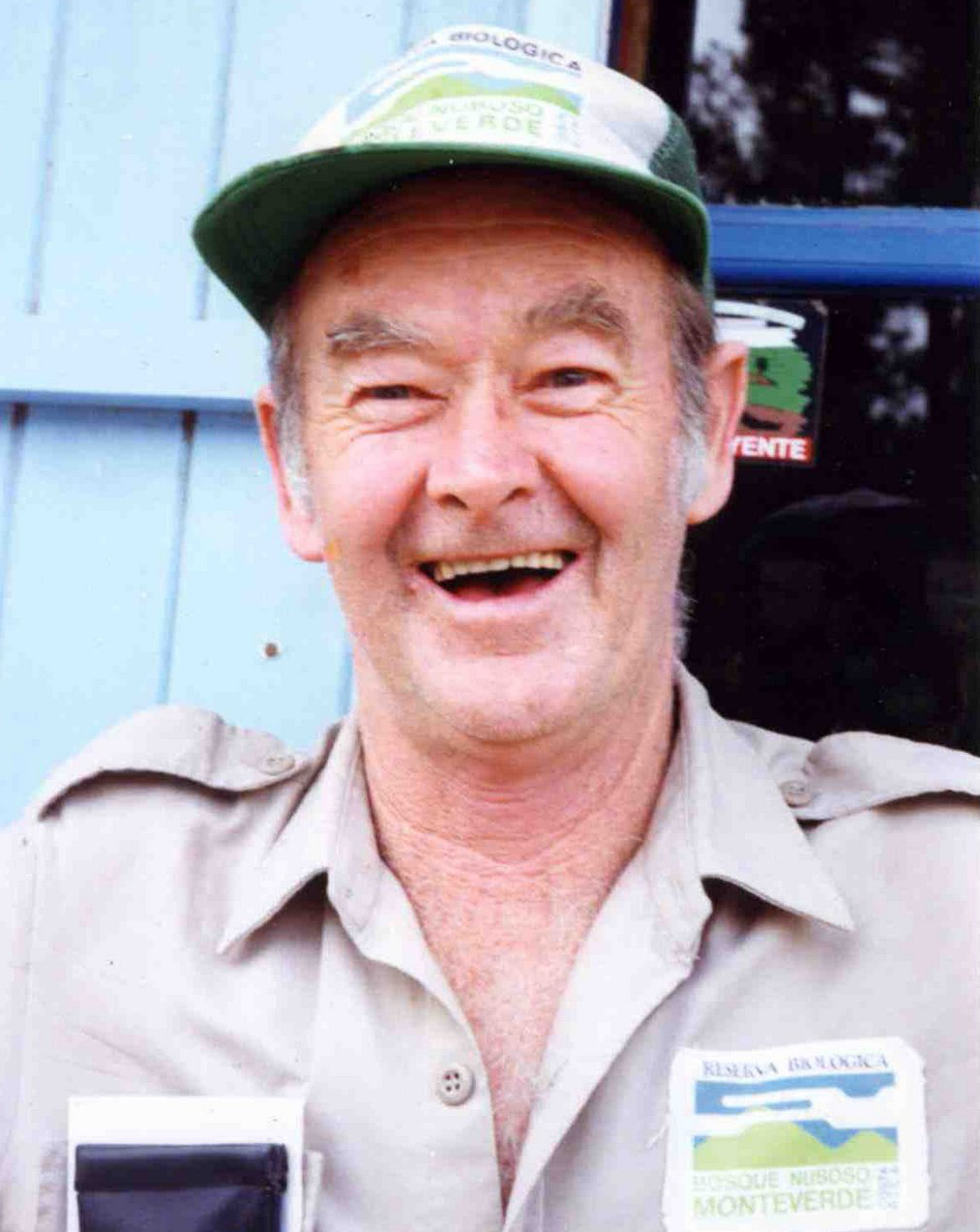
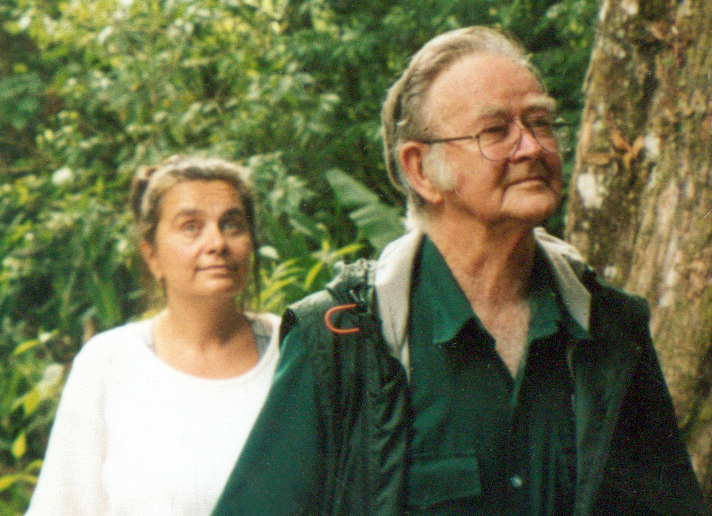
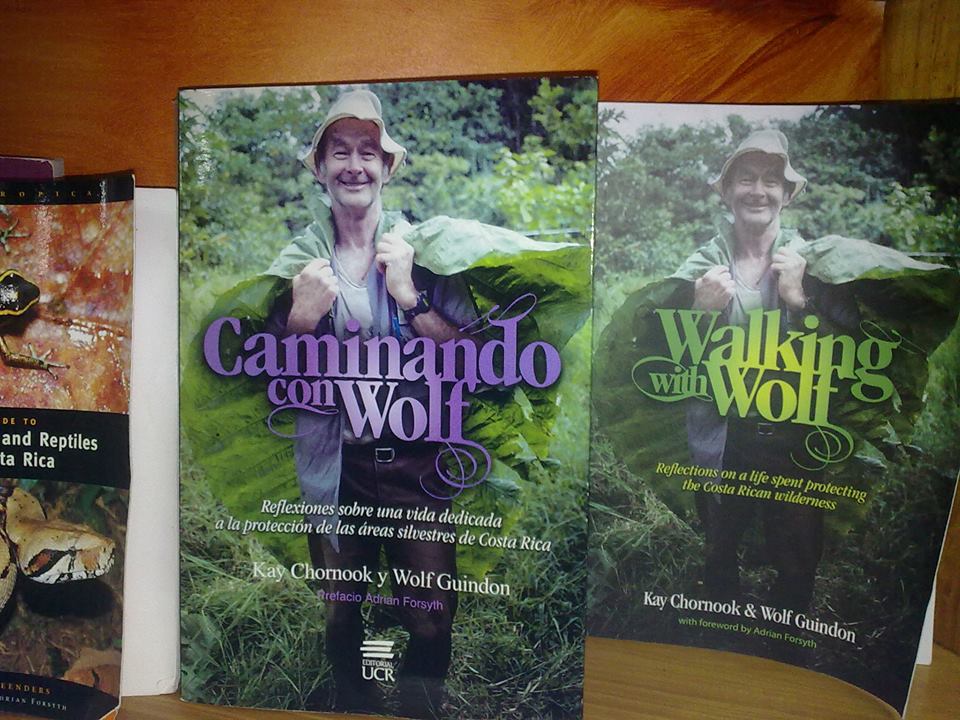
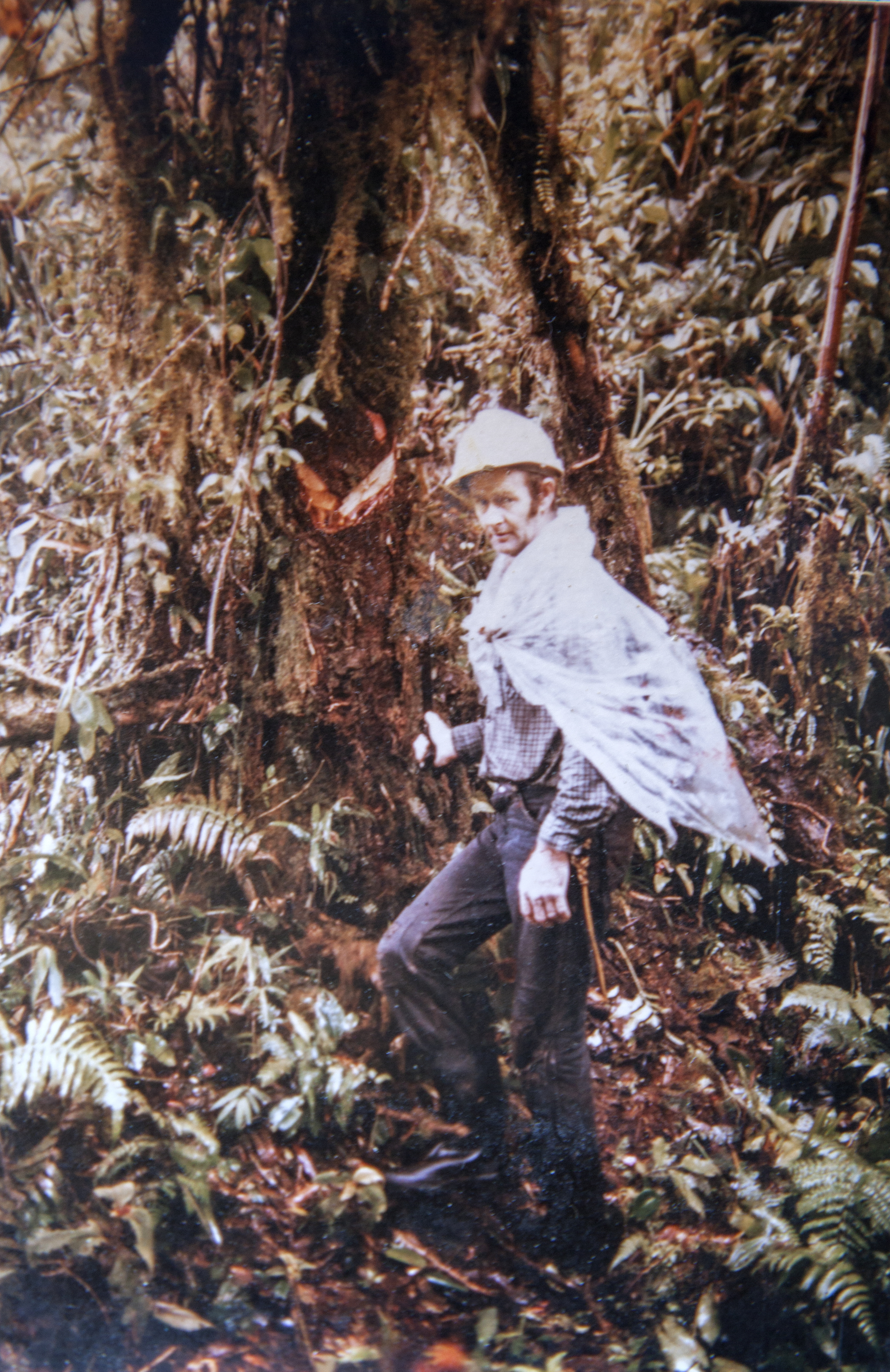
I arrived in Monteverde in February 1990, totally naïve about what I would find but, like so many others, immediately smitten with the place. Within a couple of days of my arrival, I met Wolf Guindon, one of the original group of Quakers who had come up the green mountain in 1951 and started dairy farming in this community. Twenty years later, in 1972, Wolf was a founder of the Monteverde Cloud Forest Reserve and became the first forest guard in the area. The day we met he asked me if I would like to join him on a hike through the cloud forest down into the valley of the Peñas Blancas River. A few days later I found myself slogging through the lush wet rainforest, trying to keep up to this man who was definitely one of the fastest walkers on the planet. That hike lasted several days, covering several kilometers, and it was the beginning of a long journey that resulted in our book, Walking with Wolf: Reflections on a life spent protecting the Costa Rican Wilderness (Wandering Words Press, 2008).
I grew up hiking on the Bruce Trail in southern Ontario in Canada, a path that is tame by comparison to the trails I walked with Wolf. When I started following him along these mountainous tracks that twist through gnarly roots, wind along high cloudy ridges, and get lost at stream crossings or in the tangle of a massive fallen tree, I found it was often a test of endurance but always a great experience. On that first hike through Peñas, Wolf told us of his many adventures with wild animals, poisonous snakes and getting lost in the forest. I soon got him a tape recorder which became his companion for many years, and with it he recorded his colorful stories while reflecting on his life as a pioneer, his values as a Quaker and his experiences as a conservationist.
I had published short articles before, but had never thought about writing a book. Once I started listening to the Wolf tapes I knew that I was given a gift in meeting this extraordinary man who was willing to share his memories of a unique place in a unique time. As I transcribed the tapes, I understood that I would have to share these stories and that would mean writing a book. Over seventeen years I returned each year for several months to Monteverde and worked with Wolf on our project, often while walking, always while talking.
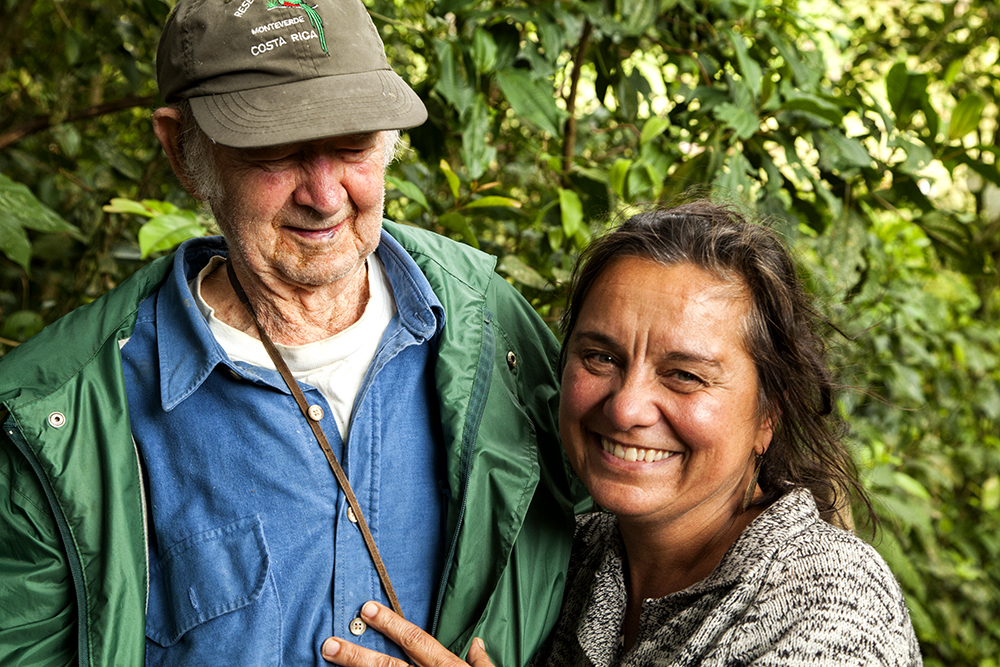
When I met him, he was a 60 year old man who would head off into the forest for several days, often alone, then race out to be at an important meeting or family event and just as quick head back into the forest. When we started down this road, I could barely keep up to Wolf, though I was thirty years younger, but as the years went by Wolf slowed down so our pace equalized. Now, at 85, he is experiencing the accumulation of all that abuse his body took over the decades spent wandering on rough terrain and sleeping on wet ground. Walking is no longer so easy for him.
Wolf and I worked together to get his stories down – he talked, I wrote, and together we slogged through the edited copy until Wolf had said what he wanted to say and I had written the narrative to the best of my ability. I left Monteverde in 2007 announcing that I wouldn’t return until the book was finished. I went north to Canada and there discovered what self-publishing meant, working with professionals who I hired to help edit and design the book. In May of 2008 I printed the first 2000 copies of Walking with Wolf and proudly returned to Monteverde where the community thankfully embraced our efforts. In a short time sales were such that it was necessary to print another 2000 copies. It is a thrill to know that our book is helping to spread the seed of conversation by telling the tales of a man committed to the conservation and protection of one of the planet’s most beautiful and diverse forests.
It was always our wish to see the book published in Spanish so that the many memories Wolf had related about his encounters and friendships with the local Costa Rican community could be shared with them. Shortly after the publishing of the book in English, the Tropical Science Center (CCT), the scientific organization that administers the Monteverde Reserve, decided to support a Spanish edition of the book and hired Wolf’s son, Carlos Guindon, to do the translation. In 2011 the University of Costa Rica Editorial Press (EUCR) recognized that this history was valuable enough to be made available in Spanish. Another very long process ensued, in which I played quality-controller and cheerleader while relying on the help of Spanish-speaking friends. Finally in June 2016 the Spanish edition, Caminando con Wolf, was published jointly by the EUCR and the CCT in Costa Rica.
It is a great privilege to have been in the right place at the right time, and through a quirk of fate in agreeing to take a hike with this man, have been given the opportunity to share his wonderful life. It allowed me to get to know Wolf’s wife Lucky who raised their eight children on a remote dairy farm on this lush green mountain while her husband worked at cutting trails through the surrounding forest for others to follow. One of Lucky’s exquisite pen and ink drawings graces the book, as do tales from family, friends and coworkers, all happy to share their own experiences of walking with Wolf. As Wolf’s days of wandering in his beloved forest are receding, it remains an honor to have joined with him in recording this bit of the history of Monteverde.
Kay Chornook is the Canadian author of “Walking with Wolf” and a migratory member of the Monteverde community. You can find copies of the book in many stores in Monteverde or by contacting Kay at kaychornook@gmail.com. The Spanish edition, “Caminando con Wolf” is available at the store of the Monteverde Cloud Forest Reserve or at the University of Costa Rica bookstore.
Note from the editor: While getting ready to post this blog Wilford Guindon passed. We consider it a true privilege to have known him and have had him be such an important member of our community, founder of our institution, and mentor of all who knew him. May you rest in peace, your spirit lives with us and everyone who follows your footsteps.



Sobre el caminar con Wolf:
Por: Kay Chornook
Llegué a Monteverde en febrero de 1990, ignorando por completo lo que iba a encontrar, y como muchas otras personas quede atónita con el lugar. A unos días de mi llegada conocí a Wolf Guindon, uno de los del grupo original de Cuáqueros que subieron a la montaña en 1951 y que comenzaron con ganadería en la zona. Veinte años más tarde, en 1972, Wolf fue uno de los fundadores del la Reserva de Monteverde y se convirtió en el primer guarda parques de la zona. El día que nos conocimos me preguntó que si me gustaría unirme en una caminata a través del bosque nuboso hacia el valle del río Peñas Blancas. Unos días después me encontré caminando costosamente por el frondoso bosque lluvioso, tratando de mantenerle el paso a este hombre que claramente era uno de los caminantes más rápidos del planeta. La caminata duró varios días, cubriendo muchos kilómetros, y a su vez fue el comienzo de un largo trayecto que resultó en un libro, Caminando con Wolf: Reflexiones de una vida dedicada a la protección del bosque (versión ingles. Wandering Word Press, 2008).
Yo crecí caminado en el sendero Bruce en el sur de Ontario en Canadá, un sendero que está domesticado en comparación con los senderos que caminé con Wolf. Cuando comencé a seguirlo por los caminos montañosos que se enroscan en raíces retorcidas, doblan por riscos ventosos, y se pierden en los cruces de las quebradas o en la maraña de un árbol gigante caído, me di cuenta que era una prueba de resistencia, pero siempre una maravillosa experiencia. En esa primera caminata a Peñas, Wolf nos habló sobre sus muchas aventuras con animales silvestres, culebras venenosas y perdidas en el bosque. Rápidamente decidí regalarle una grabadora, la cual se volvió su acompañante por muchas años, y en él, él documentó sus historias coloridas mientras reflexionaba sobre su vida como pionero, sus valores de cuáquero y sus experiencias como conservacionista.
Yo tenía algo de experiencia escribiendo artículos pequeños, pero nunca me imagine escribiendo todo un libro. Una vez que comencé a es escuchar los casetes de Wolf me di cuenta de que fue un regalo el haber conocido a este hombre tan extraordinario quien estaba dispuesto a compartir sus memorias de un lugar único en un momento único. Al ir transcribiendo los casetes entendí de que tenía que compartir estas historias y que eso implicaría escribir un libro. Por diez y siete años yo regresaba cada año por varios meses a Monteverde y trabajaba con Wolf en nuestro proyecto, muchas veces mientras caminábamos y siempre mientras hablábamos.
Cuando yo lo conocí el era un hombre de 60 años que solía ir a internarse al bosque por varios días, muchas veces solo, y después saldría apurado para estar en reuniones importantes o eventos familiares y con la misma velocidad otra vez volver al bosque. Cuando comencé a andar por este camino apenas podía seguirle los pasos a Wolf, a pesar de tener treinta años menos, pero conforme pasaban los años el paso de Wolf disminuyo hasta quedarnos iguales. Hoy a sus 85 años el está experimentando la acumulación del abuso que su cuerpo recibió por las décadas que paso andando por terrenos complicados y durmiendo en suelos húmedos. Caminar para él ya no es tan fácil.
Wolf y yo trabajamos juntos para documentar sus historias- el hablaba, yo escribía, y juntos nos afanábamos a trabajar en el boceto hasta que Wolf sentía que había dicho lo que quería decir y yo había escrito la narrativa de la mejor manera que podía. Yo me fui de Monteverde en el 2007 anunciando que no volvería hasta que libro estuviese terminado. Me fui al norte de Canadá y allí descubrí lo que auto-publicarse significaba, el trabajar con profesionales que yo tenía que contratar para ayudar a editar y diseñar el libro. En mayo del 2008 se imprimieron las primeras 2000 copias de Caminando con Wolf (versión ingles) y pude regresar a Monteverde orgullosa y en donde la comunidad agradeció nuestros esfuerzos. En poco tiempo las ventas fueron tales que tuvimos que imprimir otras 2000 copias. Es emocionante el saber que nuestro libro está ayudando a sembrar la semilla de la conversación al decir historias sobre un hombre comprometido con la conservación y protección de uno de los bosques más hermosos y diversos del planeta.
Siempre fue nuestro deseo el ver el libro publicado en español para que las memorias que Wolf había relatado sobre sus amistades con la comunidad costarricense pudieran ser compartidos con todos. Poco después de publicar el libro en ingles, el Centro Científico Tropical (CCT), la organización que administra la Reserva Monteverde, decidió apoyar la edición en español y se contrató al hijo de Wolf, Carlos Guindon, para que hiciera la traducción. En el 2011 la editorial de la Universidad de Costa Rica (EUCR) reconoció que esta historia era lo suficientemente valioso para que estuviera disponible en español. Después de otro proceso largo a seguir, en la cual yo jugué el rol de control de calidad y animadora mientras que me apoyaba en la ayuda de amigos de habla hispana. Finalmente en junio del 2016 la edición en español de Caminando con Wolf fue publicada en conjunto con la EUCR y el CCT en Costa Rica.
Ha sido un gran privilegio el haber estado en el momento justo en el lugar correcto, y que por un capricho del destino al aceptar ir en una caminata con este hombre, he tenido la oportunidad de compartir su hermosa vida. Me ayudó a conocer la esposa de Wolf, Lucky, quien crió a sus ocho hijos en una finca remota en esta montaña de verde exuberante mientras que su esposo trabajaba cortando senderos por el bosque para que otros pudieran andar. Uno de los hermosos dibujos de lapicero con tinta de Lucky adornan el libro, así como relatos de la familia, amigos y colaboradores, todos felices de contra sus propias experiencias de caminando con Wolf. A como los días de Wolf de andar por los bosque están cesando, sigue siendo un honor para mi el haberme unido con él para poder grabar este poco de la historia de Monteverde.
Kay Charnook es la autora de origen canadiense del libro “Caminando con Wolf” y es una integrante migratoria de la comunidad de Monteverde. Puedes encontrar copias del libro en muchas tiendas de Monteverde o contactando a Kay por medio de su correo: kaychornook@gmail.com. La edición en español, “Caminando con Wolf” está disponible en la tienda de la Reserva Monteverde o en las de la Universidad de Costa Rica.
Nota de la editora: Mientras nos estábamos alistando para publicar este artículo Wilford Guindon falleció. Consideramos que fue un privilegio el haberlo conocido y haber compartido con él. Él fue un integrante especial de la comunidad, fundador del Instituto Monteverde (entre otros) y mentor de todo quien lo conociera. Esperamos que descanse en paz y queremos asegurar que su espíritu estará vivo en todos aquellos que sigan sus pasos.