
Conservet = veterinary science including conservation issues / Conservet= veterinaria que include conceptos de concervación
Conservet is an on-site workshop that introduces veterinary students and veterinarians to conservation medicine concepts in the context of Costa Rica.
--- --- “Conservet” es un taller en locación que introduce estudiantes de veterinaria y veterinarios a conceptos de medicina de conservación en el contexto de Costa Rica.
(Para español favor de bajar).
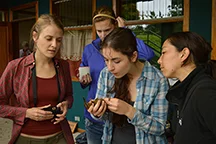
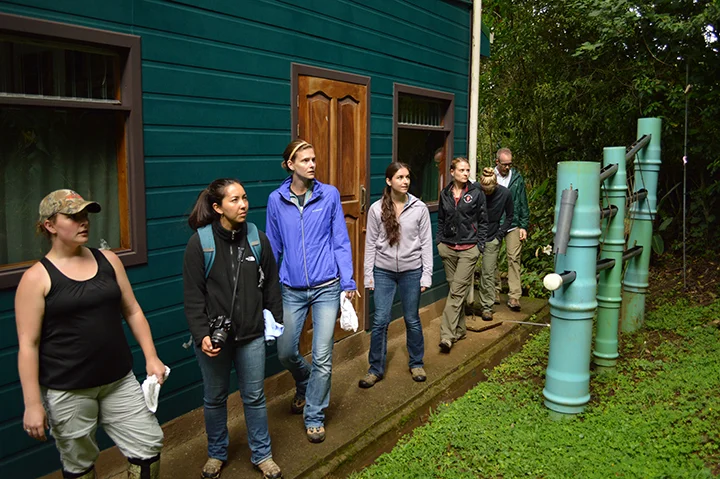
Conservet is an on-site workshop that introduces veterinary students and veterinarians to conservation medicine concepts in the context of Costa Rica. The overall objective of expanding the veterinary science view to include conservation issues is met through lectures, group discussions and problem-solving exercises. Students participated in hands-on immersion in field study methods among different forms of life, including birds, mosquitoes, frogs, and bats. This year, eight Conservet participants spent two weeks at the Texas A&M Soltis Center in San Isidro de Peñas Blancas and one week with the Monteverde Institute in order to learn more about the complexities of environmental functions and what consequences can occur when these natural processes are disrupted by regional and global disturbances, like agricultural practices or climate change. In these photos, students practice taking different measurements of bird physiology in addition to swabbing them for samples that can be sent to SENASA. The course is the creation of Dr. Raymond Tarpley (Conservet) and was co taught by Dr. Kurt Volle (Buffalo Zoo). The course involved many local and national experts and collaborations with Texas A&M University, the Monteverde Institute, SENASA, Costa Rican Health Ministry, the Bat Jungle, the ASIS Center, Universidad Nacional, ICE, Luna Nueva, and the Toucan Rescue Ranch.
The future goal of Conservet is to provide services for SENASA in the detection of human and wildlife health issues. Minor Cordero, SENAA Regional Director and Eduardo Venegas (SENASA representative) met with Raymond Tarpley (Conservet), Debra Hamilton and Fern Perkins (Monteverde Institute), Dr. Carlos Salguero (Ministry of Health), Dr. Rodrigo Marín (National Center for Vector Control) to highlight concerns and develop a plan for collaborative work in 2016. The idea is to develop a plan for the near future where this course can provide assistance in monitoring the vector mosquitos for diseases such as chinkungunya, dengue, Nile fever, etc.
For more information you can visit their website: www.conservet.org



Photographs by/ fotos por: Michael Vinicio Rodriguez Delgado
--- “Conservet” es un taller en locación que introduce estudiantes de veterinaria y veterinarios a conceptos de medicina de conservación en el contexto de Costa Rica. El objetivo general es de poder expender la ciencia de veterinaria para incluir retos en la conservación es hecha a través de charlas, discusiones de grupo y ejercicios de resolución de problemas. Los estudiantes participaron en estudios de campo participativas entre diferentes tipos de vida, incluyendo pájaros, mosquitos, ranas, y murciélagos. Este año, ocho participantes de Conservet pasaron dos semanas en el Soltis Center de Texas A&M en San Isidro de Peñas Blancas y una semana con el Instituto Monteverde para así poder aprender más sobre las complejidades de las funciones medios ambientales y las consecuencias que estas sufren cuando estos procesos naturales son interrumpidos por disturbios regionales y globales, como practicas agrícolas o cambio climático. En estas fotografías, los estudiantes están practicando el tomar diferentes medidas fisiológicas en pájaros además de tomar muestras que se pueden enviar luego a SENASA. El curso es la creación de DR. Raymond Tarpley (Conservet) y se enseño en conjunto con Dr. Kurt Volle (zoológica de Búfalo). El curso cuenta con la participación de muchos colaboradores nacionales y locales en conjunto con Texas A&M, el Instituto Monteverde, SENASA, el Ministerio de Salud de Costa Rica, la Jungla de Murciélagos, el centro ASIS, la Universidad Nacional, ICE, Finca Luna Nueva, y el Rancho de investigación Tucán.
La meta a futuro de Conservet es el de proveer servicios a SENASA en apoyo a la detección de posibles situaciones de salud en humanos y vida silvestre. Minor Cordero, director regional de la SENAA y Eduardo Venegas (representante de SENASA) se reunieron con Raymond Tarpley (Conservet), Debra Hamilton y Fern Perkins (Instituto Monteverde), Dr. Carlos Salguero (Ministerio de Salud), Dr. Rodrigo Marín (director del centro nacional de control de vectores) para resaltar preocupaciones y desarrollar un plan para trabajo colaborativo para el 2016. La idea es el poder apoyar esfuerzos en monitorio de los mosquitos vectores de enfermedades como chinkungunya, dengue, fiebre de nilo, etc.
Para más información pueden visitar su página web: www.conservet.org
El papel humano en la producción y tratamiento de aguas grises - The Human Role in the Production and Treatment of Greywater
El papel humano en la producción y tratamiento de aguas grises - The Human Role in the Production and Treatment of Greywater
Este es un resumen del trabajo hecho por la pasante del Instituto Monteverde Shelby Bates.
--- This is a summary of the work done by the Monteverde Institute's Intern Shelby Bates. (For an English version please scroll to the bottom of the page.).

Shelby y Orlando frente a la biojardinera del Instituto Monteverde. --- Shelby and Orlando in front of the MVI's biogarden.
Fotografías tomadas en Monteverde de ejemplos de Aguas Grises - Greywater examples from Monteverde
Aguas Grises: Peligros y Soluciones. (Artículo para Agua Pura).
En Costa Rica, cada persona consume un promedio de 244 litros de agua por día. Aproximadamente un 87% de este consumo se transforma en aguas grises. Según el último Informe del Estado de la Nación, solo el 3,6% de las aguas residuales del país, recibe un tratamiento apropiado. Por el momento, Monteverde tampoco cuenta con la infraestructura correcta para el manejo de aguas grises.
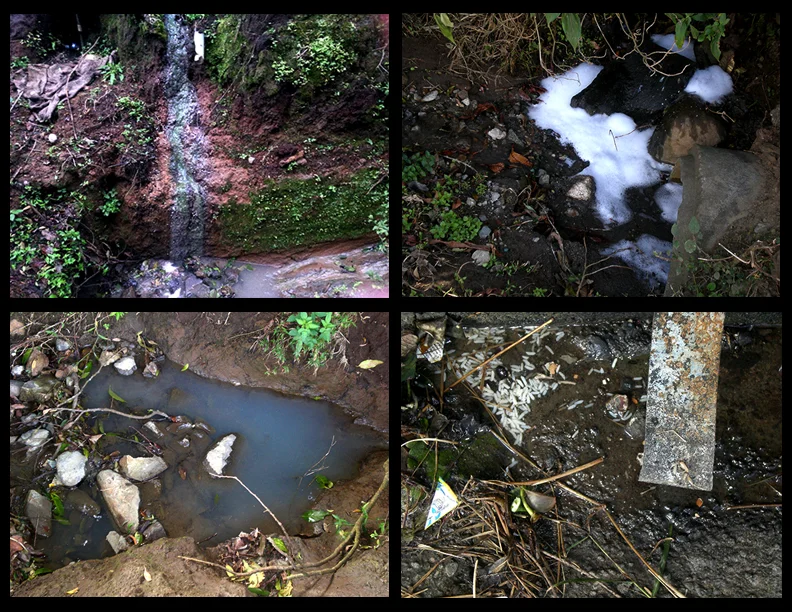
Las aguas grises se originan en los fregaderos, lavatorios, duchas y lavanderías. No incluyen las aguas negras, las cuales provienen de los inodoros y son tratados en los tanques sépticos. La incorporación de aguas grises en diversas fuentes de agua puede causar muchos problemas de salud, al igual que al medio ambiente y a la economía turística. Cuando estos flujos de agua no se tratan adecuadamente, son convertidos en focos de enfermedades como Salmonella y Campylobacter. Además, contaminan ríos, aguas subterráneas y mares, causando la mortalidad de organismos que dependen de aguas limpias para sobrevivir. Finalmente, causan un impacto negativo en relación a la apariencia de la ciudad, cuando vemos basura y jabón cayendo directamente a nuestras calles y ríos.
¿Cómo podemos reducir el impacto de las aguas grises en nuestra comunidad? Lo primero y más importante, es disminuir el consumo de agua, ya que así reducimos la formación de aguas grises. Por ejemplo, podemos tomar duchas más cortas y podemos cerrar la llave cuando se enjabonan los platos o cuando nos lavamos los dientes y manos. Debemos también reducir la cantidad de materia orgánica en nuestras aguas grises. Para esto podemos separar los sólidos y grasas antes de lavar los platos y/o podemos implementar filtros en el desagüe. Otro consejo es utilizar productos amigables con el ambiente, como los jabones biodegradables y los productos naturales. Por último, existen sistemas alternativos para el tratamiento de las aguas grises, como es el caso de las biojardineras. En general, las pequeñas acciones en nuestras casas pueden ayudar a disminuir los efectos negativos de las aguas grises en Monteverde.
Para concluir, debemos de ser más sensibles ante los problemas del recurso hídrico. Los cambios en los patrones de lluvia, posiblemente causados por el cambio climático, y el aumento de la población mundial, han contribuido a la escasez de agua potable disponible. Es importante recordar que las aguas de Monteverde afectan a muchas otras personas y sistemas de vida en altitudes inferiores, y por lo tanto debemos ser responsables con su uso y tratamiento. Cuando pensamos en otras personas y en la naturaleza, podemos trabajar en equipo para mejorar las condiciones de vida de todos.
Aquí en Monteverde, se esta dando el primer paso para responder a la problemática de aguas grises a través de el establecimiento de la Comisión Especial de Manejo de Aguas Residuales (la RED). En próximos artículos, se tratarán con mayor detalle temas específicos ya mencionados.
Por: Orlando Calvo y Shelby Bates

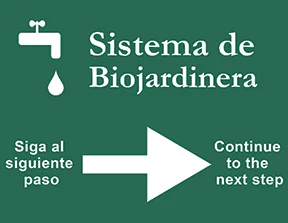
Además del artículo y el taller la pasantía de Shelby se encargó de hacer los rótulos para la bíojardinera del Instituto Monteverde.
Shelby además escribió un blog sobre su experiencia en Costa Rica y el Instituto Monteverde que pueden leer aquí.


English version=
Grey water: Dangers and Solutions.
In Costa Rica, each person consumes an average of 244 liters of water per day. Approximately 87% of this consumption is transformed into grey water. According to the most recent State of the Nation report, only 3.6% of residual waters in the country receive adequate treatment. For the moment, Monteverde also does not have the correct infrastructure to manage grey water.
Grey water originates in bathroom sinks, washing machines, showers, and kitchen sinks. These waters do not include black water, which comes from toilets and which is treated in septic tanks. The incorporation of grey water in different water sources can cause many health problems, in addition to environmental and tourism issues. When these water flows are not adequately treated, they convert into breeding grounds for diseases like Salmonella and Campylobacter. Moreover, they contaminate rivers, subterranean waters and seas, causing the death of organisms that depend on clean water to survive. Finally, they cause a negative impact with respect to the appearance of the city, when we see trash and soap falling directly into our streets and rivers.
How can we reduce the impact of grey water in our community? Firstly and most importantly, it is important to diminish your consumption of water, which will reduce the formation of grey water. For example, we can take shorter showers and we can turn off the water when we soap up plates or when we brush our teeth and wash our hands. We should also reduce the quantity of organic material in our grey water. To do this, we can separate out solids and greases before washing our plates, and/or we can implement filters in the drain. Another suggestion is to use environmentally-friendly products like biodegradable soaps and natural products. Lastly, alternative systems for grey water treatment exist, like in the case of biogardens. In general, small actions in our homes can help diminish the negative effects of grey water in Monteverde.
To conclude, we need to be more sensitive issues surrounding water. Changes in rain patterns, possibly caused by climate change, and the increase of the world’s population, have contributed to the scarcity of available potable water. It is important to remember that Monteverde’s waters affect many other people and life systems in lower altitudes, and therefore we need to be responsible with our use and treatment of water. When we think about other people and nature, we are better able to work as a team to better others’ conditions of life.
Here in Monteverde, the first step to respond to the issue of grey water has been taken thanks to the establishment of the Special Commission of the Management of Grey Water (RED). In upcoming articles, subjects already mentioned in this article will be explained in greater detail.
Orlando Calvo and Shelby Bates Monteverde Institute
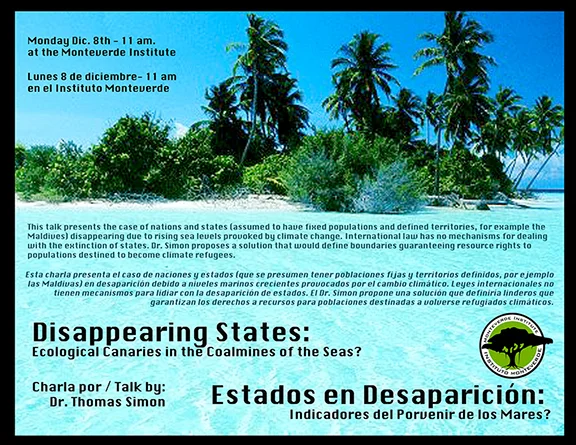
Dr. Thomas Simon - Climate Change and Disappearing States - Cambio Climático y Estados en Desaparición
El Dr. Thomas Simon dará la charla “Estados en Desaparición"
---Dr. Thomas Simon will give the lecture “Disappearing States"
The talk will be in English with simultáneos translation into Spanish. / Charla en inglés con traducción simultánea al español.
Para descripción en español favor de bajar:
Description:
Dr. Thomas Simon will give the lecture “Disappearing States: Ecological Canaries in the Coalmines of the Seas?” on Monday, December 8th, at 11:00am in the Monteverde Institute auditorium.
Dr. Thomas Simon is professor of International Law at the Johns Hopkins University Center for Chinese and American Studies. He has also acted as Professor of International Studies, Philosophy, and Legal Studies at various institutions. In addition to his work as a professor, Dr. Simon is the author of six books and countless articles on the subjects of peace, social justice, discrimination, minorities´ rights, genocide, and torture. The Monteverde Institute is proud to host him for this talk on political and social impacts of climate change.
ABSTRACT
The disappearing nation of the Maldives and its sister island states (Kiribati and Tuvalu) pose a challenge to philosophy, policy, and law. Many of those who take a holistic ecological perspective see these, much like the canaries in the coalmines, as early warnings signs of the cataclysmic effects of climate change. The current international system is based on the creation of states with fixed populations and defined territories. International law has no mechanisms for dealing with the extinction of states. Drastic problems call for drastic solutions such as recognizing states without territories. Policy makers should not treat nuclear war as gang violence. Similarly, they should not approach climate change as if it were like pollution.
Yet, a piecemeal, environmental approach does provide a solution to disappearing states. Amending the Law of the Sea Convention to freeze baselines at current levels would have an enormous impact since it would assure these states as well as those with threatened coastal communities with rights to the living and nonliving resources within their Exclusive Economic Zones (EEZ). Kiribati has nearly the same size EEZ as Japan and nearly four times the EEZ size of China, which, in turn, has about the same size EEZ as the Maldives and Tuvalu. International refugee law would not have to find a new classification for the environmentally displaced citizens of these islands. With funds from selling the rights to these resources, these citizens would have sufficient funds to relocate almost anywhere.
The canary in the coalmine does not symbolize a dire warning of ecological catastrophe but rather a potent warning of how fear conjured by over-dramatizing challenges turns us into meek canaries.
A big thank you to Cabañas los Pinos in Monteverde hosting Dr. Thomas Simon.
Español:
El Dr. Thomas Simon dará la charla “Estados en Desaparición: Indicadores del Porvenir de los Mares?” el lunes 8 de diciembre a las 11:00am en el auditorio del Instituto Monteverde.
El Dr. Thomas Simon es profesor de derecho internacional en el Centro para Estudios Chinos y Americanos de la Universidad de Johns Hopkins. También ha sido profesor de estudios internacionales, filosofía y estudios legales en varias instituciones. Además de su trabajo como profesor, el Dr. Simon es el autor de seis libros y numerosos artículos en los temas de paz, justicia social, discriminación, derechos de minorías y tortura. Al Instituto Monteverde le da orgullo ser anfitrión para su charla sobre impactos políticos y sociales del cambio climático.
Esta charla presenta el caso de naciones y estados (que se presumen tener poblaciones fijas y territorios definidos, por ejemplo las Maldivas) en desaparición debido a niveles marinos crecientes provocados por el cambio climático. Leyes internacionales no tienen mecanismos para lidiar con la desaparición de estados. El Dr. Simon propone una solución que definiría linderos que garantizan los derechos a recursos para poblaciones destinadas a volverse refugiados climáticos.
n agradecimiento muy grande a Cabañas los Pinos por hospedar al Dr. Thomas Simon.
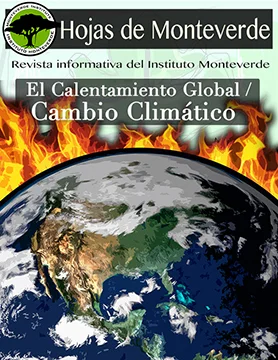
Hojas de Monteverde - Climate Change - Cambio Climático
Hojas de Monteverde - Cambio Climático -Climate Change - Revista Informativa del Instituto Monteverde.
English: Every 3 months the Monteverde Institute makes a newsletter for the community, on this occasion the theme is Climate Change. This is a Spanish only publication, but if you would like to know more information please contact us: communications@mvinstitute.org. (Please scroll down to see the newsletter, for a hard copy please stop by and visit us).
Thank you.
Español: Cada tres meses el Instituto Monteverde hace un folleto informativo para la comunidad de Monteverde. En esta ocasión trabajamos con el tema de cambio Climático. Les invitamos a verlo, si quiere una copia impresa puede pasar por el Instituto y con gusto le damos una.
Muchas Gracias.



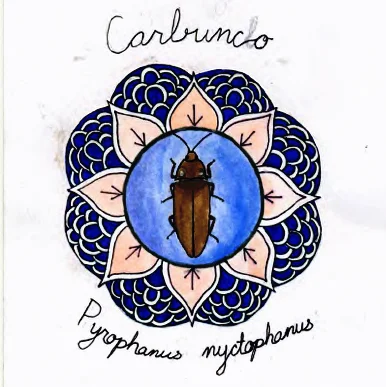
Enseñando bioluminiscencia por el arte - Teaching Bioluminescence through Art
ENSEÑANDO BIOLUMNISCENCIA POR EL ARTE - TEACHING BIOLUMINESCENCE THROUGH ART- Proyecto hecho por/ Project made by: Melina Baron-Deutsch
Proyecto hecho por/ Project made by: Melina Baron-Deutsch
Supervisora/ Intern supervisor: Carla Willoughby

Enseñando a los estudiantes del CEC en Santa Elena-Teaching children at the CEC School in Santa Elena
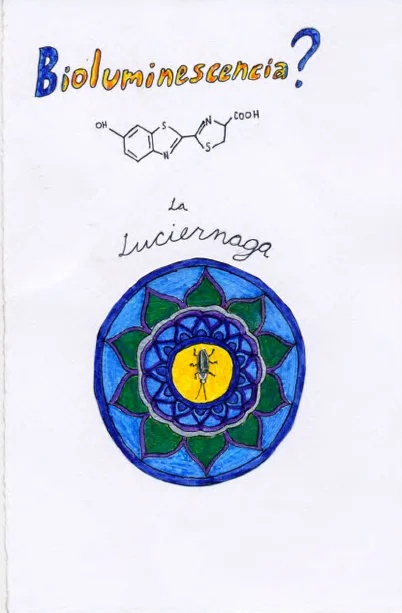
Melina estuvo un par de meses en el Instituto para hacer una pasantía que tenía que ver en cómo enseñar ciencia por medio del arte. Ella opto por hacer un librito gráfico atractivo y enseñar por medio del diseño de mandalas a los niños sobre los insectos, en particular sobre los insectos bioluminosos. Aquí les compartimos un poco sobre su trabajo. --------
Melina spent a couple of months at the Monteverde Institute working project about teaching science through art. After doing some research she decided to create a Zine (a little artistic booklet) and to teach students by drawing mandalas with insects. Here you will be able to see some of her work.


Vean el librito que hizo Melina, una buena idea para combinar arte y ciencia. ---
Look at the Zine Melina created, it's a great idea for teaching art and science.




Hojas de Monteverde- Agua y como ayudar a cuidarla
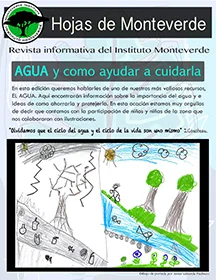
En la nueva edición de Hojas de Monteverde nos hemos enfocado en el tema de agua. Además contamos con la participación de ilustraciones de niños de la zona, no se lo pierdan!
En la nueva edición de Hojas de Monteverde nos hemos enfocado en el tema de agua. Además contamos con la participación de ilustraciones de niños de la zona, no se lo pierdan! Aquí pueden ver la versión digital y en el Instituto Monteverde podrán recoger una copia impresa.
///
In the new Community newsletter we have focused on "Water" due to the fact that we are in the dry season and water is one of our main resources. So far the "Hojas de Monteverde" newsletter is only in Spanish, however you can sign up to our bilingual newsletter here: newsletter sign up.


Poster: “ Optimizing the reforestation of tropical premontane cattle pasture through fertilization and grass maintenance”.
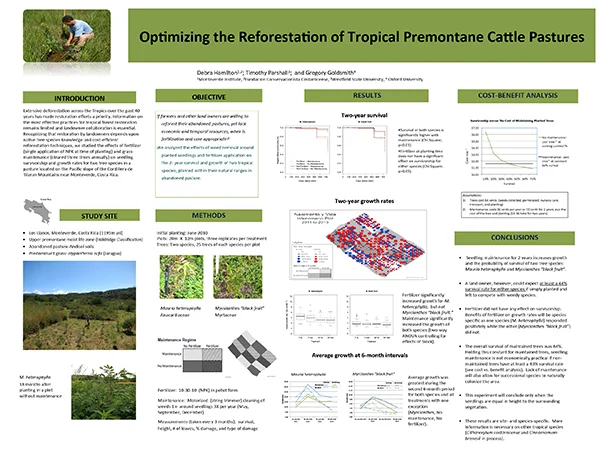
At the 26th International Congress for Conservation Biology in Baltimore, Debra Hamilton (Monteverde Institute), Tim Parshall (Westfield State University) and Greg Goldsmith (Oxford University) presented a poster entitled “ Optimizing the reforestation of tropical premontane cattle pasture through fertilization and grass maintenance”.
Poster: “ Optimizing the reforestation of tropical premontane cattle pasture through fertilization and grass maintenance”.
Afiche:
“Optimizando la reforestación de portrero tropical premontano a través de fertilización y mantenimiento”.
English: At the 26th International Congress for Conservation Biology in Baltimore, Debra Hamilton (Monteverde Institute), Tim Parshall (Westfield State University) and Greg Goldsmith (Oxford University) presented a poster entitled “ Optimizing the reforestation of tropical premontane cattle pasture through fertilization and grass maintenance”.
While the results of the two-year investigation demonstrate that grass maintenance significantly increased the survivorship and growth of planted seedlings, the application of fertilizer (10-30-10) at the time of planting had no effect on survivorship. Fertilizer application at time of planting did increase growth rates for one of the two tree species in the experiment.
More importantly, >44% of seedlings of both tree species (Mauria heterophylla (Cirri) and Myrsianthes “black fruit”) survived whether the seedlings received grass competition removal or not. Reforestation, therefore, should not necessarily be discouraged if a landowner does not have the economic resources to maintain the seedlings free of grass. This research is continuing to examine additional species and grass types.
Español:
En los 26th Congreso Internacional para Biología de la Conservación en Baltimore, Debra Hamilton (Instituto Monteverde), Tim Parshall (Westfield State University) y Greg Goldsmith (Oxford University) presentó un poster titulado “Optimizando la reforestación de portrero tropical premontano a través de fertilización y mantenimiento”.
Mientras que los resultados de la investigación de dos años demuestran que mantenimiento de pastos aumentó significativamente la supervivencia y crecimiento de los arbolitos, la aplicación de fertilizante (10/30/10) en el momento de la siembra no tuvo efecto sobre la supervivencia. La aplicación de fertilizantes en el momento de la plantación aumentar las tasas de crecimiento de una de las dos especies en el experimento.
Más importante aún, > 44% de las plántulas de ambas especies arbóreas (Mauria heterophylla (Cirri) y Myrsianthes "black fruit") sobrevivieron si los arbolitos recibieron mantenimiento o no. Por lo tanto, no necesariamente deben desanimarse si un terrateniente no tiene los recursos económicos para mantener las plantas de semillero libres de hierba. Esta investigación continúa para examinar otras especies de arboles y tipos de pastos.
Monitoreo de murciélagos en Dwight and Rachel Crandell Memorial Reserve
Monitoreo de murciélagos en Dwight and Rachel Crandell Memorial Reserve por Wim (Vino) de Baker y Fabio Araya.
--- Los Quirópteros (gr. ‘manos aladas’) han sido muy poco conocidos en la historia humana, han sido mal interpretados, asociados a muchos mitos y leyendas principalmente por sus hábitos nocturnos y por la relación de los medios con Drácula y otros cuentos de ‘vampiros’
For an English version ( made by "Bats Rule") please follow this link: http://www.batsrule.org.au/batsrule-helpsavewildlife/2014/4/9/dwight-and-rachel-crandell-memorial-reserve-costa-rica
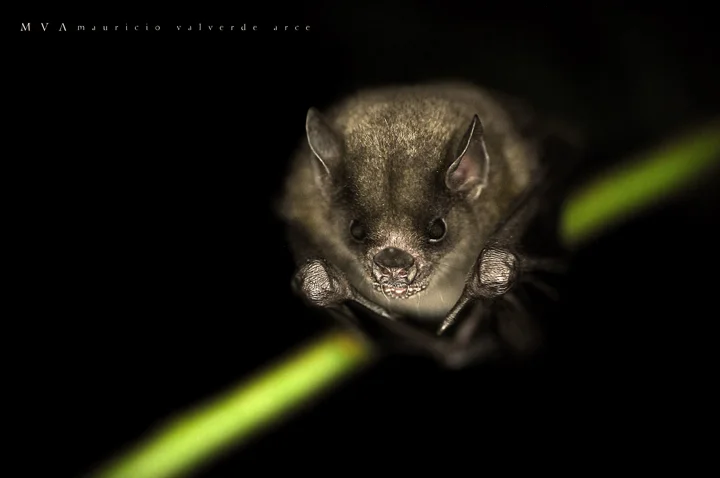
por Wim (Vino) De Backer y Fabio Araya, Fotografías por Mauricio Valverde:
Los Quirópteros (gr. ‘manos aladas’) han sido muy poco conocidos en la historia humana, han sido mal interpretados, asociados a muchos mitos y leyendas principalmente por sus hábitos nocturnos y por la relación de los medios con Drácula y otros cuentos de ‘vampiros’.

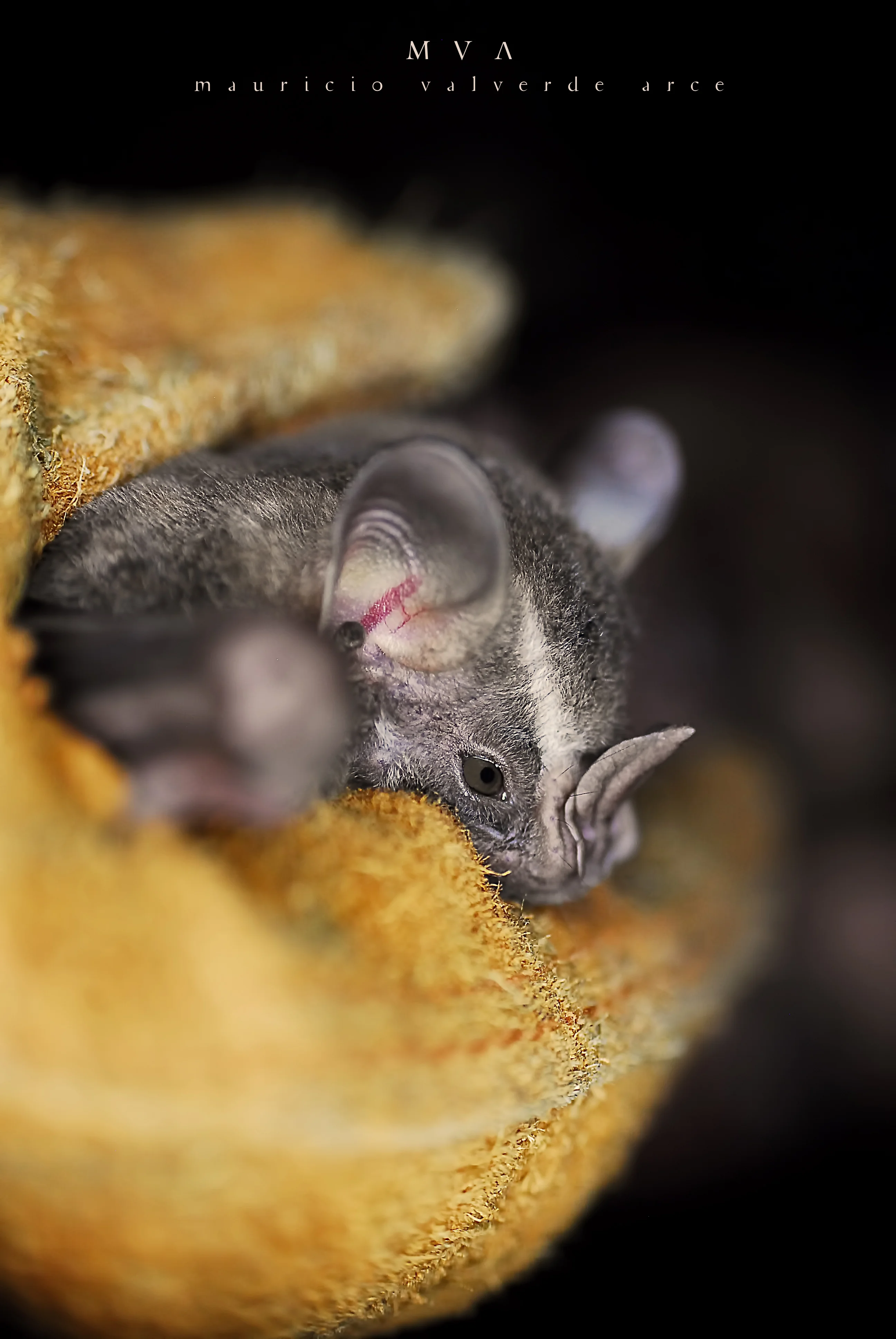
Fotografía por Mauricio Valverde en la Reserva Crandell.
Pero a pesar de lo que muchas personas creen los murciélagos están entre los mamíferos más diversos, abundantes e importantes del mundo. Se encuentran alrededor de 1255 especies alrededor del mundo, de los cuales 113 se encuentran en Costa Rica. Algo notable para un país tan pequeño, de hecho más de la mitad de las especies de mamíferos de este país son murciélagos.
En términos ecológicos su variada dieta no tiene igual. En ambientes tropicales como lo es la zona de Monteverde su alimentación se basa principalmente en insectos de todas clases, frutas tales como higos, jocotes, tomatillos, bananos, guarumos, etc. Néctar de gran variedad de flores además de pequeños vertebrados tales como lagartijas, roedores, aves, peces, inclusive sangre de mamíferos y aves.
Por su gran diversidad y abundancia en los trópicos, los murciélagos juegan un papel de gran importancia aportando numerosos beneficios al ecosistema en los que se encuentran. Son esenciales en la dispersión de miles de semillas por noche de árboles pioneros tales como solanáceas, piperáceas, pothomorpheas, vismias, muntingias, además son excelentes polinizadores de una gran cantidad de plantas tales como mukunas, bromelías, ceibos, bananos.

Fotografías por Mauricio Valverde en el Crandell Reserve.
En el bosque nuboso alrededor del Instituto de Monteverde, que ahora es conocido como Dwight and Rachel Crandell Memorial Reserve, se pueden encontrar unas 60 especies diferentes de murciélagos.
El 25 de junio del 2013 capturamos en esta reserva 27 murciélagos de 7 especies diferentes en 4 redes de niebla entre las 6:30 y 8:30pm.
Entre ellos se pudieron observar:
2 individuos Platyrrhinus vittatus ( Greater broadnosed bat), 2 hembras, ambas en perioda de lactancia)
1 individuo Artibeus literatus macho (Big fruiteating bat)
7 Artibeus toltecus (Toltec fruiteating bat)
8 Sturnira sp. (ludovici y mordax) (yellow shouldered bats) (frugivoro)
1 Carollia perspiccilata (shorttailed bats) (frugivoro)
7 Myotis keaysi (hairy legged myotis) (insectivoro)
1 Myotis nigricans (Black myotis) (insectívoro)
Otras noches en el mismo lugar se monitorearon especies de Anoura geoffroyi (nectarivoro), Hylonycteris underwoodii (nectarivoro, longtongued bats), Lonchophylla robusta (nectarivore, orange nectar bats), Carollia brevicauda (frugivore, shorttailed bats) Sturnira lilium (frugivore, littleyellow shouldered bat).
Estas capturas muestran la importancia de los murciélagos en la regeneracion del bosque y control sobre insectos de esta reserva. Con respecto a su comportamiento, cantidad de especies, estado de poblaciones, modo de alimentación,.. no hace falta de mencionar que falta mucho mas estudio o monitoreo en esta zona. Por cualquier pregunta/información/ próximo monitoreo contáctenos:
Fabio Araya Rojas tel 8612 5554
jfsk8@hotmail.es
Wim De Backer (cc Vino) de Belgica tel 8502 7056 / 2645 5723
vino.monteverde@gmail.com
Bat experts @ The Bat Jungle
Monteverde, Costa Rica
tel (506) 2645 7701



Synthetic and Organic Lettuce Fertilizers- Fertilizantes orgánicos y sintéticos
We are always trying to down grade costs. Farmers, especially, who focus on maximizing their yields and profits for the labor, energy, and supplies they put in, need reliable, cost-efficient sources of fertilizer.
We invite you to read this work made by our EAP Spring student Sarah Vetter. This was made on a two week research, if you would like more information on the article (or you want to read the full article) you can to write to: info@mvinsitute.org
Lettuce Growth in Response to Weather & Soil Nutrients & pH
Sara L. Vetter -Department of Environmental Science - University of California, Los Angeles -EAP Tropical Biology and Conservation Program, Spring 2013
ABSTRACT
Organic fertilizers can prove just as efficient as or even better in aiding in plant growth than synthetic fertilizers. I observed how lettuce seedlings would differ in growth of leaf width and length between treatments with and without the two types of fertilizers. I looked at nutrient and pH content of each treatment before and after planting, and analyzed the effects of weather on leaf production. For organic fertilizer I utilized vermi-compost cow manure, regular cow manure, and goat manure, products of a local La Cruz de Abangares farm. For synthetic fertilizer, I chose Urea and 10-30-10, ones commonly used by farmers of the same area. I measured leaf growth of the largest leaf of each seedling for each treatment for each area. For the indoor plot the seedlings of the vermi-compost cow manure treatment grew significantly taller (4.25 cm) than those of the goat manure (1.81 cm) and the control (2.12 cm). I found seedlings of the 10-30-10 treatment (4.06 cm) to have grown significantly more than goat manure as well. For the outdoor plot, goat manure (2.08 cm) and Urea (1.85 cm) showed a significantly greater change in width than the 10-30-10 treatment (0.75 cm). The vermi-compost treatment appeared to have had good soil structure and perhaps undetected reserves of micronutrients released by earth worms. For the outdoor plot the goat manure treatment may have had undetected nitrogen and salt reserves, while the Urea treatment high nitrogen content. Weather may have influenced the release of nutrients in some treatments in a way that caused seedling growth to differ in the indoor and outdoor plots. A partially unifying factor in the results between the outdoor and indoor plots appears to have been the presence of nitrogen in the starting treatment.

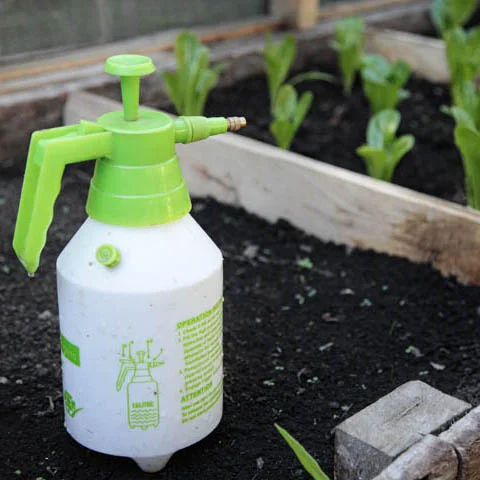
Photo for illustrative purposes/ Foto para uso ilustrativo.
RESUMEN
Los fertilizantes orgánicos pueden ser igual de eficaces o incluso mejores que los fertilizantes sintéticos en ayudar en el crecimiento de plantas. Estudié diferencias en el crecimiento de plántulas de lechuga en cuanto a la anchura de la hoja y la longitud entre los tratamientos con y sin los dos tipos de fertilizantes. Medí los nutrientes y el contenido de pH de cada tratamiento antes y después de la siembra, y analicé los efectos del clima en la producción de la hoja. Para obtener fertilizante orgánico utilicé estiércol de vaca ya compostado por lombrices, estiércol de vaca regular, y estiércol de cabra, productos de una finca en La Cruz de Abangares. Por fertilizantes sintéticos, elegí Urea y 10-30-10, utilizadas por los agricultores de la misma zona. Medí crecimiento de la hoja de la hoja más grande de cada planta para cada tratamiento para cada área. Para la parcela del interior las plántulas del vermi-compost de estiércol de vaca crecieron significativamente más altas (4,25 cm) que las del estiércol de cabra (1,81 cm) y el control (2,12 cm). Las del tratamiento 10-30-10 (4,06 cm) crecieron más que las de estiércol de cabra también. Para la parcela al aire libre, el estiércol de cabra (2,08 cm) y urea (1,85 cm) mostraron un cambio significativamente mayor en anchura que el tratamiento 10-30-10 (0,75 cm). El tratamiento vermi-compost parecía haber tenido una buena estructura del suelo y reservas de micronutrientes tal vez no detectados en la prueba. En la parcela exterior del tratamiento del estiércol de cabra puede haber tenido de nitrógeno y reservas de sal que no se detectaron, mientras urea presentó un alto contenido en nitrógeno. El clima puede haber influido en la liberación de nutrientes en algunos tratamientos de una manera que hizo que el crecimiento de plántulas difiriera en las parcelas cubiertas y al aire libre. Un factor unificador parcialmente en los resultados entre las parcelas al aire libre y de interior parece haber sido la presencia de nitrógeno en el tratamiento inicial.


Combating Coffee Rust (Hemileia vastatrix)- Combatiendo la Roya
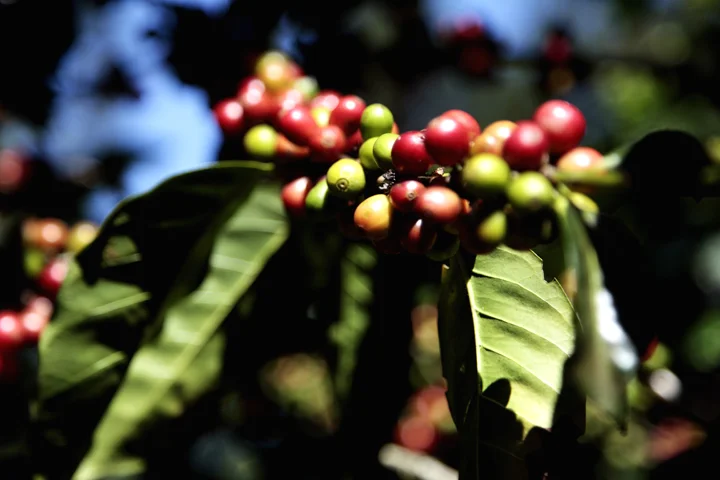
Combating Coffee Rust: Coffee Rust (Hemileia vastatrix) damages coffee leaves and leads to defoliation, and can seriously reduce yields. While chemical fungicides have been effective, they introduce dangers to human health and the environment. Naturally occurring hyperparasitic fungi do not present the same risks, and may be a more sustainable alternative.
Coffee Rust (Hemileia vastatrix) damages coffee leaves and leads to defoliation, and can seriously reduce yields. While chemical fungicides have been effective, they introduce dangers to human health and the environment. Naturally occurring hyperparasitic fungi do not present the same risks, and may be a more sustainable alternative. We studied two such parasites: Trichoderma asperellum and Lecanicillium lecanii. We compared the effects of the two fungi on rust-infected trees in a coffee plantation. Trees sprayed with L. lecanii experienced 50% fewer necrotic lesions and 40% less discoloration than those treated with T. asperellum. We also conducted a lab experiment where we applied each fungus directly on leaves infected with H. vastatrix and found that L. lecanii colonized 25% more leaves than T. asperellum. Our results indicate that L. lecanii controls rust infections more effectively than T. asperellum.
RESUMEN
La Roya (Hemileia vastatrix)
daña las hojas del café, lleva a la defoliación y puede reducir
considerablemente los rendimientos. Si bien los fungicidas químicos han sido
eficaces, introducen peligros para la salud humana y el medio ambiente.
Los hongos hiperparasíticos que ocurren naturalmente no presentan
los mismos riesgos, y puede ser una alternativa más sostenible. Estudiamos dos
de esos parásitos: Trichoderma
asperellum y Lecanicillium lecanii. Comparamos los efectos de los dos
hongos en plantas de café afectadas con roya. Los árboles rociados con L. lecanii experimentaron un menor aumentar de
lesiones necróticas(50%) y 40% menos decoloración de hojas que Trichoderma asperellum o
el control. También llevamos a cabo un experimento de laboratorio donde
aplicamos cada hongo directamente en hojas infectado con H. vastatrix, y encontramos que L. lecanii colonizó más hojas (25%) que T. asperellum. Nuestros
resultados indican que L.
lecanii controla las
infecciones de roya más eficazmente que T. asperellum.
BY:
Jonathan Martindill, University of California, Davis- Land, Air, and Water Resources
AND:
Sydney Fozard ,University of California, Santa Barbara -Ecology, Evolution, and Marine Biology
EAP Tropical Community Ecology, Spring 2013 -7 June 2013
For complete report write to/ Para el reporte completo escriban a: info@mvinstitute.org


Hugelkultur in Monteverde
Hugelkulture in Monteverde guidelines.
We cannot talk about sustainability without including the fundamental theme of agriculture, growing that which we eat. With this in mind and with a great amount of effort form our students; the Monteverde Institute is testing different vegetable-garden types in our campus. So far we have an example of HugelKulture and a Keyhole garden in progress. Both of these projects follow sustainable guidelines and have their bases on Permaculture practices.
Here you can find a "how to" guideline built by one of our interns, Peter Wells.
Hugelkultur in Monteverde
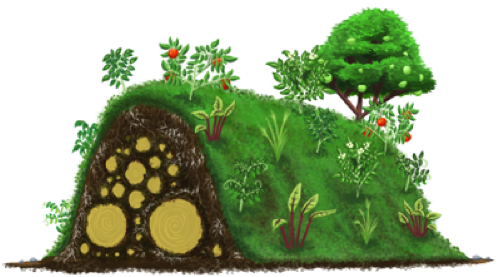
A Hugelkultur is raised bed that mimics forest decomposition. This technique is native to Austria where is has been used for hundreds for years, for more information on this system, research the work of Sepp Holzer and his Permaculture farm in the Alps. With good construction and adequate precipitation, a hugelkultur is a self sustaining system. With occasional maintenance, it requires no additional fertilizer, chemicals, irrigation, or tillage. Here is how to make one.

Sample of a Hugelkulture Garden

Start with a couple of large, rotting trees or logs as a base.

2 Pile smaller deadwood and branches on top. Let sit in rain or soak to help retain moisture.

3 Cover with compost (manure is a plus).

3.5 Cover the mound in good soil and finally, leaves or straw.

The mound can be any length and as high as two meters
This system 3 major functions:
It is a water reserve in times of drought.
It is a beneficial harbor for microbial, fungal, insect, and animal life.
It is a nutrient mine for the plants that grow on it and drastically improves soil health.
Peter Wells, 2013. Instituto Monteverde.
Square out the Details
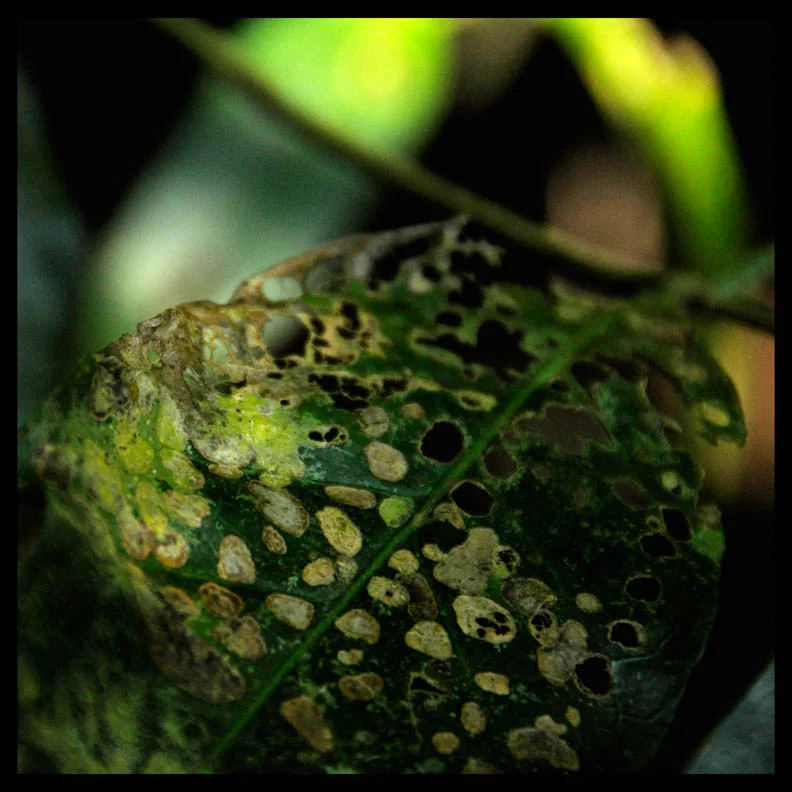
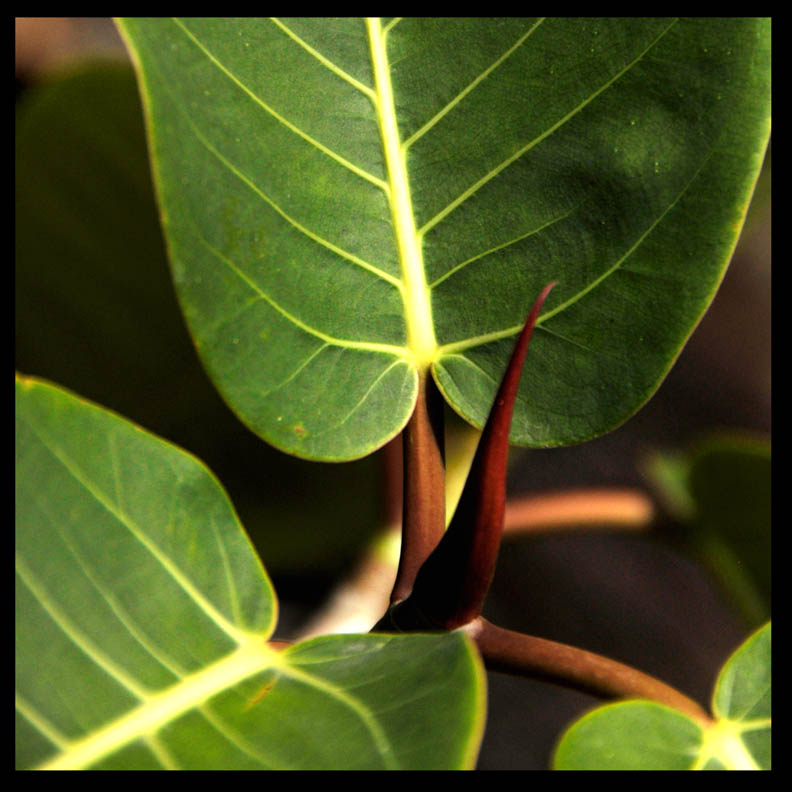
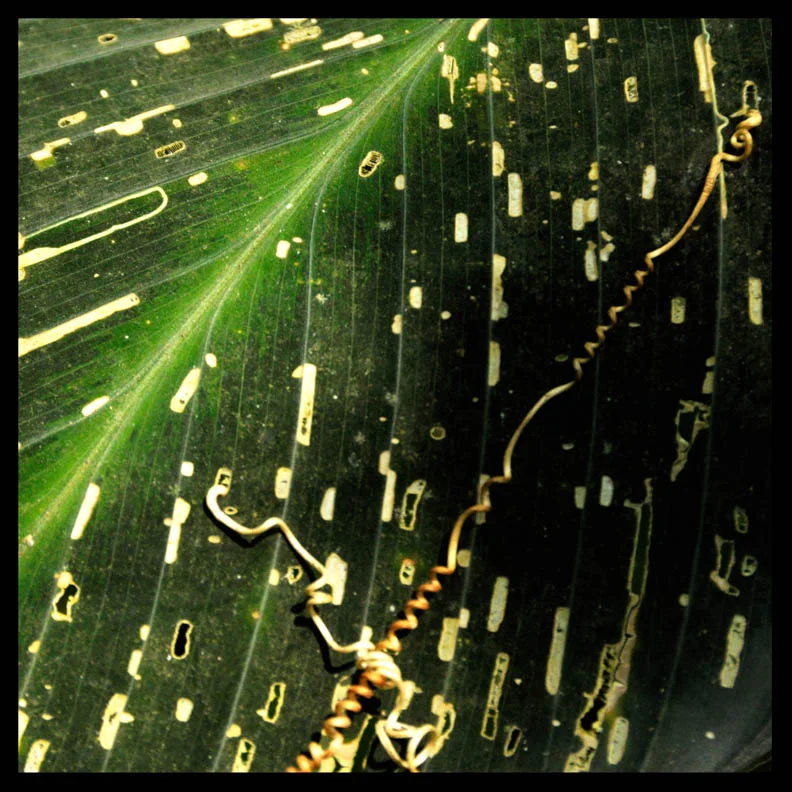
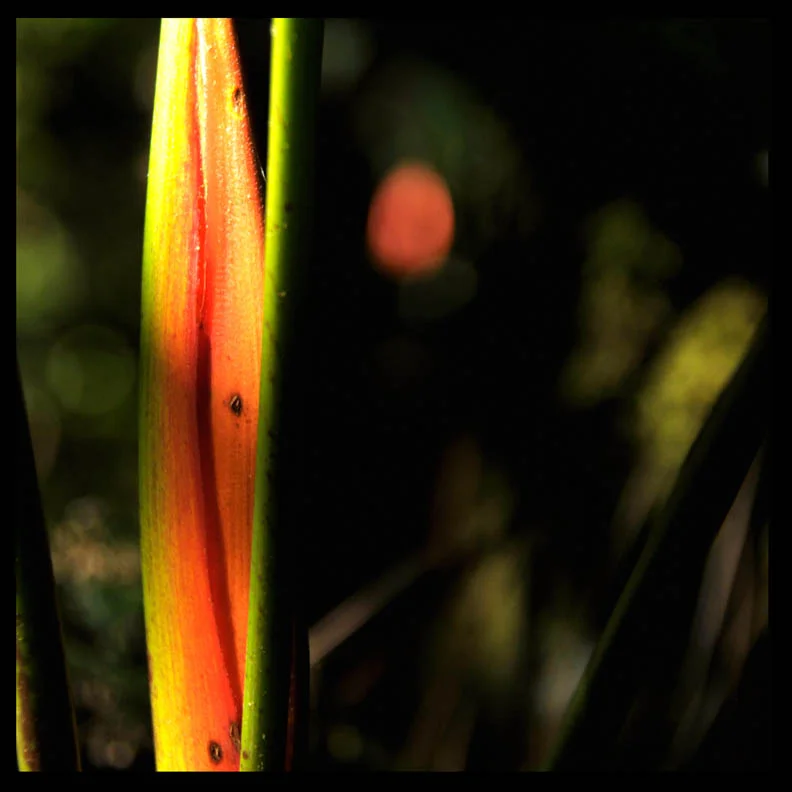
Right behind the Monteverde Institute you can find yourself immerse in a forest full of wonders and amazing diversity. Nature, as is life, is full of details; some look for the obvious, but in nature many times the magic can also be subtler. These are photos taken from a 15-minute hike in “Wonderland”. I hope someday to share the wonders of exploring nature with more time!
“Costa Rica contains over 500,000 species- or 4% of al species estimated to exist Worldwide. The entire United States, by comparison, has half the number of species that live in Costa Rica, with 200 times more land, and, thousands of species still await Discovery.” Trend Larsen
With this I would like to invite you to visit two interesting places that are part of the Institute:
32-Acre Campus:
“The Monteverde Institute’s 32-acre campus is located in the heart of the Monteverde community, adjacent to the historic Monteverde Cheese Factory. The campus backs up to hundreds of acres of lush protected cloud forest. The foot print for classrooms and administrative office is intentionally kept small and the buildings themselves incorporate the best building practices for sustainability in our tropical climate including treatment of grey water and rain water, use of biodegradable products in our kitchens and restrooms, use of high efficacy and available lighting, composting and recycling.
Dwight & Rachel Crandell Memorial Reserve
During their lifetimes, Dwight & Rachel Crandell were much loved conservationists and supporters of the Monteverde Institute and the Monteverde Zone in general. Following his passing in 2008 and her passing in 2010, the Monteverde Institute, in partnership with the Costa Rican Conservation Foundation (FCC), has turned what was once land owned by the Institute into a conservation land trust administered by the FCC. This 32-acre area is formally known as the Dwight and Rachel Crandell Memorial Reserve and is home to a network of hiking trails through primary and secondary cloud forest. The property is bordered by Bosque Eternal.”
by: Selena Avendaño MVI









Español:
Justo detrás del Instituto te puedes encontrar emergido en una bosque lleno de maravillas y una diversidad espectacular. La naturaleza, como la vida, está llena de detalles; algunos buscan lo obvio, pero naturalmente la magia puede ser a veces más sutil. Estas son fotografías tomadas en una caminata de 15 minutos en “el País de las Maravillas”. Espero algún día poder compartir la maravilla de explorar la naturaleza con más tiempo.
por: Selena Avendaño MVI
COMIRES Monteverde
-Waste management committee -Comité de manejo Integral de Residuos Sólidos
Three years ago in Monteverde there was no recycling program for the community. There were certain hotels and businesses that offered their customers this option, however it was not open to the community. In 2010 a group of members form the community got together with the local governmental counsel and different local entities, including a representative of the Monteverde Institute, to try to create a long term program for solid waste Management (not only recycling) designed to help with the different community sectors: tourism, schools, community, businesses. This program is run by the local government with help from volunteers and has now all but finished the investigation on how solid waste is managed in Monteverde and has come up with a program design. While this was happening this committee, called COMIRES Monteverde has been organizing monthly recycling pick-ups, helped build the recycling center, and searched for funds to start an educational system. //// Hace Tres años en Monteverde no había un programa de reciclaje para la comunidad. Habían ciertos hoteles y empresas que sí le ofrecían esta opción a sus clientes, sin embargo no eran abiertas a la comunidad. En el 2010 una grupo de miembros de la comunidad se reunió con representantes del gobierno local y diferentes entidades locales, incluyendo un representando del Instituto Monteverde, para solicitar crear un programa a largo plazo para el manejo de residuos sólidos (no solo reciclaje) diseñado para abarcar los diferentes sectores de nuestra comunidad: turismo, escuelas, comunidad, empresas. Este programa es manejado por parte del gobierno local con ayuda de los voluntarios y está apunto de terminar su investigación en cómo son manejados los residuos sólidos en Monteverde y contiene un diseño del programa de manejo. Mientras se hacia este estudio el comité, llamado COMIRES Monteverde a estado organizando recolecciones mensuales, a ayudado a construir el Centro de Reciclaje y ayudado encontrar los fondos para el programa educacional.


Video sustainable agriculture/ Video agricultura sostenible
Student project- Proyecto estudiantil
