

Ciencia Ciudadana en el Instituto Monteverde
Adopt-a-Stream is a citizen science (or community-based) program which started in 2009 to gather information about the streams in the Monteverde area and to involve students in the process.
Adopte-una-Quebrada es un programa de ciencia ciudadana (basada en la comunidad) que comenzó en 2009 para recopilar información sobre las corrientes en el área de Monteverde, involucrando a estudiantes en el proceso

Adopt-a-Stream is a citizen science (or community-based) program which started in 2009 to gather information about the streams in the Monteverde area and to involve students in the process. With their help, once every two months we monitor the health of the following streams: Quebrada Cuecha, Quebrada La Máquina, Quebrada Sucia, Quebrada La Saca, Río Negro and the unnamed quebrada behind the Santa Elena High School.
We work with the public high school in Santa Elena and two local private high schools, presenting introductory experiences in gathering and using information about the health of our fluvial community. Each year about three dozen students from the schools meet with our coordinator. After an introductory session, they will visit research sites.
In addition, DukeEngage, various interns, volunteers and Institute students work with the Adopt-a-Stream program coordinator to make observations and take measurements at other times of the year when school is not in session.
Each class takes samples from the same stream at two different locations. In the Rio Negro, for instance, one area is very close to the springs from which the waterway forms. The second is only about 500 meters downstream but located below a farm. The students collect and identify many types of macro-invertebrates found and learn how each type indicates something about the water’s quality. In the process they use scientific instruments to study water and air temperature, pH, turbidity, flow, nitrate and phosphate content, etc. This information is available to community groups and researchers and has proven useful in making decisions to protect the local waterways.
At the local high school many of the students add to this by participating in a Saturday program with the Santa Elena Preserve. The Adopt-a-Stream activity is one of several they work with in the preserve. Each year five students from the school who have demonstrated a high level of interest and achievement are selected for a special trip to the United States. Working with researchers in Rocky Mountain National Park near Estes Park, Colorado (Monteverde’s Sister City), students study the high mountain streams. When they return the students make a presentation to the school and the community about what they have learned. It’s a life-changing experience for many of these students, who share what they have learned with their classmates and other students.
In October of 2017, Tropical Storm Nate dumped 36” of rainfall in two days, mostly on the Pacific side of the Continental Divide. Hundreds of landslides poured downhill and the debris choked and polluted many streams. The Adopt-a-Stream program was useful in discovering how quickly the waterways recovered.
In the forest uphill from the Institute, the Quebrada Maquina filled its banks. By the time it crossed the road by the area known as La Cascada, it was literally that, a cascade that destroyed three homes beside it and cut a fifty foot wide gully across the road, isolating Monteverde for more than a week.
Measurements had been carried out in July and again after the storm had passed. It was more than four months before the water quality began returning to its normal healthy condition (Fig. 1)
For more information about the Adopt-a-Stream, other water quality studies, or if you are interested in an internship at the Institute, contact:
Luisa Moreno Scott, Research and Internship Coordinator
www.monteverde-institute.org
(506) 2645-5053, Ext 119

The red dots indicate the sites that we are currently sampling.
Los puntos rojos indican los sitios de muestreo que estamos actualmente visitando.
Adopte-una-Quebrada es un programa de ciencia ciudadana (basada en la comunidad) que comenzó en 2009 para recopilar información sobre las quebradas en el área de Monteverde, involucrando a estudiantes en el proceso. Con su ayuda, una vez cada dos meses monitoreamos la calidad de agua de las siguientes quebradas: Quebrada Cuecha, Quebrada La Máquina, Quebrada Sucia, Quebrada La Saca, Río Negro y la quebrada sin nombre detrás de la Escuela Secundaria Santa Elena.
Trabajamos con la escuela secundaria pública en Santa Elena y dos colegios privados locales, propiciando experiencias introductorias en la recopilación y el uso de información sobre la calidad de nuestra comunidad de ríos. Cada año, unas tres docenas de estudiantes de las escuelas se reúnen con nuestra coordinadora y después de una sesión introductoria, visitamos los sitios de investigación.
Además de DukeEngage, varios pasantes, voluntarios y estudiantes del Instituto trabajan con la coordinadora del programa Adopte-una-Quebrada para hacer observaciones y tomar mediciones en otros momentos del año cuando la escuela no se encuentra en días lectivos.
Cada clase toma muestras de la misma quebrada en dos ubicaciones diferentes. En el Río Negro, por ejemplo, un sitio de estudio que está cerca de las nacientes donde se forma el caudal. El otro está a solo unos 500 metros río abajo pero ubicado después de una finca. Los estudiantes recopilan e identifican muchos tipos de macro-invertebrados encontrados y aprenden cómo cada tipo indica algo sobre la calidad del agua. En el proceso, utilizan instrumentos científicos para estudiar la temperatura del agua y el aire, el pH, la turbidez, el flujo, la cantidad de nitrato y fosfato, etc. Esta información está disponible para los grupos de la comunidad e investigadores y ha demostrado ser útil para tomar decisiones con respecto a la protección de quebradas específicas.
En la escuela secundaria local, muchos de los estudiantes se suman a esta iniciativa por medio de un programa de sábado con la Reserva de Santa Elena. La actividad Adopte-una-Quebrada es uno de varios proyectos que realiza la reserva con los estudiantes. Cada año, cinco estudiantes de secundaria que han demostrado un alto nivel de interés y logros son seleccionados para un viaje especial a los Estados Unidos. Trabajando con investigadores en el Parque Nacional Rocky Mountain cerca de Estes Park, Colorado (Ciudad Hermana de Monteverde), los adolescentes estudian varios arroyos de esta gran montaña. Cuando regresan, los estudiantes hacen una presentación a la escuela y a la comunidad sobre lo que han aprendido. Es una experiencia que cambia la vida de muchos participantes, quienes comparten lo que han aprendido con sus compañeros de clase y otros colegas.
En octubre del 2017, la Tormenta Tropical Nate impactó Monteverde con casi un metro de lluvia en dos días, principalmente en el lado del Pacífico de la División Continental. Cientos de deslizamientos de tierra cayeron cuesta abajo y muchos sedimentos contaminaron las quebradas. El programa Adopte-una-Quebrada fue útil para monitorear qué tan rápido se recuperaron los cursos de agua.
En el bosque que se encuentra arriba del Instituto, la Quebrada Maquina llenó sus caudales. Al pasar por el sector de Monteverde conocido como “La Cascada”, el agua iba con tanta fuerza que destruyó tres casas y abrió un barranco de varios metros de ancho que interrumpió el acceso a Monteverde por más de una semana.
Las mediciones se llevaron a cabo en julio y nuevamente después de la tormenta. Pasaron más de cuatro meses antes de que la calidad del agua volviera a su estado normal de salud (Fig. 1)
Para obtener más información sobre Adopte-una-Quebrada, otros estudios de calidad del agua o si está interesado en una pasantía en el Instituto, comuníquese con:
Luisa Moreno Scott, Coordinadora de Investigación y Pasantías.
www.monteverde-institute.org
(506) 2645-5053, Ext. 119

Reforestation Program at the Monteverde Institute
Since 1998 the Monteverde Institute has been at the forefront of reforestation in the forests of Costa Rica and we have planted more than 250,000 trees. Learn about our Reforestation Program.
Since 1998 the Monteverde Institute has been at the forefront of reforestation in the forests of Costa Rica. In that effort we have planted more than 250,000 trees. Each year our two nurseries provide around 14,000 young trees to the local communities and preserves as well as an additional 3,000+ to several research forests that the Institute manages. We have produced more than 140 different species to replant in our forest, but have given special attention to several endemic trees that are critically endangered.
More than thirty years ago the Costa Rica Ministry of Agriculture encouraged landowners to cut down forests and to plant replacement forests of pine and cipres (to produce wood that was marketable as lumber). One of the most important uses they recommended, which has proven beneficial, is that they were planted as windbreaks. The windbreaks provide valuable wildlife corridors. The problem with the nonnative species, however, is that they do not support the local ecosystems, which suffered. Now those non native forests are being cut down, used as lumber, firewood, etc, and we and others are in the process of rebuilding those threatened ecosystems.
Our Recovery Story
Costa Rica has been the most successful country in the world in recovering their forests. Originally the forests covered 85% of the country, but largely because of this ill-advised policy, by the 1970s Costa Rica was only 35% forested; as of 2017 we have about 52% forest cover. But we have a long way to go.
Many of the trees are critically endangered, so we have concentrated on them. One example is the Ocotea monteverdensis, endemic to Monteverde. It is the main source of food for important species of birds like the Resplendent Quetzal and Three-wattled Bellbird. Once the forest contained thousands of mature O. monteverdensis, but today there may be around 700. Last year alone we planted 1500 and for the time being will continue emphasizing this important species.
While no one knows how long it will take for them to return to being primary forests, the secondary forests are already having positive effects. Where only a few years ago there were coffee trees or pastures filled with grasses and grazing cattle, guava trees and agave plants, now there is protective cover for a wide variety of flora and fauna.
Guava tree, left, and Agave plant, right, being surrounded by secondary growth forest.
Myrsine corralis (Ratoncillo)
One of our studies at Finca Rodriguez (until 2003 a coffee farm), is to determine how much support in addition to new trees does a forest need to recover. In Plot 1, planted in 2017, the existing trees had our seedlings planted among them and the plot was left wild, but we maintained the surroundings of the plot. In Plot 2, in 2016 we planted our seedlings and kept the grass mowed around them, so the young trees had the greatest amount of sunlight and water possible. In Plot 3 in 2015, we planted among the coffee trees and did nothing more, allowing other plants to come in naturally. While it is too soon to tell for sure, it seems at this point that, surprisingly, Plot 3 is doing the best.
In addition to what they provide for the environment, our regenerating forests are filled with opportunities for researchers in a wide variety of fields, and for those who wish to volunteer to help raise funds and/or plant trees.
Each year we let the communities along the Bellbird Corridor know how many trees we have and what varieties that are available for planting. To ensure that as many trees as possible survive, we provide guidance in types of trees, where to plant, and help in placement on their individual land. All trees are provided free of charge to community members who live in the Bellbird Corridor.
Randy Chinchilla Ramos is the GIS Coordinator, and Reforestation Coordinator. If you have questions about the Reforestation or GIS programs, or if you are interested in doing research in our regrowing forests, you can contact Randy at: gis@mvinstitute.org.
Julio Rojas Elizondo is the coordinator between the nursery workers, scientists, and landowners, including providing individual advice for the various projects.
The reforestation program is one of the best ways we have to share with the community of Monteverde the importance of restoring ecosystems, protect the water and conserve both natives and other important species.
Landowners are seeing the value of trees on their properties and are grateful to have the support to improve their land for themselves and for the environment.”
Various communities are increasingly mutually supportive in the reforestation effort. In addition to adding more trees the program is restoring soils, creating habit for animals and plants, improving water quality, restoring springs and furthering the economic development and stability of the area. We are grateful to see that our local friends are excited to work together to make the change, and to see the benefits.
If you wish to donate to this program please visit:
https://monteverde-institute.org/donate-support.html
You can also visit our Reforestation Program section at our webpage by clicking HERE
How does our Reforestation Program Cycle looks like?
What are some of our achievements for this year?
We planted 13,960 trees along the Bellbird Biological Corridor. These included species appropriate for all the different life zones in the Corridor.
In the lower zones we planted around 1,600 trees of 26 different native species. These were planted on three farms on Isla Cortezas.
In addition we established a small nursery in conjunction with the Asociación de Mujeres Mariposas de Golfo on the Costa de Pajaros Island. It began with 810 bags of young trees that included 80 species that are native to the area.
In Manzanillo we distributed fruit trees to various members of the community and planted trees at the community school.
Many groups and individuals have helped with our reforestation program including National Geographic Tours, G-Adventures, Collette Travel, Sun Tours, Change the World Kids, Terri Mallory, and the Adventure Girls.
What species are grown and how do potential planters find out what is the best for them?


We are happy to visit a local site and to advise individuals and organizations what species would be right for them. Each year, after we have counted and evaluated what we have, we advertise to the community.
Written by Robert W. Howe

El Programa de Reforestación del Instituto Monteverde
Desde 1998, el Instituto Monteverde ha estado a la vanguardia de la reforestación en los bosques de Costa Rica y hemos plantado más de 250,000 árboles. Conozca sobre nuestro Programa de Reforestación.
Desde 1998, el Instituto Monteverde ha estado a la vanguardia de la reforestación en los bosques de Costa Rica, plantado más de 250,000 árboles. Cada año, nuestros dos viveros proporcionan alrededor de 14,000 árboles jóvenes a las comunidades locales y reservas. Además, contamos con un adicional de 3,000 árboles que utilizamos en varios bosques de investigación que maneja el Instituto. Existen varias especies en peligro de extinción, endémicas, que son especialmente importantes para la comunidad de bosques nubosos, por lo que nuestro énfasis especial está en ellas. Sin embargo, hemos producido más de 140 especies desde que el Programa de Reforestación inició.
Hace más de treinta años, el Ministerio de Agricultura de Costa Rica impulsaba a los terratenientes a talar bosques, plantando bosques de reemplazo de pino y ciprés (debido a que son maderables). Entre los pocos beneficios encontrados, es que las filas de estos árboles han funcionado como cortavientos y corredores de vida silvestre. El problema con las especies no nativas es que no son compatibles con los ecosistemas locales, que han sufrido a consecuencia del cambio. Ahora estos bosques están siendo talados, usados como madera o leña y hemos quedado en proceso de reconstruir nuestros ecosistemas.
Nuestra historia de recuperación
Costa Rica ha sido el país más exitoso del mundo en recuperar sus bosques. Originalmente, los bosques cubrían el 85% del país, pero en gran parte debido a esta política poco aconsejable, en la década de 1970, Costa Rica tenía solo un 35% de bosques; a partir del 2017 hemos subido a un 52% de la cubierta forestal. Pero tenemos un largo camino por recorrer.
Muchos de los árboles están en peligro crítico por lo que nos hemos enfocado en ellos. Tal es el caso de la Ocotea monteverdensis, endémica de Monteverde, que es la principal fuente de alimento para importantes especies de aves como el quetzal resplandeciente y el pájaro campana. En algún momento contábamos con muchos O. monteverdensis maduros, pero hoy puede haber alrededor de 700. Solo el año pasado plantamos 1500 y por el momento continuaremos enfatizando esta importante especie.
Si bien nadie sabe cuánto tiempo les llevará a los bosques convertirse en primarios, los bosques secundarios ya están teniendo efectos positivos. Donde hace algunos años sólo había plantaciones de café, pastizales para el ganado, guayabas y plantas de agave, ahora hay una cubierta protectora con una amplia variedad de flora y fauna.
El árbol de Guayaba a la izquierda y la planta de Agave a la derecha - ambas rodeadas de bosque en crecimiento.
Myrsine corralis (Ratoncillo)
Uno de nuestros estudios en la Finca Rodríguez (que hasta 2003 fue una finca de café), es determinar cuánto trabajo se necesita para ayudar a un bosque en recuperarse. En la parcela 1, plantada en 2017, se plantaron plántulas nuevas entre los árboles ya existentes. Esta parcela se dejó para que las plántulas recién sembradas crecieran de manera salvaje, pero se dio mantenimiento a los bordes de la parcela. En la parcela 2, en 2016 plantamos nuestras plántulas y mantuvimos la hierba cortada alrededor de ellas, para que los árboles jóvenes tuvieran la mayor cantidad de luz solar y agua posible. En la parcela 3 en 2015, plantamos entre los cafetales y no hicimos nada más, permitiendo que otras plantas entraran naturalmente. Si bien es demasiado pronto para decirlo con seguridad, en este punto parece que, sorprendentemente, que la parcela 3 se está recuperándose mucho mejor.
Además de lo que proporcionan para el medio ambiente, nuestros bosques regenerados están llenos de oportunidades para investigadores en una amplia variedad de campos y para aquellos que desean ser voluntarios para ayudar a recaudar fondos y / o plantar árboles.
Cada año informamos a las comunidades a lo largo del Corredor Biológico Pájaro Campana cuántos árboles tenemos y qué variedades están disponibles para plantar. Para asegurarnos de que sobrevivan la mayor cantidad de árboles posible, brindamos orientación sobre los tipos de árboles, dónde plantar y cómo ayudar a cada tierra de forma individual. Todos los árboles se proporcionan a miembros de la comunidad de forma gratuita.
Randy Chinchilla Ramos ha trabajado con nosotros por más de 4 años y es el Coordinador de SIG y el Programa de Reforestación. Si tiene preguntas sobre el Programa de Reforestación, o si está interesado en hacer una investigación en nuestros bosques en crecimiento, puede comunicarse con Randy al siguiente correo: gis@mvinstitute.org.
Además, presentamos a nuestro compañero Julio Rojas Elizondo quien es el coordinador entre los trabajadores que mantienen nuestros viveros, los científicos y los terratenientes. También incluye asesoramiento individual para los diversos proyectos.
“El programa de reforestación es una de las mejores maneras en que debemos tener contacto y trabajar con la gente local, para compartir con la comunidad de Monteverde la importancia de restaurar los ecosistemas, proteger el agua y conservar tanto a los nativos como a otras especies importantes. Es emocionante ver cómo cada año hay más interés en plantar árboles en las granjas.
Los propietarios están viendo el valor de los árboles en sus propiedades y están agradecidos de tener el apoyo para mejorar sus tierras para ellos y para el medio ambiente ".
Varias comunidades se apoyan cada vez más en el esfuerzo de reforestación. Además de agregar más árboles, el programa está restaurando los suelos, creando hábito para los animales y las plantas, mejorando la calidad del agua, restaurando los manantiales y promoviendo el desarrollo económico y la estabilidad del área. Nos emociona ver que nuestros amigos locales están entusiasmados de trabajar juntos para lograr el cambio y ver los beneficios.”
Si desea donar para este programa, visite: https://monteverde-institute.org/donate-support.html
También puede visitar la sección del Programa de Reforestación en nuestra página web al hacer click AQUÍ
¿Cómo funciona un ciclo anual con nuestro Programa de Reforestación?
Fin de Temporada 2017 - 2018
Se entregaron 13 960 árboles en total por todo el Corredor Biológico Pájaro Campana, ya que contamos con viveros adecuados a las diferentes zonas de vida.
Entre nuestros logros, sólo en la zona baja hemos entregado y sembrado 1,597 áboles de 26 diferentes especies nativas en 3 fincas agropecuarias y en Isla Cortezas.
Además establecimos un vivero en conjunto con la Asociación de Mujeres Mariposas del Golfo, en Costa de Pájaros. El vivero empezó con un capital de 810 bolsas listas para ser sembradas y 80 plántulas de especies nativas sembradas en las bolsas.
En Manzanillo, repartimos árboles frutales a personas de la comunidad.
Sembramos árboles en la escuela y colegio de esta comunidad.
Muchos grupos y personass han ayudado con nuestro Programa de Reforestación, incluyendo National Geographic Tours, G-Adventures, Collette Travel, Sun Tours, Change the World Kids, Terri Mallory y Adventure Girls.
¿Qué especies se deben de plantar y cómo coordinamos con los propietarios?


Nos complace visitar cada sitio en específico para asesorar a los propietarios y organizaciones sobre qué especies serían adecuadas para ellos. Después de haber contado y evaluado lo que tenemos, promovemos las especies disponibles a la comunidad.
Escrito por Robert W. Howe
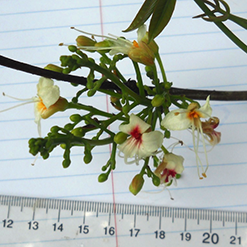
Collecting cucaracho in Costa Rica - Recolectando “cucaracho” en Costa Rica
In Costa Rica and northern Panama, the geographic ranges of the two species of Billia overlap. In these areas, there are not a lot of features to distinguish the species except for flower color.
--- En Costa Rica y el norte de Panamá, los rangos geográficos de las dos especies de Billia se superponen. En estas áreas, no hay muchas características para distinguir la especie excepto para el color de la flor.

Collecting cucaracho in Costa Rica

AJ standing in front a cabinet of dried, pressed plant specimens at the National Museum of Natural History of the United States.
My name is AJ Harris, and I am a botanist at the Smithsonian Institution National Museum of Natural History in Washington, D.C., where I am supported by a Peter Buck postdoctoral fellowship.
Within the broad field of botany, I am most interested in the geographic distributions of plants. To me, it is exciting to think of the processes that can explain how grasses exist on all seven continents even though mountain ranges and/or ocean basins separate those continents. Understanding how geographic distributions came to be, can help us to predict how they may change in the future due to environmental change.

Global distribution of species in the plant subfamily, Hippocastanoideae. The distribution of cucaracho, or Billia, is shown in red. Distributions of all other genera and species is represented by yellow.

Examples of the five genera that make up the plant subfamily Hippocastanoideae. From top row: cucaracho (Billia), buckeyes and horsechectnuts, Handeliodendron, golden coin tree (Dipteronia), maples (Acer).
For my postdoctoral research, I study the maple and buckeye trees and their close relatives, which constitute the plant subfamily, Hippocastanoideae. Hippocastanoideae, or the horsechestnut subfamily, includes five genera and about 150 species that are distributed mostly in temperate zones in the Northern Hemisphere. However, a few Hippocastanoideae occur in tropical areas. Billia is unique in the subfamily for its distribution from southern Mexico into Ecuador, Colombia, and Venezuela. The geographic distribution of Billia ultimately attracted my attention, and, eventually, I want to know how it come to live in the New World tropics in contrast to maple, buckeyes and other relatives that occur elsewhere.
Traditionally, Billia is thought to consist of two species; a red-flowered species, B. hippocastanum, that grows from Mexico into northern Panama, and a white-flowered species, B. rosea, that can be found from Costa Rica and into South America. Other than flower color, these species also differ on whether the flowering branch has full-sized leaves just below it or smaller leaves that sometimes fall off. Additionally, B. rosea may have yellow hairs on the flowering stalk, while hairs on the flowering stalk of B. hippocastanum, is either white or not there.

Representative dried, pressed museum specimens of Billia hippicastanum from Mexico (left) and B. rosea from Ecuador (right). Note the red flowers on B. hippocastanum and that the leaves directly underneath the flowering branch are missing (left) or composed of only one leaflet (right). This is contrast to B. rosea, which has white flowers (yellow with age here) and very large-sized leaves below its flowering branch.
Beyond these differences, the two species of Billia are mostly very similar. They both have three leaflets per leaf, though some leaves occur with one, two, or four leaflets. Their flowers have four sepals, petals and stamen, and the flowers can only be cut one way to yield two equal parts. The latter characteristic is usually associated with insect pollination. They also produce large, brown, capsular fruits with one to three seeds.
In Costa Rica and northern Panama, the geographic ranges of the two species of Billia overlap. In these areas, there are not a lot of features to distinguish the species except for flower color. For example, white-flowered individuals can have white, instead of yellow, hairs on the flowering branch. Similarly, white-flowered individuals can produce small leaves below the flowering branch, rather than large ones. Therefore, in the Manual de Plantas de Costa Rica Vol. VIII, the authors treated Billia in Costa Rica as having only one species, B. rosea.
I came to Costa Rica to study Billia and try to understand whether it has one or two species. I examined and collected Billia at low elevations in Osa Peninsula and at higher elevations at Monteverde. In Osa, I worked with Barry Hammel of Missouri Botanical Garden, Isabel Pérez, and Reinaldo Aguilar Fernández. In Monteverde, I worked with the Monteverde Institute and, especially with Fern Perkins and Eladio Cruz. My trip to Costa Rica was funded by the Smithsonian Institution and the Society for Systematic Biologists, and I am highly indebted to my sources of funding and all of the institutions and individuals who helped me to make the trip a success.

Places where I examined and collected Billia in Costa Rica. Upper star - Monteverde. Lower star, Puerta Jimenez, Osa.
At Osa, we found that most Billia trees were producing fruits. They had already flowered. However, we did find one individual in flower, and observed that it had white flowers, though newer petals has some yellow color while older petals had some red color.
At Monteverde, we saw white-flowered Billia at low elevations and red flowered Billia at the higher elevations. Unfortunately, we could not collect flowering branches from the trees with red flowers, because we would have needed mountain and tree climbing gear.
Billia in Osa and Monteverde seemed particularly susceptible to stranger figs, and newly produced leaves were red in color.
White-flowering Billia at lower elevations in Monteverde and Billia from Osa were similar in having large buttressing trunks. Red flowering Billia at higher elevations in Montreverde had narrow, non-buttressing trunks.


I still need more time to analyze my data to understand how many species of Billia in Costa Rica. My data analyses will include the use of DNA sequences from the Billia that I collected in Costa Rica as well as dried, pressed museum specimens, such as those that I examined at the Museo Nacional de Costa Rica in San Jose.
If you want to share your knowledge about Billia or images or if you have questions about my research, I am glad to hear from you! Please do not hesitate to contact me at harrisaj@inbox.com.

Recolectando “Cucaracho” en Costa Rica

AJ de pie frente un armario lleno de especímenes de plantas en el Museo de Historia Natural de EEUU.
Mi nombre es AJ Harris, soy botanista en el Smithsonian Institution National Museum of Natural History en Washington, D.C., donde tengo el apoyo de la beca para Postdoctorados, Peter Buck.
Dentro del amplio campo de la botánica, estoy más interesada en la distribución geográfica de las plantas. Para mí, es emocionante pensar en los procesos que pueden explicar cómo las gramíneas existen en los siete continentes, a pesar de que las cordilleras y / o las cuencas oceánicas separan esos continentes. Entender cómo las distribuciones geográficas llegaron a ser, puede ayudarnos a predecir cómo pueden cambiar en el futuro debido al cambio climática.

Distribución global de especies en la sub-familia Hippocastanoideae. La distribución de cucaracho o Billia está en rojo. Distribuciones de otros géneros y especies están representados en amarillo.
Para mi investigación postdoctoral, estudio los árboles de arce y de castaño y sus parientes cercanos, que constituyen la subfamilia de la planta, Hippocastanoideae. Hippocastanoideae, o la subfamilia de la cabra montés, incluye cinco géneros y unas 150 especies que se distribuyen principalmente en zonas templadas en el hemisferio norte. Sin embargo, algunos Hippocastanoideae ocurren en áreas tropicales. Billia es único en la subfamilia debido a su distribución del sur de México hasta Ecuador, Colombia y Venezuela. La distribución de la billia me llamó la atención y eventualmente, me llevó a querer saber como fue que vino a vivir a los trópicos del Neuvo Mundo en contraste con el arce, algunos castaños y otros parientes que ocurren en otros lugares.

Ejemplos de los cinco géneros que conforman la sub-familia Hippocastanoideae. Fila superior:
Cucaracho (Billia), buckeyes y horsechestnuts, Handeliodendron, árbol de moneda de oro (Dipteronia), arces (Acer)
Tradicionalmente, se piensa que Billia consta de dos especies; Una especie de flor roja, B. hippocastanum, que crece de México en el norte de Panamá, y una especie de flor blanca, B. rosea, que se puede encontrar desde Costa Rica y en América del Sur. Aparte del color de la flor, estas especies también difieren sobre si la rama floreciente tiene hojas de tamaño completo justo debajo de ella o hojas más pequeñas que a veces se caen. Además, B. rosea puede tener pelos amarillos en el tallo floreciente, mientras que los pelos en el tallo floreciente de B. hippocastanum, son blancos o no se encuentran.
Más allá de estas diferencias, las dos especies de Billia son en su mayoría muy similares. Ambos tienen tres folíolos por hoja, aunque algunas hojas se producen con uno, dos o cuatro folíolos. Sus flores tienen cuatro sépalos, pétalos y estambre, y las flores sólo se pueden cortar una manera de dar dos partes iguales. Esta última característica suele asociarse con la polinización de insectos. También producen frutos grandes, marrones y capsulares con una a tres semillas.

Especímenes representativos de museos de Billia hippicastanum de México (izquierda) y de B. rosea de Ecuador (a la derecha). Observe las flores rojas en B. hippocastanum y que las hojas directamente debajo de la rama floreciente faltan (izquierda) o compuestas de solamente un folleto (derecho). Esto contrasta con B. rosea, que tiene flores blancas (amarillas con la edad aquí) y hojas muy grandes por debajo de su rama floreciente.
En Costa Rica y el norte de Panamá, los rangos geográficos de las dos especies de Billia se superponen. En estas áreas, no hay muchas características para distinguir la especie excepto para el color de la flor. Por ejemplo, los individuos de flor blanca pueden tener pelos blancos, en lugar de amarillos, en la rama floreciente. De manera similar, los individuos de flor blanca pueden producir pequeñas hojas debajo de la rama florecida, en lugar de las grandes. Por lo tanto, en el Manual de Plantas de Costa Rica Vol. VIII,, los autores trataron a Billia en Costa Rica como una sola especie, B. rosea.
Vine a Costa Rica para estudiar a Billia y tratar de entender si tiene una o dos especies. Examiné y recolecté Billia en bajas elevaciones en la Península de Osa y en elevaciones más altas en Monteverde. En Osa, trabajé con Barry Hammel del Jardín Botánico de Misuri, Isabel Pérez, y Reinaldo Aguilar Fernández. En Monteverde, trabajé con el Instituto Monteverde y, especialmente con Fern Perkins y Eladio Cruz. Mi viaje a Costa Rica fue financiado por el Smithsonian Institution y la Society for Systematic Biologists, y estoy muy en deuda con mis fuentes de financiamiento y con todas las instituciones y personas que me ayudaron a hacer que el viaje un éxito.

Lugares donde he examinado y recogido a Billia en Costa Rica. Estrella superior - Monteverde. Estrella inferior, Puerta Jiménez, Osa.
En Osa, encontramos que la mayoría de los árboles Billia estaban produciendo fruta. Ya habían florecido. Sin embargo, encontramos a un individuo en flor, y observamos que tenía flores blancas, aunque los nuevos pétalos tienen un cierto color amarillo mientras que los pétalos más viejos tenían cierto color rojo.
En Monteverde, vimos a Billia de flores blancas en las elevaciones bajas y Billia de flores rojas en las elevaciones más altas. Desafortunadamente, no pudimos recolectar ramas florecientes de los árboles con flores rojas, porque hubiéramos necesitado equipo de montaña y escalada.
Billia en Osa y Monteverde parecían particularmente susceptibles a higuerones "estranguladores", y las hojas recién producidas eran de color rojo.
La Billia de floración blanca en las elevaciones más bajas en Monteverde y la Billia de Osa tenían similitudes con cuanto a que tenían troncos grandes y con Buenos contrafuertes. En cuanto a la Billia de floración roja en las elevaciones más altas de Montreverde, estas tenían troncos estrechos y sin contrafuertes.


Todavía necesito más tiempo para analizar mis datos para entender cuántas especies de Billia hay en Costa Rica. Mis análisis de datos incluirán el uso de secuencias de ADN de los Billia que coleccioné en Costa Rica, así como muestras de museos secos y prensados, como los que examiné en el Museo Nacional de Costa Rica en San José.
Si desea compartir sus conocimientos sobre Billia o imágenes o si tiene preguntas sobre mi investigación, me gustaría saber de usted! Por favor, no dude en ponerse en contacto conmigo en harrisaj@inbox.com..
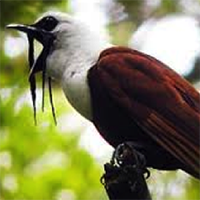
The Bellbird and Ocotea monteverdensis, A Special Relationship - El pájaro campana y el Ocotea monteverdensis, una relación muy especial
Of course the relationship between fruit-bearing trees and fruit-eating birds is mutually beneficial. The latter get free food and the former get their seeds spread across the landscape. However, the quality of this “spreading of seeds” is not always the same. The bellbird and O. m. appear to have a special relationship in this regard.
--- Por supuesto la relación entre árboles que tiene fruto y los pájaros que comen de estos es mutualmente beneficioso. Los pájaros reciben fruta y el árbol logra esparcir sus semillas en lugares ideales. Sin embargo la calidad de esta propagación de semillas no es siempre la misma. El pájaro campana y el O.m. parece que tienen una relación especial en cuanto a esto.
In my last blog I wrote about Ocotea monteverdensis (referred to here as “O. m.”), a critically endangered tree found only in the Monteverde “zone.” It was noted that, when it is fruiting during June to August, it is eaten by a number of large and unique birds, several of which are also threatened and found only in wet highland forests (i.e., resplendent quetzal, black guan, three-wattled bellbird). In this blog I want to discuss the special relationship that exists between O. m. and the three-wattled bellbird.


The three-wattled bellbird (called here simply “the bellbird”) is endemic to Central America and ranges between southeastern Honduras and western Panama. There are several populations that have their own breeding areas and own migration routes. The largest populations are (1) one that resides in the Tilaran mountains, in the general vicinity of Monteverde, for six months out of the year (March – August), and (2) one that is chiefly found in the Talamanca region of Costa Rica and Panama and the surrounding foothills and lowlands. These two sub-populations even call with very different “bonks”! The work of Don Kroodsma, George Powell, Debra Hamilton, Vinodkumar Saranathan, and Julio Sanchez has shown that the bellbird has three confirmed dialects and a suspected fourth.
BONK LINKS:
Listen to the Monteverde dialect bellbird bonking on dead branch perch:
https://www.youtube.com/watch?v=Gnu8QbpImWw
Talamancan dialect bellbird bonking:
https://www.youtube.com/watch?v=GMoEOjsHw4E
Powell and Robin Bjork documented the complex migrations of the bellbird in Monteverde, chiefly designed to maximize the availability of the fruit it depends upon. The “Monteverde population” breeds chiefly on the Caribbean slope of the Tilaran Cordillera, in the wet foothills and highlands east of Monteverde, during February to May. By June, many of the trees that were fruiting where these bellbirds breed have stopped bearing fruit. After breeding, this population journeys to the Tilaran Pacific slope between 1200 m and 1500 m (that would be here in the “Monteverde zone”!). For about three months (June to August or September), it feeds on fruit of trees here that are on a different annual cycle of fruiting, from those where the bellbird just finished raising young. Most of this fruit consists of small avocados of Lauraceae species that regularly bear fruit during these months.

Picture of an avocado fruit.
Debra Hamilton and Victorino Molina (with assistance from guides, interns, and ornithological associations) have been conducting research and censuses of bellbirds as they pass through “the Monteverde zone” for about 2 decades. They have noted that the birds concentrate in different areas of “the zone” in different years. Assuming that these concentration patterns are determined by what fruit the birds are eating, Debra and Rhine Singleton started a 6-year study of the principal fruiting tree species in these areas between 1200 and 1500 m. They studied when these species were fruiting (both monthly and annual patterns) and how this related to where the bellbirds were concentrated from year to year, and month to month. Eladio Cruz, Juan Fuentes, I, and others assisted them in data collection for these six years. Most of the tree species were small avocadoes (Lauraceae family).
After months and months of tedious data analysis, Debra, Rhine, and I have concluded that the preferred fruit of the bellbird is that of our friend O. m. Whenever and wherever O. m. is fruiting, the bellbird can be found nearby. Our data shows that O. m. generally only bears abundant fruit here every three years, so that a distinct pattern of concentration of birds around areas of O. m. trees can be seen during these years. In other years, the birds move to different places in the zone. During those years, other species of fruit trees attract them.
Of course the relationship between fruit-bearing trees and fruit-eating birds is mutually beneficial. The latter get free food and the former get their seeds spread across the landscape. However, the quality of this “spreading of seeds” is not always the same. The bellbird and O. m. appear to have a special relationship in this regard.
The nature of this relationship was illustrated by Dan Wenny and Doug Levy when they studied an avocado species very closely related to Ocotea monteverdensis— Ocotea endresiana. This tree grows at a slightly higher elevation than O. m., up in the Monteverde cloud forest reserves. It is not only in the same genus, but in the same sub-group of species in the genus Ocotea. Wenny and Levy studied where various bird species that ate this fruit distributed the seeds. Toucans, guans, quetzals, mountain robins and others all dropped their seeds fairly close to the adult fruiting tree they were feeding on (within 20 m). Bellbirds, in contrast, habitually went to their “perching branch” to finish digesting their fruit, and regurgitated their seeds there.
REGURGITATING:
https://www.youtube.com/watch?v=hPJMcNQB_4Y
Bellbirds select perches that they claim and re-use for months at a time, and these perches typically are on mid-canopy, dead branches in slightly open gaps in the forest canopy. These locations just happen to be ideal for germination and growth of both Ocotea endresiana and O. m. Directly under parent trees, soil microbes pathogenic to the tree species (including seedlings) often concentrate. But bellbird perches typically are located further from parent trees (>50 m). And, perhaps more important, the canopy cover is frequently closed under the parent tree, but more open under the bellbird perch “mini-gap.” This means that newly germinating seedlings—and later when they are saplings—receive more light for growth and survival. Wenny and Levy found that seedlings were twice as likely to survive where bellbirds dropped seeds as where other birds did. They were also one-third less likely to be infected with pathogenic root fungi.


So one can see how O. m. trees and the bellbird may have co-evolved to be particularly mutually beneficial to each other. O. m., it would seem, has evolved to produce fruit that is nutritious, easily located, and the right size for the bellbird to swallow whole and digest slowly. And the bellbird has perhaps evolved to be exhibit behaviors that just happen to result in the distribution of O. m. seeds in ideal locations. Walking through the forests here, I sometimes find small clusters of O. m. saplings that are some distance (> 60 m) from any parent tree. These trees usually appear to be the same age. It is easy enough to imagine that a bellbird perched years before above those locations and regurgitated seeds there. Further research and documentation is needed!
Four 3-m-tall (about 5 years old) O. m. saplings (red flagging) growing in a cluster.
Semi-open canopy, with dead branches, above the same sapling cluster above:
In my next blog, I want to discuss how this endangered tree can be conserved and even encouraged to replenish its population. This involves both saving the few remaining mature trees (only about 750!) and promoting new seedling establishment.
About the author:
Dev Joslin is a scientist who enjoys research that combines his interests and expertise in forest ecology, soils, ornithology, and reforestation. With a masters and a Ph. D. in forestry and soil science, he conducted research for 30 years in North America and Europe on air pollution and climate change impacts on forests, soils, and streams. He has been an active birder and conservationist in Tennessee and Costa Rica for the past 26 years. He and his wife, Harriet, have lived in Monteverde for the past 11 years, during which time he has been active in community organisations, “gentleman farming,” and conservation research involving frugivorous birds and their relationships to wild avocados.
Dev is the main person responsible for helping to put the Ocotea monteverdensis on the critically endangered species list.
REFERENCES
POWELL, G., and R. BJORK (2004) Habitat Linkages and the Conservation of Tropical Biodiversity as Indicated by Seasonal Migrations of Three-Wattled Bellbirds. Bird Conservation International 4:161-174.
WENNY, D.G., and D. J. LEVEY. 1998. Directed seed dispersal by bellbirds in a tropical cloud forest. Proc. Natl. Acad. Sci. USA. 95: 6204–6207.
VAN DER WERFF, H. 2002. A synopsis of Ocotea (Lauraceae) in Central America and Southern Mexico. Annals of the Missouri Botanical Garden. 89: 429-451.

El pájaro campana y el Ocotea monteverdensis,
una relación muy especial
En mi último blog escribí sobre el Ocotea monteverdensis (mencionado aquí como “O.m.”), el cual es un árbol que está críticamente en peligro de extinción y que únicamente se encuentra en la “zona” de Monteverde. Aquí se notó que cuando está en fruta, de junio a agosto, este es comido por una cantidad de pájaros que son grandes y únicos, muchos de los cuales también están en peligro y que solo se encuentran en bosques húmedos altos (ej. El quetzal, pava negra, pájaro campana). En este nuevo blog me gustaría discutir la relación especial que existe entre los O.m. y el pájaro campana.


El Procnias tricarunculatus (aquí simplemente llamado “pájaro campana”) es endémico de Centroamérica y se encuentra entre el sureste de Honduras y el oeste de Panamá. Hay varias poblaciones que cuentan con sus propias zonas de apareamiento y sus propias zonas migratorias. Las poblaciones más grandes son (1) una que reside en las montañas de Tilarán, en la vecindad de Monteverde, por seis meses al año (marzo- agosto), y (2) otra que se encuentra principalmente en la región de Talamanca entre Costa Rica y Panamá y en sus respectivas estribaciones y tierras bajas. Estas sub-poblaciones hasta tienen llamados diferentes o “boinj”. El trabajo de Don Kroodsma, George Powell, Debra Hamilton, Vinodkumar Saranathan, y Julio Sanchez ha demostrado que el pájaro campana tiene tres dialectos confirmados y se sospecha de una cuarta.
Enlaces para los “boinjs”:
Pájaro campana en Monteverde hacienda su sonido de “boinj” mientras está perchado en una rama muerta.
https://www.youtube.com/watch?v=Gnu8QbpImWw
Pájaro campana de Talamanca haciendo su sonido “boinj”: https://www.youtube.com/watch?v=GMoEOjsHw4E
Powell y Robin Bjork documentaron la complejidad de las migraciones del pájaro campana, estas son principalmente diseñadas para maximizar la disponibilidad de fruta de la cual depende. La “población de Monteverde” se reproduce principalmente en la vertiente caribeña de la cordillera de Tilarán, en las estribaciones húmedas y las tierras altas del este de Monteverde, de febrero a mayo. Al llegar al mes de junio, muchos de los árboles que estaban en fruta donde estos pájaros se reproducen, habrán dejado de producir. Después de la época de cría, esta población viaja hacia la vertiente pacífica de Tilarán entre los 1200m y los 1500m (eso sería aquí, en la “zona de Monteverde”). Por cerca de tres meses (junio a agosto o septiembre) estos se alimentan de las frutas de los árboles que están allí, las cuales se encuentran en un ciclo anual distinto que aquel donde el pájaro campana acaba de terminar de criar a sus pichones. La mayor parte de esta dieta consiste en pequeños aguacates de las especies de Lauraceae que regularmente producen frutas durante estos meses.
Foto del fruto de un aguacatillo.
Debra Hamilton y Victorino Molina (con ayuda de guías, pasantes y asociaciones ornitológicas) han estado conduciendo censos de las poblaciones de los pájaros campana cuando estos pasan por la “zona de Monteverde” por cerca de dos décadas. Al hacer esto notaron de que los pájaros se concentran en partes distintas de la “zona” en diferentes años. Asumiendo que estos patrones de concentración eran determinados por el tipo de fruta del cual se alimentaban los pájaros, Deb y Rhine Singleton comenzaron una investigación de seis años sobre las principales especies de árboles frutales entre los 1200 y 1500m. Ellos estudiaron cuando estas especies estaban en fruta (los patrones mensuales y los anuales) y como estos se relacionaban a donde los pájaros campana se concentraban año a año y mes a mes. Eladio Cruz, Juan Fuentes, yo y otros asistimos en la recolecta de información durante estos seis años. La mayoría de estas especies eran aguacatillos (familia Lauraceae).
Después de meses y meses de una labor tediosa en análisis de datos, Deb, Rhine y yo hemos concluido que la fruta favorita del pájaro campana es la de nuestro amigo el O.m. Cuando sea y donde sea que el O.m. están en fruto el pájaro campana se puede encontrar en su cercanía. Nuestra información muestra que el O.m. suele solo tener fruta en abundancia cada tres años, así que en estos periodos se puede encontrar un patrón distintivo de concentración de los pájaros. En otros años los pájaros campana se trasladan a diferentes lugares de la zona. Durante esos años otras especies de árboles frutales son los que los atraen.
Por supuesto la relación entre árboles que tiene fruto y los pájaros que comen de estos es mutualmente beneficioso. Los pájaros reciben fruta y el árbol logra esparcir sus semillas en lugares ideales. Sin embargo la calidad de esta propagación de semillas no es siempre la misma. El pájaro campana y el O.m. parece que tienen una relación especial en cuanto a esto.
La naturaleza de esta relación fue ilustrado por Dan Wenny y Doug Levy al estudiar una especie de aguacatillo que es muy cercana al Ocotea monteverdensis, y este es el Ocotea endresiana. Este árbol crece a una elevación ligeramente más alta que el O.m., en las reservas del bosque nuboso de Monteverde. Esta especie no es solamente el mismo género, pero además se encuentra en el mismo sub-grupo de especies del género Ocotea. Wenny y Levy estudiaron la ubicación donde varias especies de pájaros que se alimentaban de esta fruta distribuían las semillas. Tucanes, pavas, quetzales, zorzales y otros sueltan las semillas cerca del árbol frutal adulto de donde se alimentan (dentro de los 20m.). Los pájaros campana, en contraste, habitualmente iban a su “rama de percha” para terminar de digerir su fruta, y regurgitaban sus semillas ahí.
Pájaro regurgitando semillas:
https://www.youtube.com/watch?v=hPJMcNQB_4Y
Los pájaros campana seleccionan perchas de las cuales ellos se apoderan y reutilizan por meses, estas perchas habitualmente se encuentran a medio dosel, en ramas muertas ubicadas en aperturas del bosque. Estas ubicaciones son justamente ideales para la germinación y crecimiento de ambas: el Ocotea endresiana y el O. m. Justo debajo de los árboles madre suelen concentrarse los microbios de suelo que son patógenos a estas especies de árboles (incluyendo cuando se encuentran como plántulas). Las perchas del pájaro campana usualmente se encuentran lejos de los árboles madre (>50m). Y, seguramente de manera más importante, la cobertura boscosa es más cerrada debajo de los árboles madre, pero más abierta debajo de la percha del pájaro campana por su ubicación en una apertura boscosa. Esto significa que semillas recién germinadas – y luego cuando son árboles jóvenes- van a recibir más luz para su crecimiento y sobrevivencia. Wenny y Levy encontraron que los árboles tenían el doble de oportunidades de sobrevivencia de donde los pájaros campana dejaban las semillas en relación a donde eran dejados por otros pájaros. También tenían una tercera parte menos de posibilidades de ser infectados por el hongo de raíz patógeno.


Así que uno puede ver como los árboles O.m. y el pájaro campana han co-evolucionado para beneficiarse mutuamente el uno del otro. El O.m., al parecer, ha evolucionado para producir fruta llena de nutrientes, fácil de encontrar, y el tamaño apropiado para que el pájaro la pueda comer entero y digerir lentamente. Y el pájaro campana ha evolucionado para tener costumbres que resultan en la distribución de las semillas del O.m. en locaciones ideales. Al caminar por los bosques en esta zona he podido encontrar grupos de árboles juveniles que se encuentran a más de 60 metros del árbol madre. Estos árboles aparentan ser de la misma edad, por lo tanto es lo suficientemente fácil de imaginar que un pájaro estaba en esta zona regurgitando semillas. Hace falta más investigación y documentación para poder demostrar esto apropiadamente.
Cuatro árboles juveniles de O.m. de 3 metros de alto (aprox. 5 años de edad) marcados con cinta roja creciendo en un grupo:
Dosel parcialmente abierto, con ramas muertas por encima del grupo de árboles juveniles.
En mi siguiente blog quiero discutir como este árbol en peligro puede ser conservado y hasta fomentado para reponer su población. Esto implica rescatando los árboles maduros restantes (solo son como 750) y promoviendo el establecimiento de plántula.
Sobre el autor:
Dev Joslin es un científico que disfruta la investigación y combina sus intereses y pericia en ecología forestal, suelos, ornitología y reforestación. Con una maestría y un doctorado en ciencias forestales y ciencias de suelos el ha conducido investigación por 30 años en América del Norte y Europa en el impacto de la contaminación de aires y el cambio climático en los bosques, suelos y quebradas. Él ha sido un pajarero y conservacionista active en Tennessee y Costa Rica por los últimos 26 años. Él y su esposa, Harriet, han vivido en Monteverde por 11 años en los cuales han participado activamente en organizaciones comunitarias, “agricultura de caballeros”, y investigación de conservación involucrando pájaros fructíferos y su relación con el aguacatillo Silvestre.
Dev es además la principal persona responsable en ayudar a colocar el Ocotea monteverdensis en la lista de críticamente en peligro de extinción.
REFERENCIAS:
POWELL, G., and R. BJORK (2004) Habitat Linkages and the Conservation of Tropical Biodiversity as Indicated by Seasonal Migrations of Three-Wattled Bellbirds. Bird Conservation International 4:161-174.
WENNY, D.G., and D. J. LEVEY. 1998. Directed seed dispersal by bellbirds in a tropical cloud forest. Proc. Natl. Acad. Sci. USA. 95: 6204–6207.
VAN DER WERFF, H. 2002. A synopsis of Ocotea (Lauraceae) in Central America and Southern Mexico. Annals of the Missouri Botanical Garden. 89: 429-451.
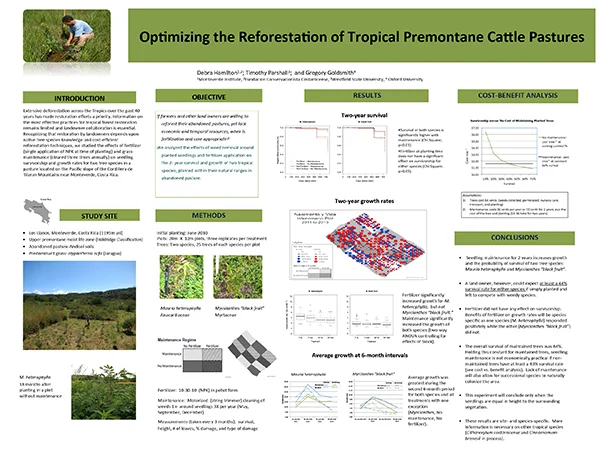
Poster: “ Optimizing the reforestation of tropical premontane cattle pasture through fertilization and grass maintenance”.
At the 26th International Congress for Conservation Biology in Baltimore, Debra Hamilton (Monteverde Institute), Tim Parshall (Westfield State University) and Greg Goldsmith (Oxford University) presented a poster entitled “ Optimizing the reforestation of tropical premontane cattle pasture through fertilization and grass maintenance”.
Poster: “ Optimizing the reforestation of tropical premontane cattle pasture through fertilization and grass maintenance”.
Afiche:
“Optimizando la reforestación de portrero tropical premontano a través de fertilización y mantenimiento”.
English: At the 26th International Congress for Conservation Biology in Baltimore, Debra Hamilton (Monteverde Institute), Tim Parshall (Westfield State University) and Greg Goldsmith (Oxford University) presented a poster entitled “ Optimizing the reforestation of tropical premontane cattle pasture through fertilization and grass maintenance”.
While the results of the two-year investigation demonstrate that grass maintenance significantly increased the survivorship and growth of planted seedlings, the application of fertilizer (10-30-10) at the time of planting had no effect on survivorship. Fertilizer application at time of planting did increase growth rates for one of the two tree species in the experiment.
More importantly, >44% of seedlings of both tree species (Mauria heterophylla (Cirri) and Myrsianthes “black fruit”) survived whether the seedlings received grass competition removal or not. Reforestation, therefore, should not necessarily be discouraged if a landowner does not have the economic resources to maintain the seedlings free of grass. This research is continuing to examine additional species and grass types.
Español:
En los 26th Congreso Internacional para Biología de la Conservación en Baltimore, Debra Hamilton (Instituto Monteverde), Tim Parshall (Westfield State University) y Greg Goldsmith (Oxford University) presentó un poster titulado “Optimizando la reforestación de portrero tropical premontano a través de fertilización y mantenimiento”.
Mientras que los resultados de la investigación de dos años demuestran que mantenimiento de pastos aumentó significativamente la supervivencia y crecimiento de los arbolitos, la aplicación de fertilizante (10/30/10) en el momento de la siembra no tuvo efecto sobre la supervivencia. La aplicación de fertilizantes en el momento de la plantación aumentar las tasas de crecimiento de una de las dos especies en el experimento.
Más importante aún, > 44% de las plántulas de ambas especies arbóreas (Mauria heterophylla (Cirri) y Myrsianthes "black fruit") sobrevivieron si los arbolitos recibieron mantenimiento o no. Por lo tanto, no necesariamente deben desanimarse si un terrateniente no tiene los recursos económicos para mantener las plantas de semillero libres de hierba. Esta investigación continúa para examinar otras especies de arboles y tipos de pastos.