
Efímeras, un análisis del presente para mejorar el futuro
Este grupo de insectos (Ephemerópteros), son un grupo interesante ya que es uno de los grupos de insectos más antiguos existentes y tienen un ciclo de vida que incluye un corto estadio adulto en medio terrestre y un estadio larval acuático, siendo su estadio larval el más importante para el futuro de la investigación...
Por:Daniel Villegas Rojas (For English please scroll down).
Mi nombre es Daniel Villegas Rojas tengo 24 años y soy estudiante de Biología en la Universidad nacional de Costa Rica, soy vecino de Los olivos de Tilaran, Guanacaste, actualmente me encuentro estudiando un género de Ephemeróptero (Baetis), en busca y descripción de nuevas especies de dicho género, y re describiendo especies ya conocidas para enriquecer el conocimiento que se tiene sobre estos insectos. Este trabajo es de vital importancia para el conocimiento taxonómico de las especies existentes de este género de macro invertebrado, ya que estos insectos acuáticos son complejos cuando de determinar su especie se trata, ya sea en el campo o en laboratorio.
Este grupo de insectos (Ephemerópteros), son un grupo interesante ya que es uno de los grupos de insectos más antiguos existentes y tienen un ciclo de vida que incluye un corto estadio adulto en medio terrestre y un estadio larval acuático, siendo su estadio larval el más importante para el futuro de la investigación, ya que dicho estadio nos proporciona la oportunidad de investigar y determinar el grado de contaminación en quebradas y ríos de nuestro país, usando como parámetro la ausencia o presencia de las larvas de especias presentes en la zona, dando como resultado una excelente y practica herramienta utilizable como bio indicador en aguas, para poder así determinar el impacto que se puede estar o no generando en el estado de los cuerpos de agua, y así posteriormente determinar fuentes contaminantes y tomar las medidas necesarias para corregir el problema ambiental.
Nota: Daniel Villegas estuvo trabajando en su investigación en la biblioteca del Instituto Monteverde por lo que le solicitamos que nos escribiera un poco sobre su importante proyecto. Esto dado a que el programa de ciencia ciudadana de nuestra organización trabaja con estudiantes de la zona monitoreando quebradas y esperamos podernos beneficiar con este tipo de investigaciones.

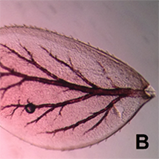
Base de antena (A) y branquia completa (B) en un Baetis, Importantes a nivel taxonómico.

Equipo trabajando en laboratorio de Entomología, UNA.

Larvas de Ephemeropteros en colecta de campo y Ephemeropteros subimagos en trampa de luz.
By: Daniel Villegas (para español, favor subir)
My name is Daniel Villegas Rojas I am 24 years old, a Biology student at the National University of Costa Rica, and a neighbor of Los olivos de Tilarán, Guanacaste, I am currently studying a genre of Ephemeróptero (Baetis), looking for and describing new species of this genus, and re describing already known species to enrich the knowledge that we had about these insects. This work is of vital importance for the taxonomic knowledge of the existing species of this macro invertebrate species, since these aquatic insects are complex when determining their species, whether in the field or in the laboratory.
This group of insects (Ephemerópteros), are an interesting group since it is one of the oldest existing insect groups and they have a life cycle that includes a short adult stage in terrestrial environment and an aquatic larval stage, its larval stage being the more important for the future of research, since this stage provides us with the opportunity to investigate and determine the degree of pollution in streams and rivers of our country, using as a parameter the absence or presence of the species of larvae present in the area, resulting in an excellent and practical tool that can be used as a bio indicator in water, in order to determine the impact that may or may not be generated in the state of water bodies, and subsequently determine contaminating sources and take the necessary measures to correct the environmental problem.
Note: Daniel Villegas was working on his research in the library of the Monteverde Institute, so we asked him to write us a bit about his important project. This is because the citizen science program of our organization works with students in the area monitoring streams and we hope we can benefit from this type of research.
Combating Coffee Rust (Hemileia vastatrix)- Combatiendo la Roya
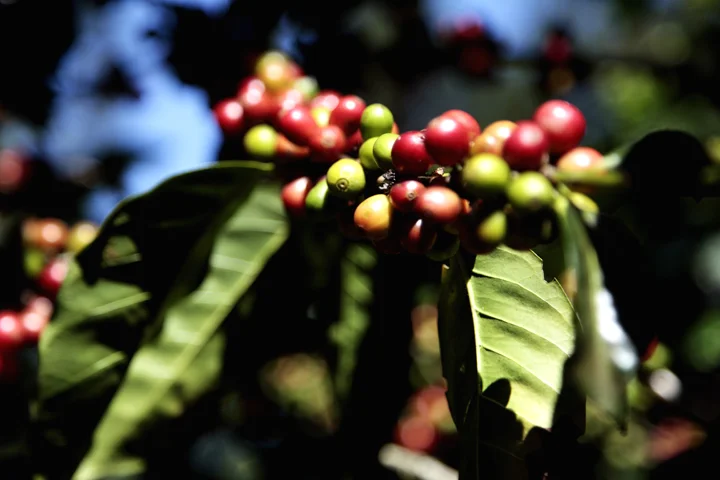
Combating Coffee Rust: Coffee Rust (Hemileia vastatrix) damages coffee leaves and leads to defoliation, and can seriously reduce yields. While chemical fungicides have been effective, they introduce dangers to human health and the environment. Naturally occurring hyperparasitic fungi do not present the same risks, and may be a more sustainable alternative.
Coffee Rust (Hemileia vastatrix) damages coffee leaves and leads to defoliation, and can seriously reduce yields. While chemical fungicides have been effective, they introduce dangers to human health and the environment. Naturally occurring hyperparasitic fungi do not present the same risks, and may be a more sustainable alternative. We studied two such parasites: Trichoderma asperellum and Lecanicillium lecanii. We compared the effects of the two fungi on rust-infected trees in a coffee plantation. Trees sprayed with L. lecanii experienced 50% fewer necrotic lesions and 40% less discoloration than those treated with T. asperellum. We also conducted a lab experiment where we applied each fungus directly on leaves infected with H. vastatrix and found that L. lecanii colonized 25% more leaves than T. asperellum. Our results indicate that L. lecanii controls rust infections more effectively than T. asperellum.
RESUMEN
La Roya (Hemileia vastatrix)
daña las hojas del café, lleva a la defoliación y puede reducir
considerablemente los rendimientos. Si bien los fungicidas químicos han sido
eficaces, introducen peligros para la salud humana y el medio ambiente.
Los hongos hiperparasíticos que ocurren naturalmente no presentan
los mismos riesgos, y puede ser una alternativa más sostenible. Estudiamos dos
de esos parásitos: Trichoderma
asperellum y Lecanicillium lecanii. Comparamos los efectos de los dos
hongos en plantas de café afectadas con roya. Los árboles rociados con L. lecanii experimentaron un menor aumentar de
lesiones necróticas(50%) y 40% menos decoloración de hojas que Trichoderma asperellum o
el control. También llevamos a cabo un experimento de laboratorio donde
aplicamos cada hongo directamente en hojas infectado con H. vastatrix, y encontramos que L. lecanii colonizó más hojas (25%) que T. asperellum. Nuestros
resultados indican que L.
lecanii controla las
infecciones de roya más eficazmente que T. asperellum.
BY:
Jonathan Martindill, University of California, Davis- Land, Air, and Water Resources
AND:
Sydney Fozard ,University of California, Santa Barbara -Ecology, Evolution, and Marine Biology
EAP Tropical Community Ecology, Spring 2013 -7 June 2013
For complete report write to/ Para el reporte completo escriban a: info@mvinstitute.org


